 How-to
Solar Panel Removal in Florida: A Homeowner's Reroof Guide
Last Updated: November 8, 2026
Quick Summary
Solar panel removal is the planned shutdown, documentation, and temporary removal of a roof-mounted array so roofing work can proceed, followed by reinstallation and testing. Most removals happen because the roof has reached the end of its service life, not because the panels failed. If your roof is being replaced, the array comes off first.
- Removal for a standard residential array is often completed in about a day, with reinstallation taking a day or two.
- Full removal is commonly needed for a whole-roof replacement, while partial removal may suit work on one slope.
- Document module and inverter serial numbers before removal in case of damage or warranty claims.
- New flashing goes in at every penetration where old sealant has aged out during reinstallation.
- Ask in writing who pulls permits, who insures stored modules, and who schedules inspections.
Table of Contents
- When Solar Panels Need to Come Off for a Roof Replacement
- The Solar Panel Removal and Reinstallation Process, Step by Step
- Full vs. Partial Removal: Which Does Your Roof Need?
- Solar Panel Removal and Reinstallation Cost: What Drives the Price
- Solar Panel Removal Permit Florida: What Port St. Lucie Homeowners Should Know
- Solar Panel Reinstallation Timeline: How Long the Project Takes
- Solar Panel Mounting Inspection After Reroof: Checking the Details That Matter
- Questions to Ask Before You Schedule Solar Panel Removal
- Frequently Asked Questions
When Solar Panels Need to Come Off for a Roof Replacement
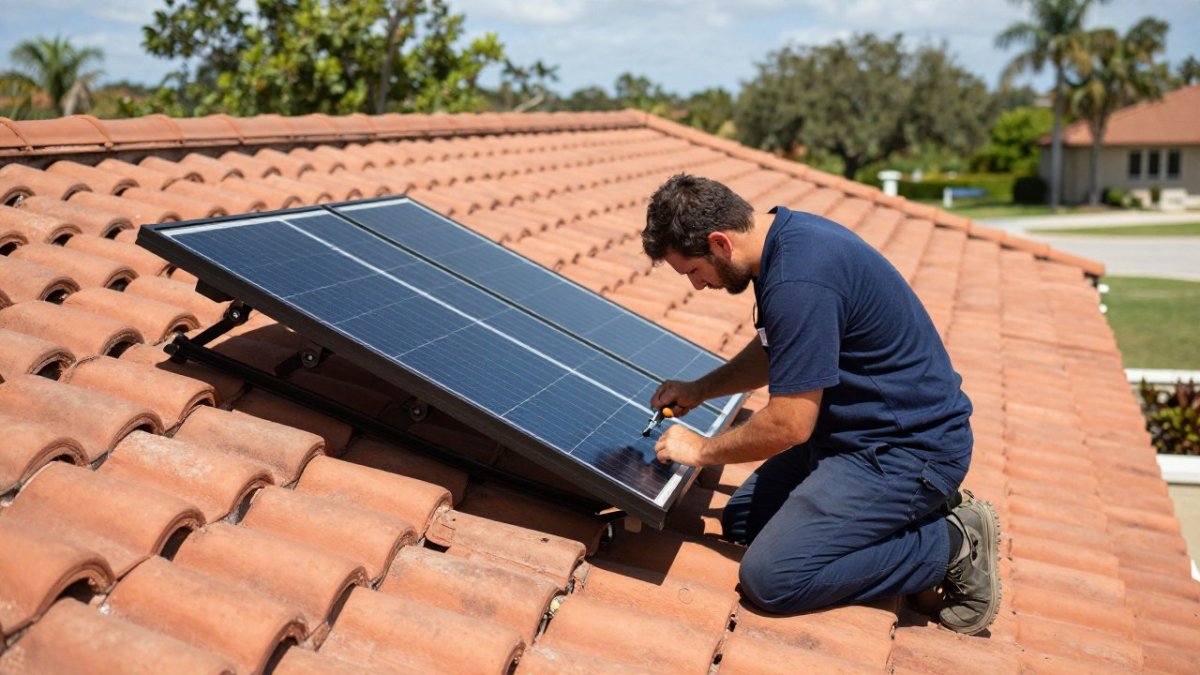
Solar panel removal is the planned disconnection, documentation, and temporary removal of a roof-mounted array so roofing work can proceed, followed by reinstallation and testing.
Roofing crews cannot install new underlayment or shingles around racking and roof penetrations. Leaving an array in place means the roofer works around it, and that shortcut usually shows up later as leaks at the mounting points.
Florida Solar Pro handles removal and reinstallation for homeowners in our service area. Here is what the job involves.
The Solar Panel Removal and Reinstallation Process, Step by Step
Every removal follows the same sequence, whether the array has ten panels or forty. Skipping a step is how damage and paperwork problems start.
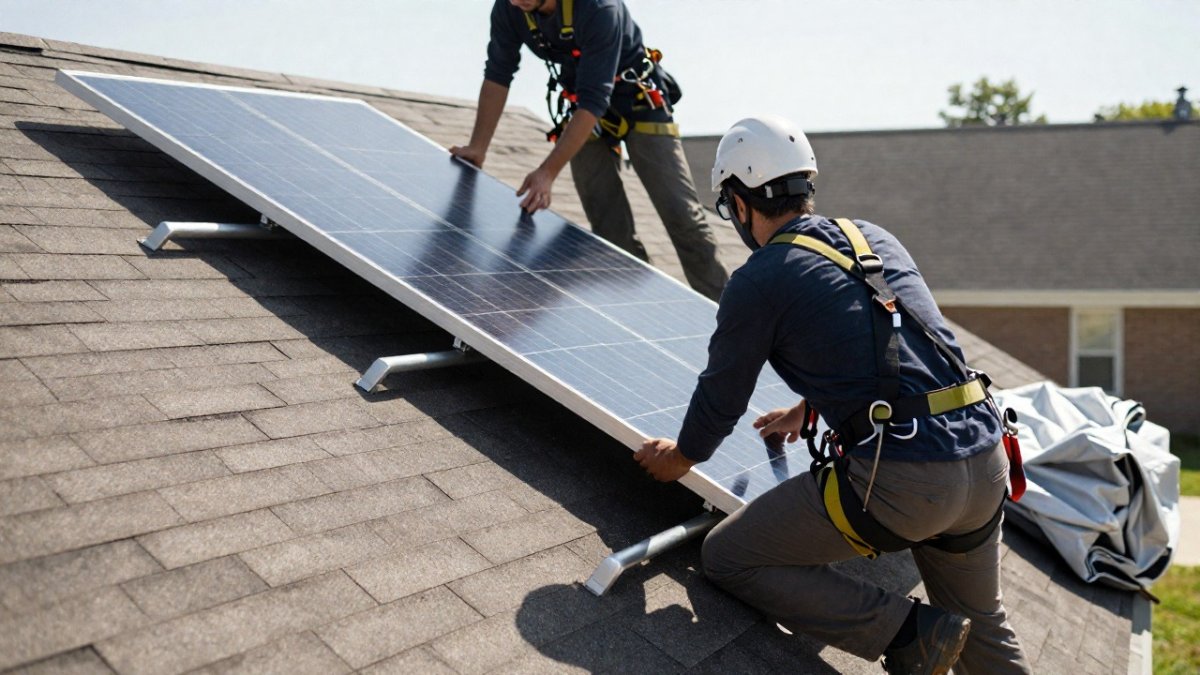
Shutdown, Documentation, and Removal
Shutting the system down at the disconnect and verifying the DC side is de-energized comes before anyone touches a module. Documenting the array layout, labeling conductors, and recording model and serial numbers on modules and inverters creates a record that matters if a panel is damaged or a warranty claim comes up.
Panels come off in reverse order of installation, and mounting hardware gets bagged and labeled by roof section so nothing gets mixed during reinstallation.
Storage, Roof Work, and Reinstallation
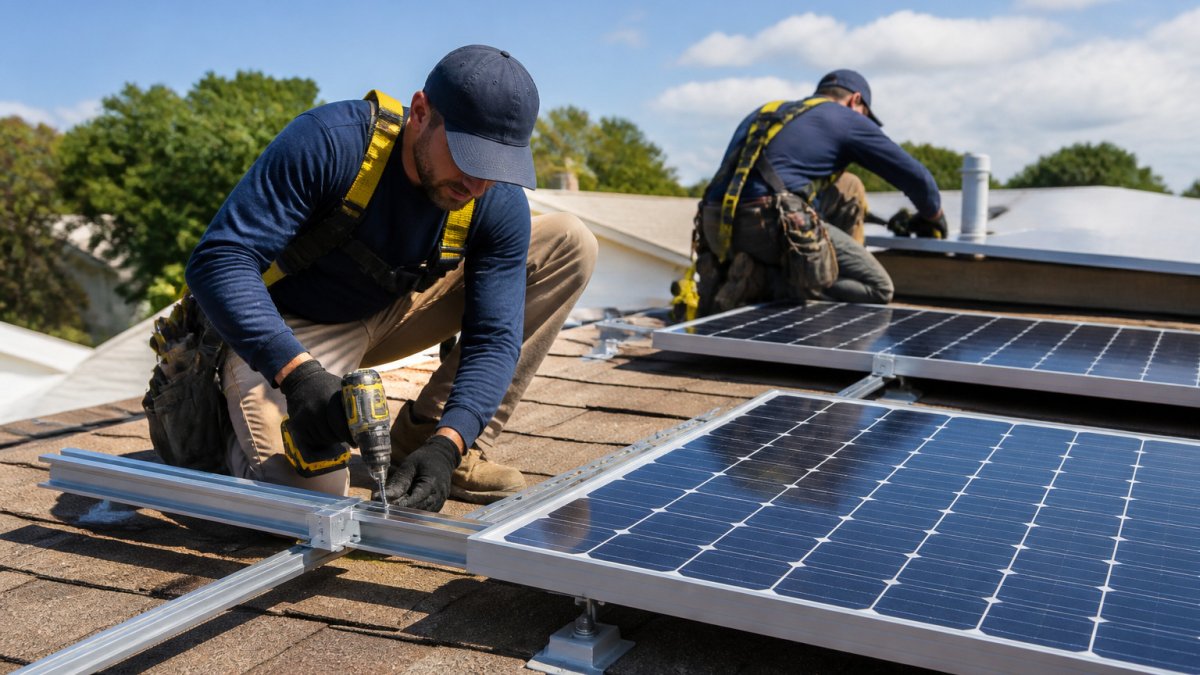
Modules are typically stored upright on padded racks rather than laid flat, where they can flex. Coordinating the handoff with your roofer and returning once the new roof is complete keeps the project on track. Reinstallation generally follows the original layout, with new flashing at penetrations where old sealant has aged out.
Full vs. Partial Removal: Which Does Your Roof Need?
Partial removal may be an option when the roof work is limited to one slope or section that holds no panels. Full removal is commonly needed for a whole-roof replacement.
Ask your roofer which slopes the job covers. If the answer is "all of them," the array comes off completely.
Solar Panel Removal and Reinstallation Cost: What Drives the Price
Most quotes for solar removal and reinstallation are built from the same handful of line items, and knowing them helps you compare bids instead of guessing. Pricing depends on the variables below, which often affect cost more than panel count does. Ask for a free estimate and a walkthrough of what the quote includes before you commit.
What the quote is actually paying for
A removal-and-reinstallation quote may bundle these pieces:
- Shutdown and documentation. De-energizing at the disconnect, verifying the DC side, photographing the array layout, labeling conductors, and recording module and inverter model and serial numbers.
- Removal labor. Taking modules off in reverse installation order and bagging and labeling mounting hardware by roof section.
- Roof coordination. Handoff to your roofer and a return visit once the new roof is complete.
- Reinstallation. Setting racking back on the original layout and installing new flashing at every penetration where old sealant has aged out.
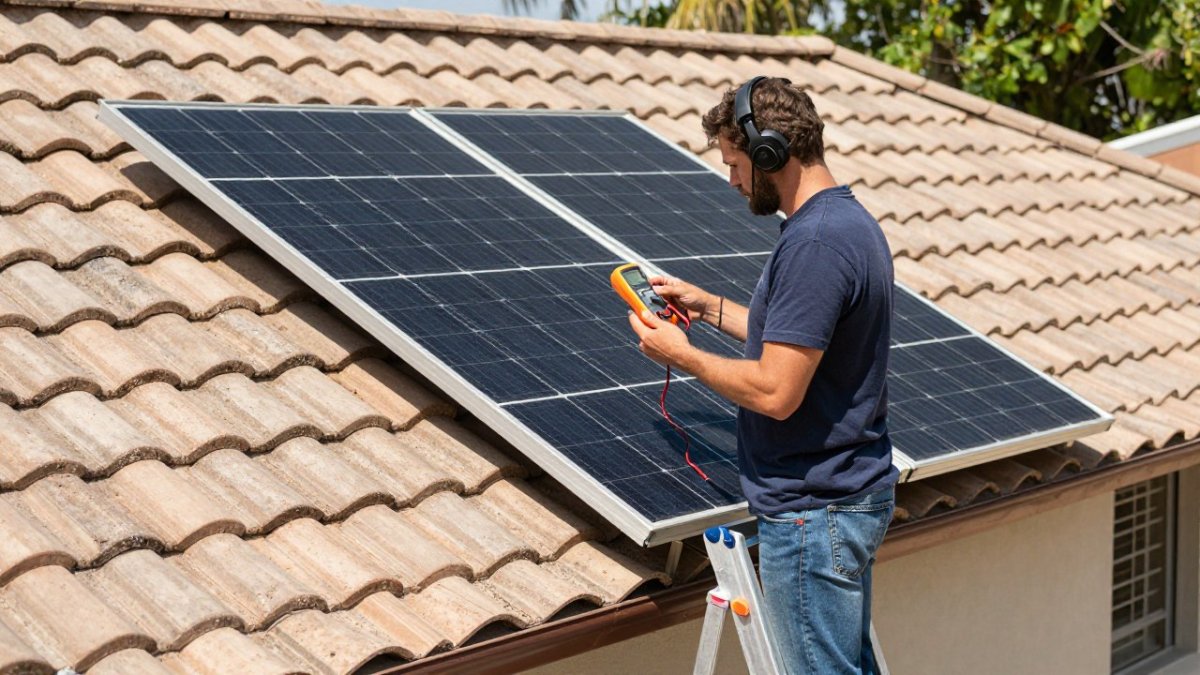
- Electrical reconnect and testing. Checks that may include string voltage and current, rapid shutdown verification, and production comparison against the pre-removal baseline.
The factors that move the number
- System size. A ten-panel array and a forty-panel array are different jobs, but labor scales with module count and roof sections, not just wattage.
- Roof access and pitch. Steep, multi-story, or hard-to-reach roofs take longer and may need additional safety setup.
- Roof type. Tile roofs generally take longer than shingle because of how modules and flashing interact with the tile field.
- Mounting and electronics. Arrays with optimizers or microinverters add labor at every module during removal and reinstallation.
- Reuse decisions. How much racking and hardware can be reused affects both labor and material cost.
A homeowner preparation checklist before the crew arrives
A little prep shortens the job and protects your records:
- Save your last several months of production data from the monitoring app so you have a pre-removal baseline.
- Locate your system paperwork: original contract, equipment manuals, and any warranty documents.
- Note the inverter make and model and the module brand, if you can read them safely from the ground or from paperwork.
- Clear access to the electrical panel, disconnect, and the path the crew will use to carry modules.
- Confirm with your roofer which slopes the roof job covers and share that scope with the solar crew.
- Ask each contractor in writing who pulls permits, who insures the modules while stored, and who schedules inspections.
Watch out: if a quote is dramatically lower than the others, ask what it excludes. Storage insurance, new flashing, and post-install testing are common omissions that show up later as extra charges or as problems after the system is back online.
For a closer look at how these factors play out on a typical job, read our breakdown of solar panel reinstallation cost after roof repair.
Solar Panel Removal Permit Florida: What Port St. Lucie Homeowners Should Know
Permit requirements for solar removal and reinstallation in Port St. Lucie depend on the city or county jurisdiction that has authority over your property, and on how your roofer is permitted for the roof work. Since permit requirements can affect the timing of roof work, deciding on roof replacement before solar is in place can help coordinate the project and avoid unnecessary removal and reinstallation.
Who has authority over your project
Permitting for a Port St. Lucie property can run through the city or the county, depending on where the property is located and what the project involves. The roofing permit and the solar removal-and-reinstallation work may be handled under one permit or as separate permits. A short call to the authority having jurisdiction for your address is the fastest way to know which applies to you.
The inspections that commonly apply
A removal-and-reinstallation project can trigger more than one inspection. Which ones apply depends on your jurisdiction and the scope of the roof work:
- Roofing inspection. Tied to the roof replacement permit and the roofer's scope.
- Electrical or solar inspection. May be required for the disconnect, reconnect, and rapid shutdown verification, depending on how the jurisdiction classifies the work.
- Final inspection. Confirms the completed work matches what was permitted.
Coordinating the sequence of solar and roof work can help avoid inspection conflicts, and documenting the array layout and testing results keeps the record clear if an inspector asks for it.
What to verify before you schedule
- Confirm which department issues the permit for your address and whether removal and reinstallation are separate from the roofing permit.
- Ask whether the jurisdiction requires a licensed electrical or solar contractor to pull the solar portion.
- Confirm the inspection sequence and who schedules each inspection.
- Ask your roofer and your solar contractor to put permit responsibility in writing so it is not assumed by either side.
Watch out: if one contractor tells you no permit is needed and another says one is, get the answer from the authority having jurisdiction for your address in writing before work starts. A missing permit can surface at resale or after a storm claim.
For local service details, see how we handle solar panel removal and reinstallation in Port St. Lucie.
Solar Panel Reinstallation Timeline: How Long the Project Takes
Removal for a standard residential array is often completed in about a day, and reinstallation after the roof is finished can take a day or two, plus inspection scheduling.
Florida's storm season can push the schedule. Build a weather buffer into your planning rather than assuming a fixed completion date.
Here is how the schedule typically breaks down for a standard residential array.
Phase | Typical time | Note |
|---|---|---|
Removal | About a day | Standard residential array |
Reinstallation | A day or two | After the roof is finished |
Inspection scheduling | Additional time | Depends on jurisdiction |
Roof replacement | Several days to a few weeks | Weather and scope dependent |
Storm season | Build in a weather buffer | Rather than assuming a fixed completion date |
Solar Panel Mounting Inspection After Reroof: Checking the Details That Matter
Once the array is back, mounting points should be inspected, check flashing and sealant, verify torque on the racking, and confirm the rapid shutdown system works. Then we test string voltage and current, compare production against the pre-removal baseline, and check monitoring.
If you want an independent look at mounting and system condition after roof work, our solar system inspections and diagnostics cover exactly that.
Questions to Ask Before You Schedule Solar Panel Removal
Ask these before you sign anything:
- Who pulls the permit, and who pays for the inspection?
- Is the removal crew your own employees or a subcontractor?
- How are panels stored, and who insures them while off the roof?
- What happens if a module is damaged during removal?
- Will you document the array layout before disconnecting?
- How do you coordinate the schedule with my roofer?
For more guidance on vetting contractors, read how to find reliable solar reinstallation contractors.
A reroof is disruptive enough without wondering whether your array will come back online correctly. Florida Solar Pro handles removal, storage coordination, reinstallation, and testing with our own crew, and we're fully insured including workers' compensation.
Florida Solar Pro · Solar Energy Professionals · 1930 SW Biltmore St, Port St. Lucie, FL 34984 · 772-464-2663 · Licenses CVC56702 · CPC1458189 · CAC1817178 · SCC131153056
Frequently Asked Questions
How much does solar panel removal and reinstallation cost in Florida?
Pricing depends on system size, roof pitch, how many arrays need to come off, and whether partial or full removal is required. Most quotes include disconnection, removal, storage, reinstallation, and testing. Florida Solar Pro provides free estimates for replacements and can walk you through cost factors during an on-site visit. Ask for a line-item breakdown so you can compare bids fairly.
Can a roofer remove solar panels, or should a solar contractor do it?
A roofer can replace the roof, but solar panel removal involves electrical disconnection, rapid shutdown, and mounting hardware that a roofing crew may not be equipped to handle. A licensed solar contractor should disconnect and remove the array, then reinstall and test it after the roof is finished. Coordinating both trades under one project plan reduces the risk of damage and gaps in workmanship responsibility.
Does solar panel removal and reinstallation require a permit in Florida?
Permit requirements vary by jurisdiction. Many Florida building departments require a permit for the removal and reinstallation of a roof-mounted solar system, and some require a separate electrical permit. Before work starts, confirm which permits apply in your city or county and who is pulling them. Keep copies of approved permits and inspection records for your files and for any future warranty claim.
How long does solar panel removal and reinstallation take?
Removal for a standard residential array is often completed within a day or two. Reinstallation after the roof is complete can take longer, depending on system size and whether mounting hardware needs replacement. The full project timeline depends on the roofing schedule, permit approvals, and weather. Build in a weather contingency, especially during Florida's rainy season.
Can existing solar panels be reused after a roof replacement?
In most cases, yes. Panels are built to last decades, and many systems can be reinstalled after a reroof. A solar contractor should inspect the panels and mounting hardware for microcracks, corrosion, or damaged connectors before reinstallation. If the original installer is unavailable, document the system's condition before removal so you have a baseline for any manufacturer warranty discussion.