 How-to
Solar Energy System Service: Port St. Lucie Owner's Guide
Last Updated: November 22, 2026
Quick Summary
A solar energy system service in Port St. Lucie is a documented health check covering monitoring and production history, inverter and rapid shutdown status, mounting and roof penetrations, wiring, and any pool heating or solar hot water equipment. Our Solar Rescue Assessment is a flat $149 with a two-hour diagnostic cap, credited toward a Service Protection Plan if you enroll within 30 days.
- A monitoring app showing system offline may mean only the gateway failed, not the array.
- Stop and call a professional if you see unrecognized fault codes, a burning smell, scorch marks, or damaged wiring.
- Robert Fulks, our owner, has more than 30 years of solar experience and specializes in battery storage.
- Service Protection Plans run on a 360-day term with automatic renewal and one complimentary service call per year.
- Gather monitoring screenshots, fault codes, recent utility bills, and warranty documents before your service visit.
Table of Contents
- What Solar Energy System Service Covers in Port St. Lucie
- Solar Panel Repair in Port St. Lucie: Safe Troubleshooting Before You Call
- Solar Energy System Service in Port St. Lucie: Cost Drivers and Plan Options
- Repair or Replace? A Decision Framework for Older Systems
- Book Your Solar Service Visit in Port St. Lucie
- Frequently Asked Questions
What Solar Energy System Service Covers in Port St. Lucie
A solar energy system service visit in Port St. Lucie should cover far more than a quick look at your panels. At Florida Solar Pro, we treat service as a full health check of everything that turns sunlight into usable power at your home, and we put the findings in writing so you can see what was tested and what was not.
Your system is really several systems working together. A weak link anywhere drags down the whole. Here is the sequence we follow on a typical service visit, and why each step matters.
Step 1: Monitoring and Production History
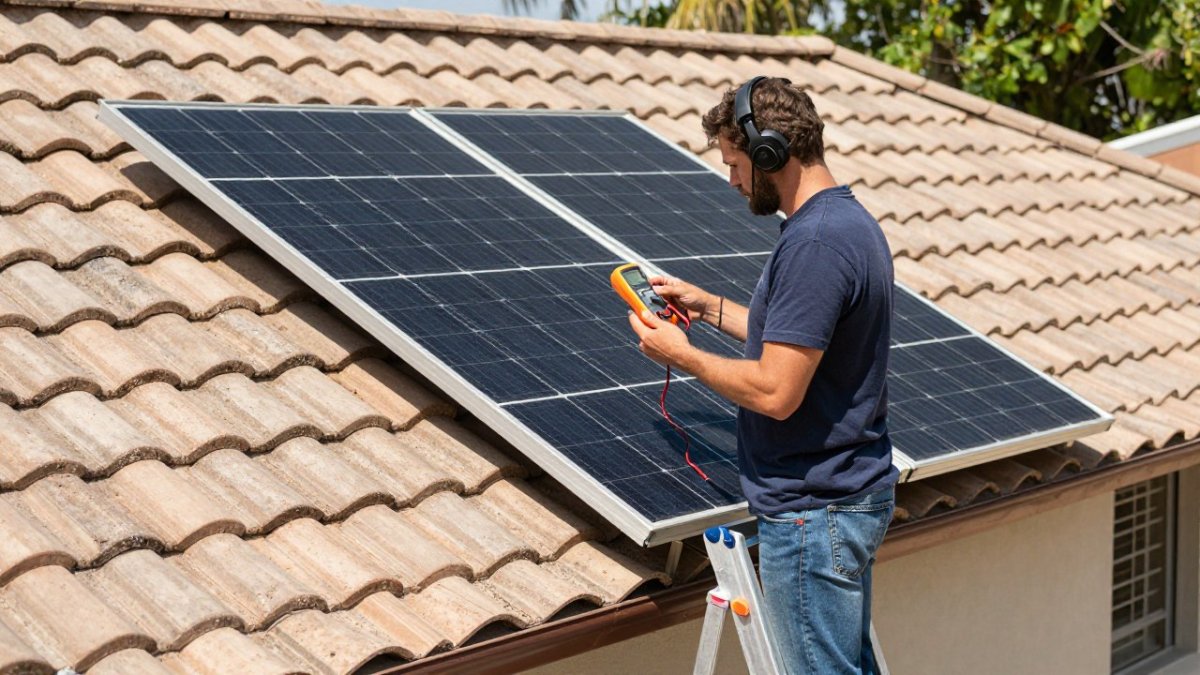
The monitoring portal is your first warning system. A useful check pulls string-level and panel-level production for the last 12 months and compares it to the same months in prior years.
Watch out: a monitoring app that shows "system offline" is not the same as a system that has stopped producing. The gateway or router may be the only thing that failed, and the array may still be generating.
Step 2: Inverter and Rapid Shutdown Status
Inverters and optimizers do the heavy lifting of conversion. Inverter display and event logs are useful for spotting fault codes, and rapid shutdown and ground-fault protection should be checked for proper function and damage. Brand compatibility and available diagnostics depend on the model and system.
Step 3: Mounting, Roof Penetrations, and Wiring
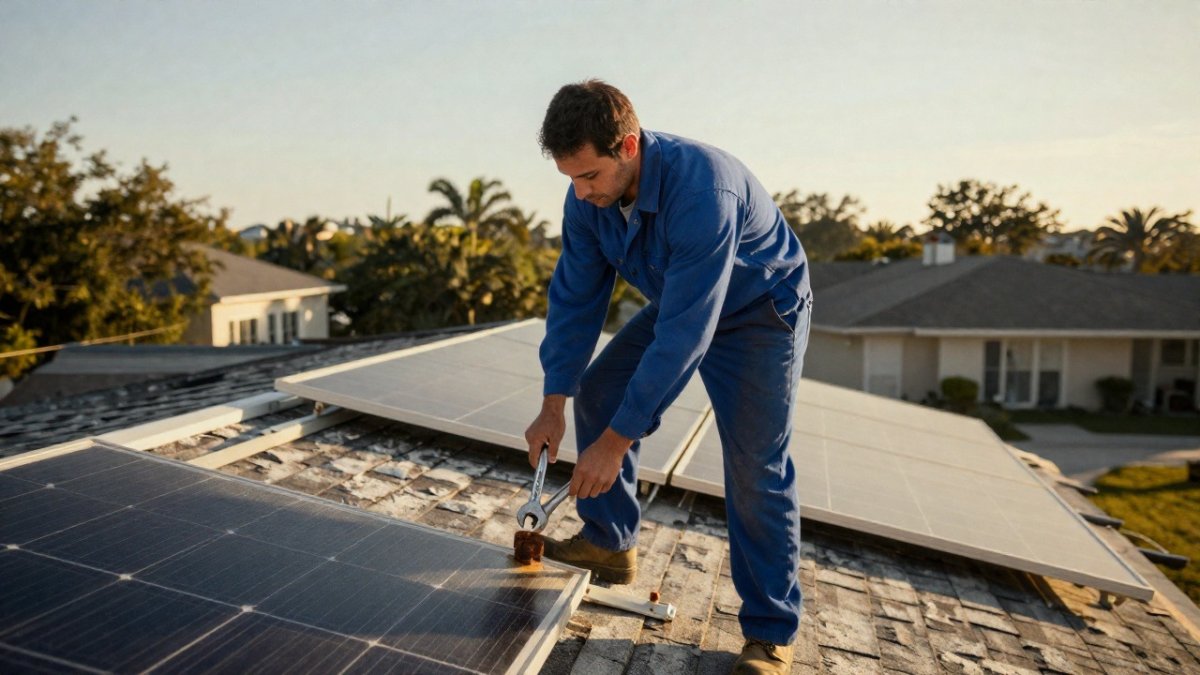
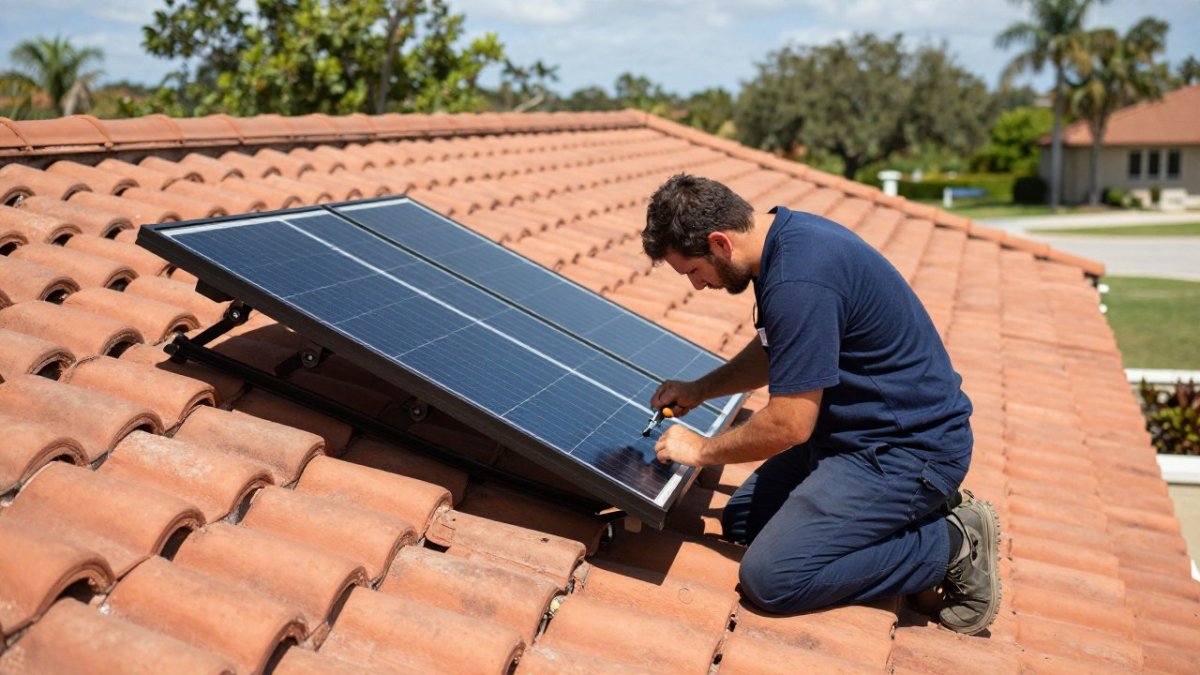
Mounting hardware and roof penetrations matter more here than in most of the country. Salt air, summer UV, and hurricane-season wind loads all stress the racking and flashing over time. Torque on clamps and rails, corrosion at cut edges, and flashing and sealant at roof penetrations are all worth inspecting, along with conduit, junction boxes, and exposed wiring for UV cracking or water intrusion.
Step 4: Pool Heating and Solar Hot Water
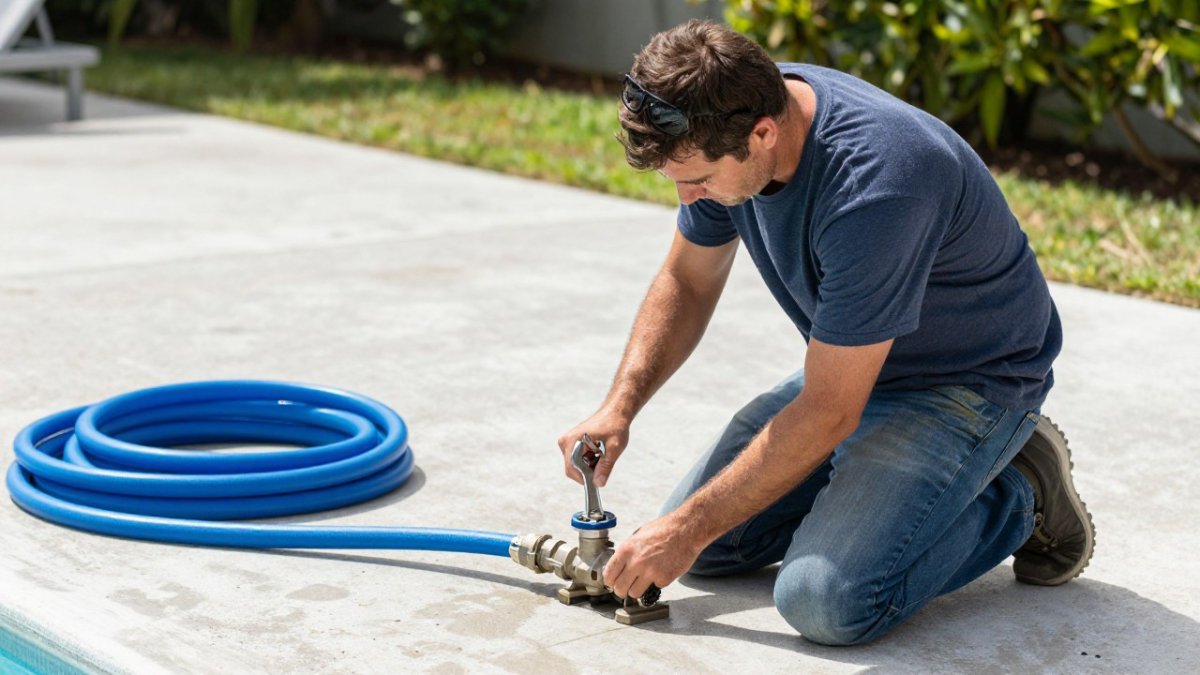
Pool heating and solar hot water round out the picture. Collector leaks, failed sensors, stuck valves, and controller faults are common, and they are all serviceable. Solar hot water systems may be open-loop, closed-loop, or drainback, and identifying the configuration first matters because the troubleshooting path differs for each.
Step 5: Utility and Interconnection Context
Port St. Lucie homes are served by more than one utility, and the interconnection rules and net-metering treatment differ. Confirming which utility serves your address and whether your system was interconnected under an older program is a sensible first step before discussing changes.
What a Service Visit Does Not Cover
A standard service visit is not a reroof, a panel-level deep clean, or a structural engineering review. Because roof maintenance falls outside a standard solar service visit, coordinate that work separately with Blue Collar Roofing to keep roofing and solar responsibilities distinct.
If you want a documented review of your system, our team handles professional PV inspections and diagnostics for faults, storm concerns, and reroof planning.
Solar Panel Repair in Port St. Lucie: Safe Troubleshooting Before You Call
You can safely check a few things yourself before scheduling solar panel repair in Port St. Lucie. Start with your monitoring app, your last utility bill, and a visual look from the ground.
Solar Energy System Service in Port St. Lucie: Cost Drivers and Plan Options
What you pay for solar energy system service in Port St. Lucie depends on the diagnosis, the parts, and the access. A monitoring fault is a different job from a failed inverter or a leaking pool collector.
The main cost drivers are:
- Diagnostic time and system complexity
- Parts, including inverter or optimizer replacement
- Roof access and height
- Whether the original installer is still available
Our Solar Rescue Assessment is a flat $149 with a two-hour diagnostic cap. It does not include repairs, but the full amount is credited toward a Service Protection Plan if you enroll within 30 days.
Service Protection Plans at a Glance
| Plan | Annual Price | Best For |
|---|---|---|
| Thermal Guard | $289 | Solar hot water systems |
| PV Guard | $339 | Solar electric systems |
| Battery Watch | $239 | Homes with battery storage |
| Pool Solar Guard | $239 | Solar pool heating |
| HVAC Guard | $379 | Home HVAC systems |
| Multi-system bundles | $449-$1,039 | Homes with two or more systems |
Annual Price
Plans run on a 360-day term with automatic renewal. Benefits include priority response, one complimentary service call per year under the approved plan terms, warranty management, and repair discounts by tier. Plans do not include free parts or unlimited diagnostics.
You can compare the service protection plans and their terms side by side before deciding.
Repair or Replace? A Decision Framework for Older Systems
Repair often makes sense when the fault is isolated, parts are available, and the rest of the system is sound. Replacement starts to make sense when failures stack up or the equipment is no longer supported.
Condition, compatibility, parts availability, remaining warranty, and the scope and cost of the repair are the factors that matter. There is no universal age cutoff.
A Simple Repair-or-Replace Decision Tree
Use this as a starting point, not a verdict. A licensed crew still has to confirm it on site.
- Is the fault isolated to one inverter, one optimizer, or one string? If yes, repair is usually the first path.
- Are replacement parts for that model currently available? If no, replacement of the affected unit or the system moves up the list.
- Is the rest of the array producing within a reasonable band of its expected output? If yes, repair protects the value of the panels you already own.
- Are multiple failure types showing up in the same 12-month window? Stacked failures often signal that patching will keep costing money.
- Does the remaining manufacturer warranty still cover the failed part, and is the original installer's workmanship obligation still in play? If the answer is unclear, we help you sort out which coverage applies to which component.
A system with one failed unit and good panels is often a repair. A system with a failed inverter, cracked optimizers, and no available parts may cost more to patch than to modernize.
How to Prepare for a Service Call
A little preparation makes the visit faster and the diagnosis more accurate. Gather these before we arrive:
- Your monitoring app login or a screenshot of the last 30 days of production
- Any fault codes shown on the inverter display, written down exactly
- The date you first noticed the problem, and whether it followed a storm, an outage, or a utility voltage event
- Your last two utility bills, so we can compare billed usage to reported production
Watch out: if you smell burning, see scorch marks, or notice physical damage to panels or wiring, stop and call us rather than waiting for a scheduled visit. Do not climb on the roof or open the inverter or disconnect box to investigate.
Ownership, Leases, and Installer Closures
Who owns the system changes who can authorize repairs. If you bought the system outright, you decide. If the system is tied to a lease or a loan, the agreement may set out who approves service and which vendors can be used.
If you are weighing a repair against a replacement, our team can walk you through solar repair and service in Port St. Lucie and give you both paths in writing.
Book Your Solar Service Visit in Port St. Lucie
The fastest way to get answers is to book a visit and let a licensed crew diagnose the system in person.
We service existing systems across Port St.
Call us at 772-464-2663 to schedule, or use our contact page to call, text, or message.
A solar system that underproduces or faults out is a problem you can solve with the right diagnosis.
Florida Solar Pro · Solar Energy Professionals · 1930 SW Biltmore St, Port St.
Frequently Asked Questions
Who provides solar energy system service in Port St. Lucie?
Florida Solar Pro is based at 1930 SW Biltmore St in Port St. Lucie and services solar electric, battery, solar pool heating and solar hot water systems from south of Daytona to Miami, and west to Okeechobee and Sebring. We work on systems we did not install, including orphaned systems whose original installer is no longer available. Call 772-464-2663 to describe the symptoms and schedule a visit.
Can a solar company service a system installed by another contractor?
Yes. We service existing systems regardless of who installed them. If a manufacturer warranty may apply, we help with eligible manufacturer warranty procedures. That is separate from the original installer's workmanship obligations and from our warranty on our own work, so keep your original paperwork if you have it.
How do I know whether my solar inverter needs repair?
Common signs include a red or fault light on the unit, an error code in the monitoring app, production dropping to zero while the sun is out, or readings that no longer match your neighbors' systems. Check the app first and note the code. Do not open the inverter enclosure, since it holds energized components. A diagnostic visit can help determine whether the issue lies in the inverter, a microinverter, an optimizer, wiring or the utility feed.
Can I add battery backup to an existing solar system?
Often yes, but compatibility depends on your inverter model, system size and what you want backed up during an outage. Robert Fulks, our owner, specializes in battery storage and home backup and has more than 30 years of solar experience. Reviewing your equipment and essential-load priorities before choosing a battery helps avoid paying for capacity you will not use.