 How-to
How to Handle It When Your Solar Installer Goes Bankrupt
Last Updated: November 11, 2026
Quick Summary
If your solar installer bankrupt, your system usually still works, your manufacturer equipment warranties usually stay valid, and you need a new licensed contractor of record. Gather your contract, permit, equipment list and monitoring login, keep paying any loan or lease, and hire a state-licensed contractor to inspect and take over.
- Manufacturer warranties on panels, inverters and batteries usually stay valid; the installer's workmanship warranty is usually gone.
- Keep paying your solar loan or lease, because the finance company is separate from the installer.
- An open permit can stall a home sale or complicate an insurance claim, so confirm permit status with your city or county.
- Hire a contractor with a valid Florida solar contractor license and verify it on the state database before signing.
- Monitoring access usually transfers when the new contractor requests it from the manufacturer and you confirm in writing.
Table of Contents
- Step 1: Gather Your Contract, Permit, Equipment List, and Monitoring Login
- Step 2: Check That Your System Is Still Producing Power
- What Happens to Your Solar Warranty if the Installer Goes Out of Business
- Step 4: Check for Open Permits and Complete a Florida Solar Permit Close-Out
- Solar Installer Went Out of Business: Do I Still Have to Pay?
- Step 6: Transfer Solar Monitoring to a New Installer
- Step 7: Hire a State-Licensed Solar Contractor to Inspect and Take Over
- Let Florida Solar Pro Take Over Your Orphaned System
- Frequently Asked Questions
Step 1: Gather Your Contract, Permit, Equipment List, and Monitoring Login
If your solar installer has gone out of business, your system may still work, your equipment warranties are usually still valid, and you need a new licensed contractor of record. That's the short answer.
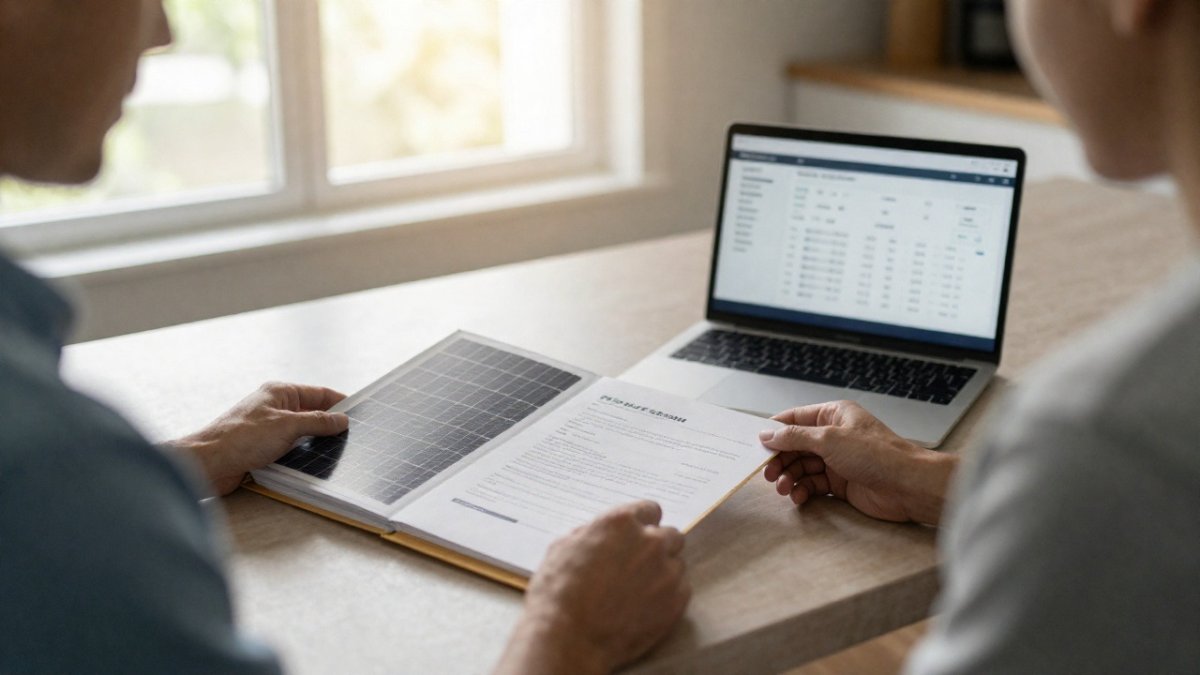
Start with a folder, digital or paper. Gather your signed contract, the permit number, the equipment list with model and serial numbers, and your monitoring app login.
This step takes an hour. It saves weeks later.
Step 2: Check That Your System Is Still Producing Power
Your inverter or monitoring app tells you whether the system is making power right now. Look at today's production curve, not yesterday's. A healthy system shows a smooth arc from morning to evening.
How to Read Your Inverter or Monitoring App
Open the app and find the daily energy view. Compare today's number to the same week last year if the app keeps history. A big drop means something changed.
Watch for these signs:
- Flat line at zero during daylight hours
- Error codes on the inverter screen
- A red or amber status light
- Production that stops by mid-morning
Don't climb on the roof. Don't open the inverter cover. If production has stopped, that's the point to call a professional. Our guide on how to get solar repair after your installer closes walks through the repair path in more detail.
What Happens to Your Solar Warranty if the Installer Goes Out of Business
Manufacturer warranties on panels, inverters, and batteries usually stay valid when your installer closes. The installer's workmanship warranty is often gone.
A manufacturer warranty covers the equipment itself.
So what happens to your solar warranty in a solar installer bankrupt case? The equipment side survives. The labor side usually doesn't. Keep your serial numbers. You'll need them for any future claim.
How do I actually file a manufacturer warranty claim?
Most manufacturers run claims through an authorized installer or service provider, not directly through the homeowner. That's the practical hurdle. Here's the path that works:
- Find the model and serial number for each major component. They're on the inverter label, the panel backsheet, and the battery nameplate, and they're often in your original proposal packet.
- Call the manufacturer's support line and ask two questions: is my equipment still under warranty, and what's the claim process for a homeowner whose installer is gone?
- Ask whether the manufacturer requires a certified installer to file or perform the work. Many do for certain claims.
- Get the claim reference number in writing before any work starts.
A new licensed contractor can often help file on your behalf once they have monitoring access and the equipment list. A qualified contractor can help homeowners work through eligible manufacturer warranty procedures, but approval is the manufacturer's call.
What records make a warranty claim go smoothly?
Keep these together in one folder:
- The original signed contract and proposal, including the equipment list
- Model and serial numbers for panels, inverter or microinverters, and battery
- The permit number and final inspection record
- Monitoring account history showing production before and after any fault
- Photos of the equipment and any visible damage
- Any bankruptcy notice or closure letter you received from the installer
A common pattern is a homeowner with a valid equipment warranty but no serial numbers, which stalls the claim while everyone hunts for records. Gathering them now, while the system is still working, is the cheapest insurance you have.
Where does Florida consumer protection fit in?
If you believe the installer took deposits or left work unfinished, Florida has channels beyond the manufacturer.
Watch out: don't sign a release or accept a small settlement from a manufacturer or a successor company without reading what rights you're giving up.
One more caution: some manufacturers require installation by a certified installer for certain claims.
Here's the split that matters most when your installer closes.
| Coverage type | What it covers | What happens when installer closes |
|---|---|---|
| Manufacturer warranty | Panels, inverters, batteries | Usually stays valid |
| Workmanship warranty | Installation labor and roof penetrations | Usually gone |
Step 4: Check for Open Permits and Complete a Florida Solar Permit Close-Out
An open permit is a loose end that can stall a home sale or complicate an insurance claim. Call your city or county building department and ask for the permit status on your address.
A Florida solar permit close-out means the final inspection was passed and the permit was closed with the authority that issued it. Unresolved permit issues often create significant legal complications when selling a house with solar, potentially stalling your transaction until the documentation is properly reconciled.
Why it matters:
- Title companies flag open permits during a sale
- Insurers may question unpermitted work after storm damage
- A future contractor inherits the problem
Ask the building department what's needed to close it. Often it takes an inspection and a signed affidavit.
Solar Installer Went Out of Business: Do I Still Have to Pay?
Yes. If your system is financed through a solar loan or lease, keep paying. The finance company is separate from the installer. Your loan was sold or assigned to a lender at signing, and that lender has no connection to the bankruptcy. Missing payments hurts your credit and can trigger default terms.
But the right next step depends on how you own the system. Here's the branching path.
If you own the system outright
You have no finance obligation to worry about. Your tasks are the paperwork, permit, warranty, and monitoring steps in this guide. Confirm no lien was recorded at installation. Your county clerk's office can tell you what's recorded against the property. If a lien exists from a paid-off loan, ask the clerk what's needed to release it.
If you have a solar loan
Keep paying the servicer, not the installer. Check your loan documents for:
- The servicer's name, phone, and payment portal
- Whether payments are escrowed
- Any lien recorded on your property
- Whether the loan has a dealer or installer recourse clause
A lien stays with the property until the loan is paid. If you're unsure what's recorded, your county clerk's office can tell you. If the loan was sold, the new servicer should have sent you a notice. If you never got one, call the original servicer and ask who owns the loan now.
If you lease or have a power purchase agreement
Keep paying the lease or PPA company. In Florida, these arrangements are regulated differently from owned systems, and the finance company is not the installer. Ask the lease or PPA company three questions: who is the contractor of record now, who handles service calls, and what happens to the agreement if the system stops producing. Get the answers in writing.
If your installation was never finished
This is the hardest case. If the installer took your money and left the job incomplete, the finance company may still expect payment even though the system isn't producing. Don't stop paying without written guidance from the lender. Instead:
- Document what's installed and what's missing, with photos and dates
- Get the permit status from your city or county
- Ask the lender whether the loan has an unfinished-work or dealer-default provision
- File a complaint with the Florida Attorney General's consumer protection office and DBPR if money changed hands for work not done
A new licensed contractor can inspect what's there and tell you what it takes to finish or safely de-energize the partial system. Don't energize or test a partial installation yourself.
What about utility interconnection?
Installer closure doesn't automatically disconnect a working system. Your utility interconnection agreement is between you and the utility, not the installer. If your system is producing and your net metering or interconnection approval is in place, it keeps running.
Watch out: don't sign a new finance agreement or transfer your loan to a new company just because someone calls offering to 'take over' your system. Verify who they are and who they represent before you sign anything.
Step 6: Transfer Solar Monitoring to a New Installer
Monitoring access lets a new contractor see faults without guessing. Most systems tie monitoring to an account the original installer created.
Here's how the transfer usually works:
- The new contractor requests account access from the manufacturer
- You confirm the transfer in writing or by email
- Production history moves to the new account
- Fault alerts now route to the new provider
If you can't log in at all, the manufacturer's support line can help you recover the account. Our team handles this transfer regularly, and you can read more about solar monitoring and warranty claim help for orphaned systems.
Step 7: Hire a State-Licensed Solar Contractor to Inspect and Take Over
Hire a contractor with a valid Florida solar contractor license and verify it on the state database before you sign anything. Ask for proof of insurance, including workers' compensation.
A takeover inspection should cover:
- Roof mounting and penetrations
- Inverter and rapid shutdown function
- Grounding and arc-fault protection
- Battery condition if you have storage
- Permit and interconnection status
Get the findings in writing. Our article on finding reliable solar reinstallation contractors covers the vetting questions in detail, and our solar inspections and diagnostics page shows what a professional inspection includes.
Best for: homeowners who want documented answers before authorizing repairs. Skip if: your system is producing normally and no permit issues exist. You can wait and monitor.
Let Florida Solar Pro Take Over Your Orphaned System
Robert Fulks brings 30+ years of Florida solar experience, with deep focus on battery storage and home backup.
Our Solar Rescue service covers inspection, permit close-out, warranty claims, and monitoring transfer. We're family owned and licensed CVC56702.
If you're near Port St. Lucie, call 772-464-2663. You can also read more on our Solar Rescue service page.
Your system isn't stranded.
Frequently Asked Questions
Is my solar warranty void if the installer goes bankrupt?
Usually not. Manufacturer warranties on panels, inverters, and batteries stay with the equipment, not the company that installed it. What typically disappears is the installer's workmanship warranty, which covered their labor and installation quality. Keep your serial numbers and installation records so you can file a claim with the manufacturer if a part fails. A licensed contractor can help you work through eligible manufacturer warranty procedures, but they can't take over the original installer's workmanship obligations.
Who fixes my solar system now that the installer is gone?
A state-licensed solar contractor with a CVC license can inspect, diagnose, and repair your system. Look for one who services your equipment brands and can document what they find. In Florida, you can verify a contractor's license through the state licensing database before hiring. The right contractor will also help with permit close-out and monitoring access so your system is fully back under qualified care.
Do I still owe my solar loan if the installer went out of business?
Yes, in most cases. Your loan, lease, or power purchase agreement is with a finance company, not the installer. The finance company still expects payment even if the installer closes. Stopping payments can damage your credit and may trigger lien or default terms in your contract. Review your financing documents and contact the lender directly if you have questions about your account or servicing.
What if my solar permit was never closed?
An open permit can cause problems when you sell your home or file an insurance claim. Contact your city or county building department to check the permit status. A licensed contractor can often complete the final inspection and close-out, but requirements vary by jurisdiction. Get the permit number and any inspection records before you call so the process moves faster.