 How-to
How to Fix a Residential Solar System Problem Safely
Last Updated: November 15, 2026
Quick Summary
A residential solar system repair starts with checking monitoring data, inverter codes and the breaker or disconnect, then calling a licensed technician for anything involving burning smells, scorched wiring or storm damage. Never open energized equipment or climb the roof yourself. A diagnostic visit identifies the failed component before any repair decision.
- Compare recent production with your normal output for the same season.
- Note any inverter error codes, the time they appeared, and recent weather events.
- Check whether the breaker or disconnect is on and whether your utility reports an outage.
- Do not open the inverter cabinet, touch exposed wiring, or climb onto the roof.
- Call 772-464-2663, or 954-372-3358 for South Florida, if you see burning, scorching or storm damage.
Table of Contents
- How to Tell Whether Your Solar System Needs Repair
- Solar System Troubleshooting You Can Safely Do Yourself
- Solar Inverter Repair: Common Faults and What They Mean
- Repairing a Solar System Installed by Another Company
- Storm and Coastal Damage to Solar Systems in Port St. Lucie
- Solar Panel Maintenance That Prevents Costly Repairs
- Booking Your Solar Rescue Assessment with Florida Solar Pro
- Frequently Asked Questions
How to Tell Whether Your Solar System Needs Repair
A residential solar system that stops producing power is usually telling you something specific. The first step is figuring out whether the problem is a simple fault or a component that needs professional residential solar system repair. Most homeowners first notice the issue on their monitoring app, a utility bill, or a dark inverter display.
Start by comparing recent production to your normal output for the same season. A sudden drop, a single panel that never reports, or an inverter showing a fault code are all signs that something needs attention. Gradual decline is normal over years, but a sharp change in a few days is not.
When to stop and call: If you see a burning smell, scorched wiring, cracked panels, a sagging array, or visible damage after a storm, do not investigate further. Call a licensed technician. You can reach Florida Solar Pro at 772-464-2663, or 954-372-3358 for South Florida service. You can also read our guide to why your solar system is not producing power.
Solar System Troubleshooting You Can Safely Do Yourself
Some checks are safe for any homeowner. Read the inverter or monitoring display, note any error codes, and check whether the system's breaker or disconnect is in the on position. Check whether your utility has reported an outage in your area, since grid-tied systems are designed to shut down during a grid outage.
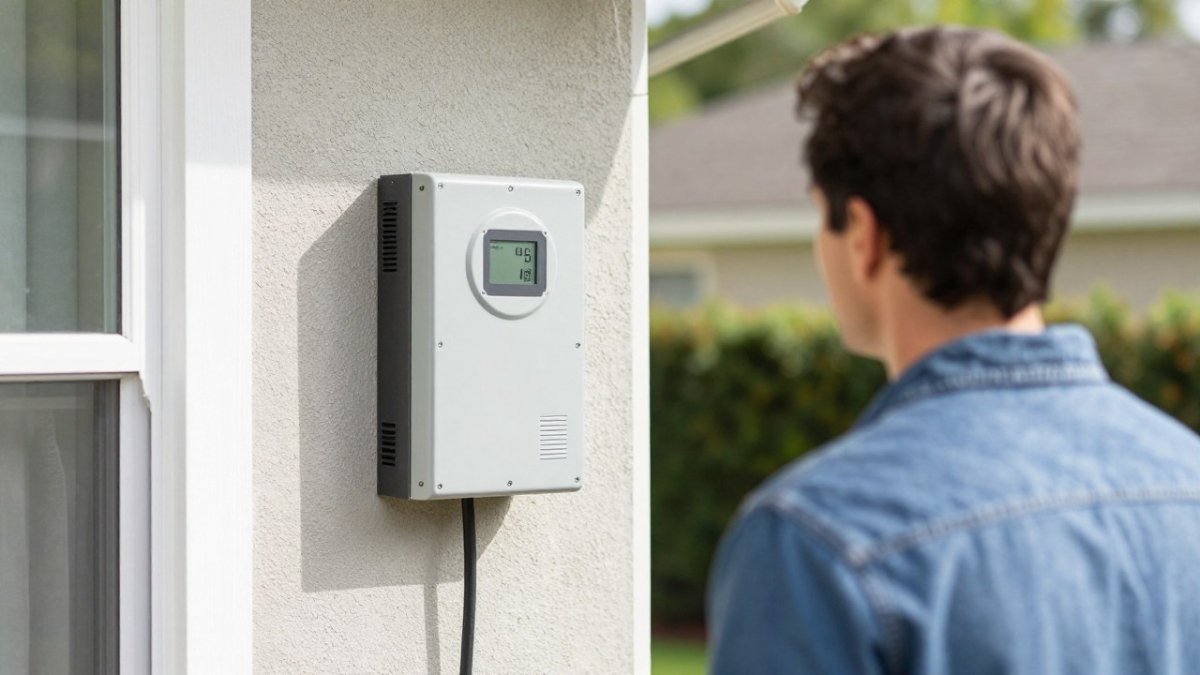
Do not open the inverter cabinet, touch exposed wiring, climb onto the roof, or bypass any safety device. Solar circuits can stay energized even when the utility is off. Write down what you observe, including the time, the codes shown, and any weather events, so the technician has useful information when they arrive.
Solar Inverter Repair: Common Faults and What They Mean
The inverter turns the panels' direct current into household alternating current, so it is the component most often behind a system that suddenly stops producing. The fault code or monitoring alert is the starting point, not the answer. A good repair visit works from the outside in: what the monitoring portal reported, what the inverter display shows, what the meter and disconnects read, and only then what is happening inside the equipment. Our inverter diagnostic and repair service covers Enphase, SolarEdge, SMA, Fronius and APsystems equipment.
What homeowners usually see first. A string inverter may show a red or amber light, a blank screen, or a code such as a ground fault, arc fault, grid-voltage fault, or overtemperature warning. On microinverter and optimizer systems, the monitoring app may show one panel dark while its neighbors keep producing, or a whole branch that drops out together. Those patterns point in different directions, and that is why the monitoring history matters as much as the code itself.
How we narrow it down. A ground fault may trace to a damaged conductor, a wet junction, or a failed internal component. An arc fault may come from a loose connector rather than the inverter. A grid-voltage fault can be a utility-side condition rather than a solar problem, which is why we confirm what the utility is doing before quoting a repair.
What makes Florida harder on electronics. Heat, humidity, salt air along the coast, and lightning activity all stress inverters and their wiring. An inverter mounted in a hot garage or on a sun-baked wall may derate or shut down on the hottest afternoons and recover by evening. That pattern is different from a hard failure, and it changes the recommendation.
Repair or replace? The decision weighs the inverter's age, whether parts are still available, the remaining manufacturer warranty, the cost of the repair against the cost of a replacement, and whether the rest of the system is compatible with a newer unit. A unit that has failed once and is near the end of its coverage is often a candidate for replacement; a newer unit with a single failed component is often a repair. Weighing these factors together is how the decision should be made.
When to stop and call. If you smell burning, see scorched wiring or a cracked inverter housing, or the unit will not power up after a storm, do not open the cabinet or reset it repeatedly. Call us at 772-464-2663, or 954-372-3358 for South Florida service. We service existing systems, including systems installed by another company, and we help with eligible manufacturer warranty procedures.
The table below sums up the common inverter symptoms the article describes and what each one can point to.
| Symptom | Possible cause | What it means for repair |
|---|---|---|
| Ground fault code | Damaged conductor, wet junction or internal component | Needs a technician to trace the fault |
| Arc fault code | Loose connector | Often fixed at the connection, not the inverter |
| Grid-voltage fault | Utility-side condition | Confirm utility status before quoting a repair |
| Overtemperature or derating | Hot garage or sun-baked mounting | Pattern differs from a hard failure |
| One panel dark, neighbors producing | Single-panel or microinverter fault | Check monitoring history before assuming inverter failure |
Repairing a Solar System Installed by Another Company
Many homeowners have a system installed by a company that is no longer in business. That does not mean the system cannot be repaired. Monitoring data, a fault review, and the manufacturer's warranty process can often identify the problem and the correct path forward for residential solar system repair. See how we handle solar monitoring, fault reviews and warranty claim help for systems without an installer.
Gather the original contract, permit records, equipment labels, and any warranty paperwork you have. Warranty coverage depends on the manufacturer's written terms, and it is separate from the original installer's workmanship obligations. Florida Solar Pro services existing systems and can help with eligible manufacturer warranty procedures, but we do not automatically take over another company's warranty.
Storm and Coastal Damage to Solar Systems in Port St. Lucie
Coastal exposure, salt air, and hurricane season can create risks for rooftop solar. Wind-driven debris can crack panels, loosen mounting hardware, and damage wiring. Water intrusion through a compromised roof penetration can cause intermittent faults that appear weeks after a storm.
After a storm, look for panels that are visibly cracked, shifted, or missing, and note any change in production. Do not walk on the roof to check. A professional inspection can document the damage, identify electrical hazards, and plan any roof work. Learn more about our storm damage inspection and repair process. If you are also replacing your roof, the panels will need to be removed and reinstalled, and that work should be coordinated with the roofer.
Solar Panel Maintenance That Prevents Costly Repairs
Routine maintenance catches small problems before they become expensive ones. Keep an eye on your monitoring app, and note any panel that consistently underperforms its neighbors. Keep the surface reasonably clean, and trim trees or branches that shade the array, since shading can reduce output and stress electronics.
Schedule a professional inspection periodically, especially after major storms. Check that mounting hardware is secure, that connections are intact, and that the inverter is operating within its normal range. Preventive attention is usually far less costly than a failed component that causes weeks of lost production.
Booking Your Solar Rescue Assessment with Florida Solar Pro
If your system is underperforming, showing persistent faults, or was damaged in a storm, a professional diagnostic is the fastest way to get answers. Florida Solar Pro's Solar Rescue Assessment is a flat $149 with a two-hour diagnostic cap, and it is 100% credited toward a Service Protection Plan when you enroll within 30 days. The assessment is a diagnostic service and does not include repairs. Compare the solar service plans for PV, pool solar, hot water and battery before you book.
What drives the repair cost after the assessment. Most residential solar repairs come down to a handful of factors: which component failed, whether the part is in stock or must be ordered, whether the work is at ground level or on the roof, whether the repair touches one panel or a whole string, and whether permits or utility coordination are required. Pricing depends on what failed and what the repair involves, so current pricing and estimate details are best confirmed by calling us or requesting a quote through our website.
Scheduling and parts. Scheduling depends on parts availability and whether a manufacturer warranty claim is involved. We do not promise permit dates, utility approval dates, or manufacturer claim approval times.
Warranties, insurance, and the utility. Three separate things can affect a repair, and it helps to keep them apart. The manufacturer's written warranty may cover a failed component, subject to its terms. The original installer's workmanship obligations are separate and stay with that installer. Our warranty covers our own work. If a storm caused the damage, your homeowner's insurance may apply, and we can document what we find so you can file a claim. If the repair affects interconnection, your utility may need to be involved. We help with eligible manufacturer warranty procedures, but we do not automatically take over another company's warranty.
Who does the work. Our own crew performs our solar work, and we are fully insured, including workers' compensation. Owner Robert Fulks brings more than 30 years of solar experience, with a focus on battery storage and home backup. Florida Solar Pro is family-owned and woman-owned, and we service systems across our territory from south of Daytona to Miami and west to Okeechobee and Sebring.
To book, call 772-464-2663, or 954-372-3358 if you are in South Florida. You can also visit our contact page to request service, or review our solar repair services to see what a visit covers.
Florida Solar Pro · Solar Energy Professionals · 1930 SW Biltmore St, Port St. Lucie, FL 34984 · 772-464-2663 · Licenses CVC56702 · CPC1458189 · CAC1817178 · SCC131153056
Frequently Asked Questions
Is it expensive to repair a residential solar system?
Repair cost depends on what has failed, how easy the equipment is to reach, and whether replacement parts are still available. A loose connection or a monitoring fault is usually far less costly than an inverter replacement or storm-damaged panels. Florida Solar Pro offers a Solar Rescue Assessment for $149 flat, with a two-hour diagnostic cap, and 100% of that fee is credited toward a Service Protection Plan when you enroll within 30 days. For a repair estimate on your specific system, call 772-464-2663.
Can a different company repair a solar system if the original installer is unavailable?
Yes. Many systems are serviced by a company other than the original installer, especially when that installer has gone out of business. The key questions are whether the technician can access the equipment's make and model, and whether any remaining manufacturer warranty can still be honored. Florida Solar Pro services existing systems and helps with eligible manufacturer warranty procedures, but we do not automatically take over an installer's warranty. Warranty terms should always be confirmed against the applicable written warranty.
When should I stop troubleshooting and call a solar repair professional?
Stop and call a professional if you smell burning, see scorched wiring, notice cracked or water-damaged equipment, or find an inverter displaying a fault code you cannot clear. Do not climb the roof, open energized equipment, or bypass any safety device. Homeowners can safely check the monitoring app, confirm the utility breaker is on, and note any error messages. Once those checks are done without resolving the problem, contact Florida Solar Pro at 772-464-2663 for diagnostics.
Can storm damage affect a residential solar system in Port St. Lucie?
Yes. Wind-driven debris, hail, and hurricane-force gusts can loosen mounting hardware, crack panels, damage wiring, and disrupt inverters. Coastal salt air can also corrode connections over time. After a storm, check your monitoring app for a sudden drop in production and look for visible damage from the ground. Do not walk on the roof to inspect it. Schedule a professional inspection so mounting, wiring, and grounding can be tested before the system is returned to service.