 ultimate-guide
Solar System Maintenance Timeline for 2026
Last Updated: October 23, 2026
Quick Summary
A solar system maintenance timeline for 2026 is a four-tier schedule: monthly monitoring checks, quarterly ground-level visual inspections, one annual professional inspection, and a full inspection after every named storm. Monthly checks catch production drops early, quarterly walks catch the obvious issues, and the annual visit catches what you can't see from the ground.
- Compare monthly production to the same month last year, not to last week, so slow declines don't hide.
- Screenshot your monitoring dashboard on the first of every month to build a service history.
- Never open an inverter cover or disconnect DC wiring; the array is live whenever the sun is up.
- Inverters typically last 10 to 15 years, while panels often carry 25-year production warranties.
- After a storm, look from a safe distance for shifted panels or water stains, then stop and call.
Table of Contents
- What Does a 2026 Solar Maintenance Timeline Actually Look Like?
- Your Monthly Solar Panel Maintenance Checklist
- Solar Inverter Troubleshooting: Enphase, SolarEdge, SMA, and Fronius
- Wiring, Connectors, and Roof Penetrations: The Problems You Can't See
- What Happens During a Solar System Annual Inspection
- Solar Panel Inspection After a Hurricane or Severe Storm
- What If Your Original Solar Installer Is Out of Business?
- Repair or Replace? The Age and Warranty Math
- Frequently Asked Questions
What Does a 2026 Solar Maintenance Timeline Actually Look Like?
A solar system maintenance timeline for in 2026 is a four-tier schedule: monthly monitoring checks, quarterly ground-level visual inspections, one annual professional inspection, and a full inspection after every named storm. That's the whole plan. Everything below is detail. At Florida Solar Pro, we've serviced Florida arrays for 30 years, and this is the schedule we run on our own service calls out of Port St. Lucie.
The Four-Tier Schedule: Monthly, Quarterly, Annual, Post-Storm
Heat, salt air, and lightning do the damage here, not age. Monthly checks catch production drops early. Quarterly walks catch the obvious stuff. The annual inspection catches what you can't see from the ground.
Maintenance Schedule Table
| Tier | When | Who Does It | What It Catches |
|---|---|---|---|
| Monitoring check | Monthly | Homeowner | Production drops, offline inverters |
| Visual inspection | Quarterly | Homeowner, from the ground | Debris, staining, roof damage |
| Professional inspection | Annually | Licensed contractor | Wiring, connectors, torque, grounding |
| Post-storm inspection | After any named storm | Licensed contractor | Penetration leaks, racking, micro-cracks |
Your Monthly Solar Panel Maintenance Checklist
Your monthly job is one thing: read the monitoring app. Compare this month to the same month last year, not to last week. A slow decline hides in week-to-week noise.
What to Check and What It Means
- Production within normal range for the season
- Every inverter and microinverter reporting online
- No error or fault codes in the app
- No new shade on the array
A system that's down one microinverter still produces. It just produces less, quietly, for months. If one panel's output sits well below its neighbors, that's a failing unit, not weather.
Solar Inverter Troubleshooting: Enphase, SolarEdge, SMA, and Fronius
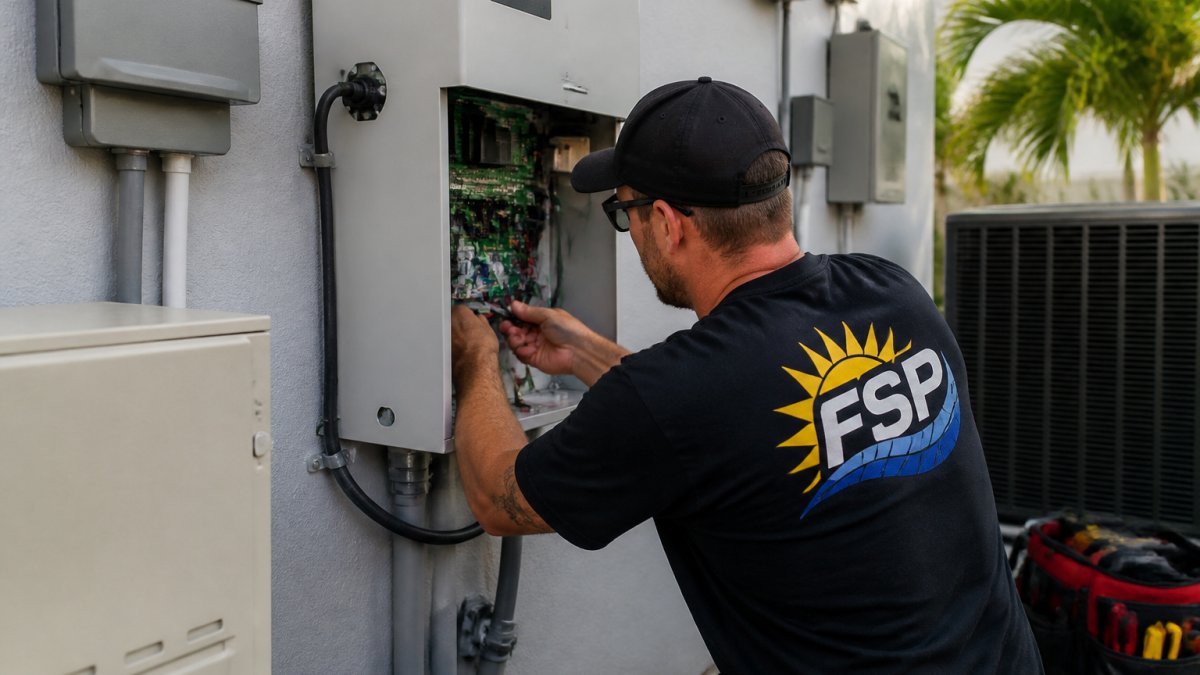
Inverter troubleshooting starts with the error code, not the equipment. Read the code in the app or on the display, write it down, then call. Enphase microinverters report per-panel; SolarEdge reports at the inverter and optimizer level; SMA and Fronius display faults on the unit itself.
Reading the Error Before You Call
- Enphase: a dark microinverter in the app usually means a failed unit or a bad connection at the branch circuit.
- SolarEdge: a red LED with a communication fault often points to an optimizer or the inverter's communication board.
- SMA and Fronius: grid-fault and arc-fault codes are common after lightning. Don't reset repeatedly. A unit that trips three times has a real fault.
Symptom, cause, DIY-or-pro: production loss with an error code is a pro call. Production loss with no code is usually shade, soiling, or a tripped breaker you can check yourself.
Wiring, Connectors, and Roof Penetrations: The Problems You Can't See
The failures that cost the most money start small and invisible. Connectors corrode in salt air. UV breaks down cable jacket. Roof penetrations seal with caulk that cracks after a few Florida summers.
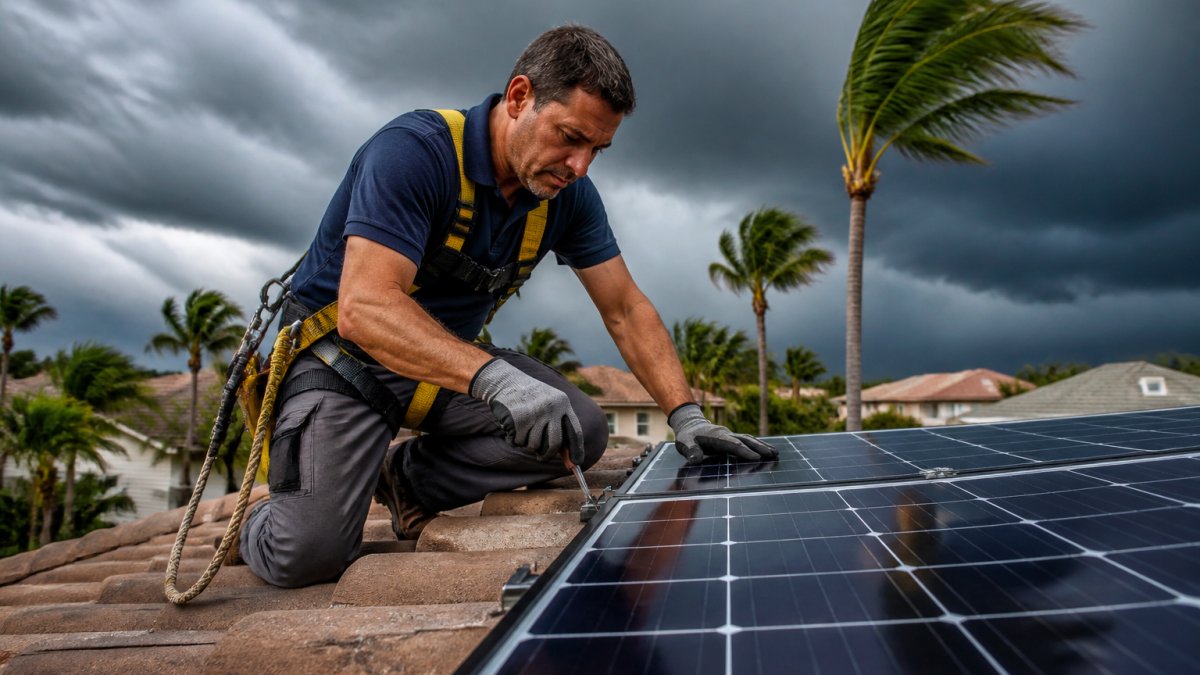
From the ground you can spot staining on the roof deck, a sagging conduit run, or a lifted panel. What you can't see is a loose MC4 connector arcing behind a panel or a flashing that's already letting water in. Those need a pro on the roof with a meter.
What Happens During a Solar System Annual Inspection
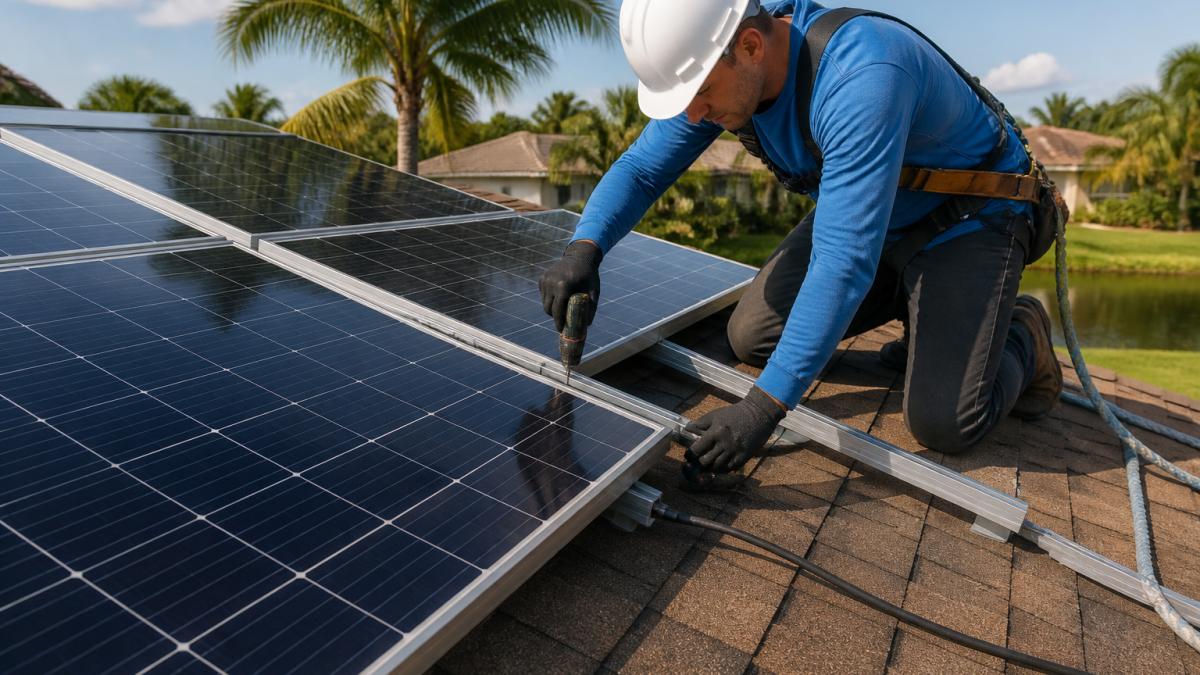
A solar system annual inspection is a top-to-bottom check of the array, wiring, and equipment, done once a year by a licensed contractor. We check torque on racking, test connections, inspect every roof penetration, verify grounding, and review a year of production data against expected output.
We do this across Palm Beach and Broward, from Boca Raton and Delray Beach up through West Palm Beach and Jupiter, and south through Coral Springs, Parkland, Pompano Beach, and Fort Lauderdale. One visit a year beats three emergency calls.
Solar Panel Inspection After a Hurricane or Severe Storm
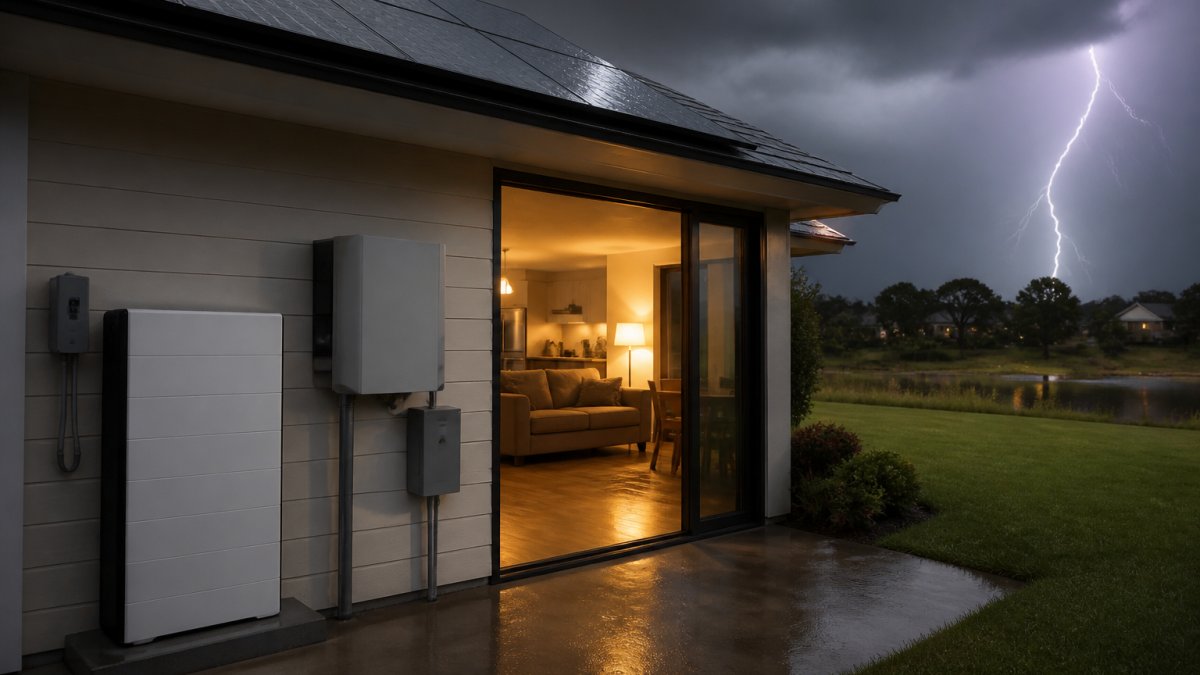
Solar panel inspection after a hurricane or severe storm is not optional. Hurricane season runs June through November, and a storm can loosen racking, crack panel glass, or open a roof penetration without any visible sign from the ground.
After a storm, look from a safe distance for shifted panels, dangling conduit, or water stains on the ceiling below the array. Then stop. Don't climb up, don't reset anything, don't hose off debris near wiring.
When to Stop and Call
Stop and call us when you see any of these: a panel out of line with its neighbors, visible cracking, water intrusion at a penetration, an inverter that won't restart, or production that stays low days after the storm passes. Broward homeowners can reach us at 954-372-3358; Palm Beach at 772-464-2663.
What If Your Original Solar Installer Is Out of Business?
Call a licensed contractor who takes over orphaned systems. More than a dozen Florida installers have closed and left customers with nobody to honor the warranty. We handle warranty takeovers and system rescues as routine work.
Have your original contract, equipment list, and any warranty paperwork ready. If you don't have them, we can often identify the equipment on site. Our Solar Rescue Assessment is $149 flat, capped at two hours, and credited toward a Service Protection Plan if you enroll within 30 days.
Repair or Replace? The Age and Warranty Math
The math is simple: if a part is under warranty, repair it. If it's out of warranty and past its expected service life, replace it. Inverters typically last 10 to 15 years; panels often carry 25-year production warranties.
Frequently Asked Questions
How often should a home solar system be inspected in Florida?
Once a year by a licensed contractor, plus a visual check from the ground every quarter and a monitoring review every month. Florida's heat, humidity, salt air, and June-through-November hurricane season wear on a system faster than in cooler states. After any named storm or severe thunderstorm, do a ground-level look before you reset anything. The annual professional inspection is where torque checks, thermal scans, and connector inspections happen, and it's the one part of the timeline you shouldn't skip.
How can I tell if my solar system is producing less electricity?
Compare this month's production to the same month last year in your monitoring app, not to last month. A drop of more than 10 percent with no change in weather or shading is a warning sign. Check for a string or microinverter reporting zero, a flat production curve on a sunny day, or an inverter showing a fault code. Enphase and SolarEdge both log these events. If the numbers stay low for a week of clear sky, it's time for solar inverter troubleshooting by a pro.
Should I inspect my solar panels after a hurricane or severe storm?
Yes, but only from the ground. Walk the yard and look for tilted panels, lifted edges, dangling conduit, or debris on the array. Check inside for water stains on the ceiling under the panels. Do not climb on the roof or touch wiring. Storm damage often shows up as a roof leak at a penetration or a ground fault that trips days later. A solar panel inspection after hurricane conditions should be done by a licensed contractor before you file an insurance claim.
Can I clean or repair my solar panels myself?
Cleaning from the ground with a garden hose is fine in most cases, and rain does most of the work in Florida. Skip the roof, skip pressure washers, and skip anything that involves opening an inverter or touching a connector. Electrical work on a PV system requires a licensed contractor, and rooftop work without fall protection is how homeowners get hurt. If you see cracked glass, burn marks, or a loose connector, stop and call.
What should I do if my solar inverter stops working?
Write down the error code and the model number first. Check the breaker at the panel and confirm the DC disconnect is on. If the unit is an Enphase microinverter system, the app will tell you which unit is offline. SolarEdge, SMA, and Fronius inverters all display fault codes that point to ground faults, arc faults, or grid issues. Don't open the cover. Call a contractor certified on your brand so the diagnosis and any warranty claim are done right.