 ultimate-guide
Why Is My Pool Water Cold? Causes & Fixes
Table of Contents
- Why Pool Water Loses Heat Overnight
- How to Keep Pool Water Warm
- Solar Pool Heating Benefits for Year-Round Comfort
- Solar Pool Heater Troubleshooting: When Your System Underperforms
- Why Is My Pool Water Cold? Water Chemistry and Temperature
- Cost-Benefit Analysis of Pool Heating Solutions
- Frequently Asked Questions
Last Updated: September 29, 2026
Why Pool Water Loses Heat Overnight
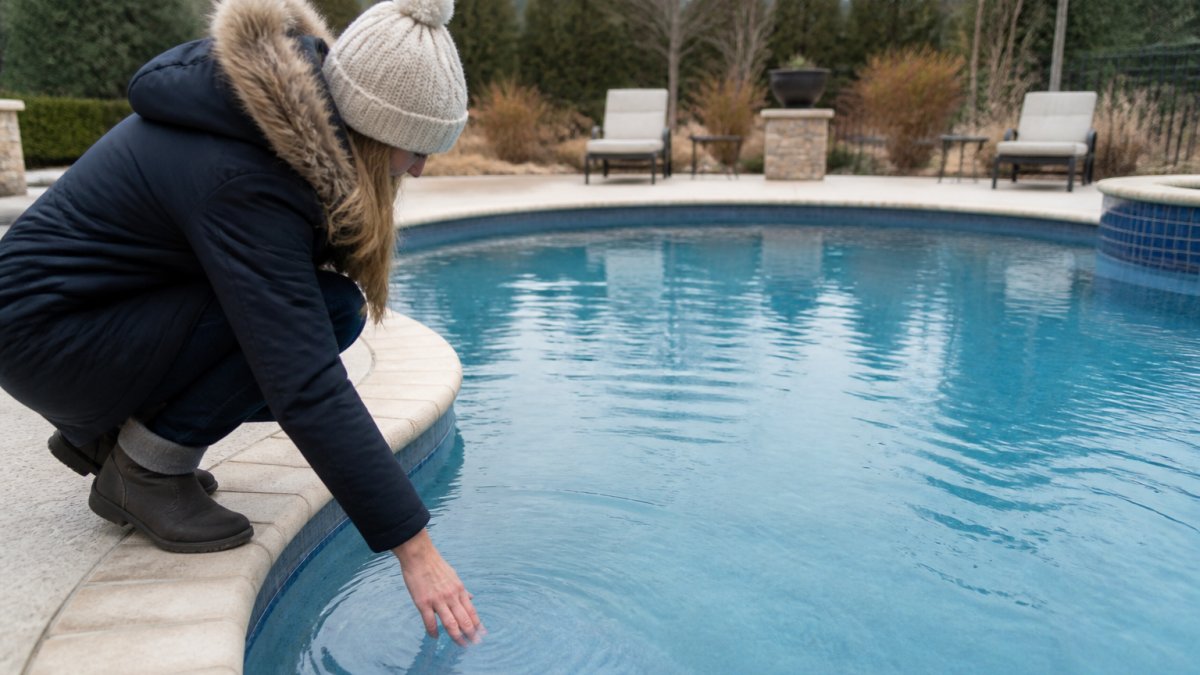
If your pool water cold the morning after a warm day, the cause is almost always heat loss through evaporation, not a broken heater. Water gives up warmth in four ways, but two dominate overnight: evaporation and convection to cooler air.
Evaporation: The Main Culprit
Evaporation is the single largest driver of overnight heat loss in most residential pools. When water turns to vapor, it takes heat with it, and that energy leaves the pool permanently. The process accelerates whenever the water is warmer than the air above it, which is exactly the condition on a cool, clear night.
A few factors speed evaporation up:
- A wide, unobstructed surface area
- Low humidity levels, which let air absorb more vapor
- Wind moving saturated air away and replacing it with dry air
- Warm water meeting cool night air
Wind Chill and Air Temperature
Wind chill does not lower water temperature the way it lowers your skin's perceived temperature, but wind still strips heat from a pool. Moving air sweeps away the humid micro-layer sitting just above the surface, which keeps evaporation running at full speed.
How to Keep Pool Water Warm
You keep pool water warm by slowing heat loss first and adding heat second. Covers, circulation management, and a properly sized heating system work together, and skipping any one of them leaves performance on the table.
Start With the Physics: Thermal Mass and Time-to-Heat
A swimming pool is a huge reservoir of thermal mass. Water holds roughly 8.3 pounds per gallon and has a specific heat of about 1 BTU per pound per degree Fahrenheit. That means a 20,000-gallon pool contains about 166,000 pounds of water, and raising it just 1°F requires roughly 166,000 BTUs, before you account for any losses along the way.
A rough time-to-heat estimate you can do yourself:
- Multiply pool gallons by 8.3 to get pounds of water.
- Multiply that by the temperature rise you want, in degrees Fahrenheit, to get BTUs needed.
- Divide by your heater's rated BTU output per hour.
- Add 20 to 40 percent to cover ongoing losses during the heat-up window.
Using a Pool Cover or Thermal Blanket
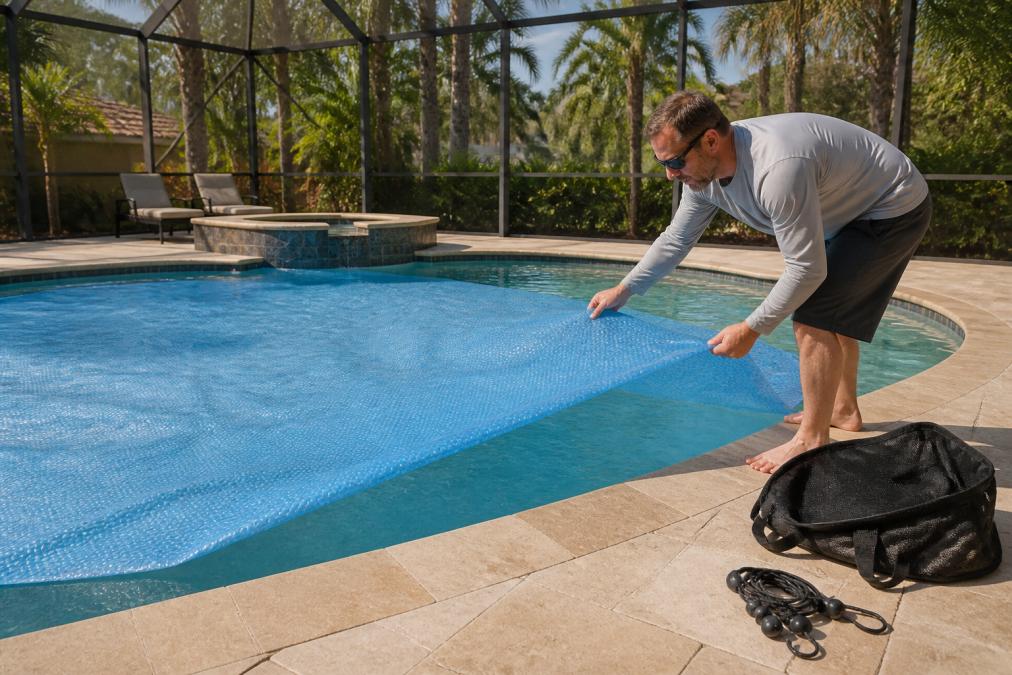
A pool cover or thermal blanket is the highest-return investment for heat retention. The U.S. Department of Energy guidance on pool heating notes that covers cut evaporation and can dramatically reduce the energy needed to maintain temperature.
- Solar blankets float directly on the water and trap heat, best for daily use
- Thermal blankets add insulation for cooler months
- Automatic covers reduce the hassle of manual placement
Managing Water Circulation and Filtration
Water circulation spreads heat evenly and prevents cold spots, but running your pump at the wrong time wastes energy. Circulate during the warmest part of the day so solar gain is distributed before the overnight cooldown.
- Run the pump when the sun is highest for maximum heat absorption
- Keep filtration consistent to protect water chemistry
- Avoid long overnight runtimes unless your system requires them
Climate Changes the Playbook
The same advice does not perform equally everywhere, and the biggest split is between dry and humid climates.
- High-desert and dry-summer climates see aggressive evaporative losses because the air is thirsty. Covers and windbreaks deliver outsized returns here, and daytime circulation matters less than simply keeping the surface sealed at night.
- Humid coastal climates lose less to evaporation per hour, but the moist air also slows daytime heat gain, so pools warm more slowly and hold heat a bit longer. Solar gain windows are narrower, which makes collector sizing and pump scheduling more important than raw cover discipline.
- Inland areas with wide day-night swings benefit most from thermal blankets and from running heat only during the warmest hours.
Solar Pool Heating Benefits for Year-Round Comfort
Solar pool heating benefits homeowners by extending the swim season without the ongoing cost of gas or electric heating. A solar collector array absorbs heat from the sun and transfers it to circulating pool water, and in a warm climate that free energy covers most of your needs.
The advantages stack up:
- Lower operating costs once the system is installed
- Longer usable season, often year-round in mild climates
- Reduced reliance on fossil-fuel heaters
- Quiet operation with few moving parts
Solar Pool Heater Troubleshooting: When Your System Underperforms
When a solar pool heater underperforms, the problem usually sits in the collectors, the controls, or the flow. Diagnosing in that order saves time and money.
Start with the simple checks before assuming the worst:
- Confirm the controller is calling for heat and the sensor readings are accurate
- Check that the diverter valve is routing water through the collectors
- Look for air in the system, which points to a leak or a failing pump
- Inspect collectors for debris, shading, or physical damage
Common Issues with Solar Collectors and Controls
That is where a licensed, authorized technician earns their keep. Florida Solar Pro is an authorized Heliocol and SunStar dealer, so we can diagnose and repair systems we did not originally install.
Why Is My Pool Water Cold? Water Chemistry and Temperature
Cold water changes your pool's chemistry, and ignoring that shift creates a second problem on top of the first. Lower temperatures slow chemical reactions, which affects pH balance, alkalinity, and sanitizer effectiveness.
- Cold water holds dissolved oxygen differently, which can affect how sanitizer behaves
- Lower temperatures slow the breakdown of contaminants
- pH and alkalinity can swing as the water warms and cools
Cost-Benefit Analysis of Pool Heating Solutions
Choosing a heating method comes down to upfront cost versus ongoing expense, and the math favors different options depending on how you use the pool. The right answer is rarely the cheapest system, it is the one whose cost profile matches your swim habits.
How the Options Actually Compare
| Heating Method | Upfront Cost | Ongoing Cost | Efficiency Snapshot | Best For |
|---|---|---|---|---|
| Solar heating | Higher upfront | Very low | Uses free solar energy; output varies with sun and collector area | Year-round use in warm, sunny climates |
| Gas heater | Lower upfront | High | Typically 80-95 percent thermal efficiency | Quick heat on demand, spas, short swim windows |
| Heat pump | Moderate upfront | Moderate | Often delivers 3-6 units of heat per unit of electricity (COP) | Consistent efficiency in mild climates |
| Cover + blanket only | Low | Minimal | Reduces evaporative loss rather than adding heat | Retaining existing heat |
Solar has the highest initial investment and the lowest running cost, which is why it pays off fastest for homeowners who swim often. Gas heats quickly but burns money every time it runs. A heat pump sits in the middle on both counts, and its efficiency advantage shrinks as outdoor air gets colder.
The ROI Question, Framed Honestly
The payback period for any system depends on four variables: how many months you swim, how warm you keep the water, your local energy prices, and how much sun or ambient heat your site actually receives. Rather than trust a generic number, work the problem in this order:
- Estimate your current monthly heating cost, or the cost of the swim season you wish you had.
- Subtract the ongoing cost of the candidate system.
- Divide the upfront cost by that monthly savings figure to get a rough payback in months.
- Sanity-check against equipment lifespan, solar collectors and heat pumps commonly last well over a decade with maintenance, while gas heaters tend to have shorter service lives.
Matching the System to Your Usage Pattern
- Swim daily, mild winters: solar plus a cover usually wins on lifetime cost.
- Swim on weekends, want instant heat: gas is hard to beat for speed, even at higher operating cost.
- Swim often, moderate climate, no roof space for collectors: a heat pump balances upfront and ongoing cost.
- Just want to stop the overnight bleed: a cover or thermal blanket alone is the highest-return move.
Pricing for any of these depends on pool size, roof layout, and equipment, so the honest answer is to get a quote rather than trust a generic number. Ask any installer for the system's rated output, its efficiency rating, and a written estimate of monthly operating cost at your usage level, those three numbers make the comparison real.
Frequently Asked Questions
Why is my pool water cold on a hot day?
Even when the air temperature is high, pool water can stay cold because water has high thermal mass and changes temperature slowly. Evaporation and wind chill pull heat from the surface faster than the sun can replace it. If your pool is not covered overnight, you can lose several degrees before morning. A solar blanket reduces evaporation and helps retain heat.
How does evaporation contribute to pool heat loss?
Evaporation is the largest source of heat loss for most pools. As water turns to vapor, it carries heat away from the surface. The rate depends on air temperature, humidity, and wind. In dry or breezy conditions, evaporation can account for up to 70% of total heat loss. Using a pool cover or thermal blanket traps that moisture and dramatically cuts heat loss.
What is the ideal temperature for a residential swimming pool?
Most swimmers prefer a pool temperature between 78°F and 82°F. For competitive swimming or therapy, 80°F to 84°F is common. If your pool stays below 75°F, it may feel too cold for casual use. A solar pool heater can extend your swimming season and maintain a comfortable temperature without high energy costs.
How do I know if my solar pool heater needs troubleshooting?
Signs include water that stays cold despite sunny days, unusual noises from the pump, leaks around collectors, or a controller that shows errors. Check if the filter is clean and the valves are set correctly. If the system still underperforms, contact a licensed solar pool heating professional for a diagnostic. Regular maintenance prevents most issues.