 ultimate-guide
Solar Energy Battery Backup for Power Outages
Table of Contents
- What Solar Energy Battery Backup Does During Power Outages
- Types of Solar Battery Backup Systems
- How Long Do Solar Batteries Last During an Outage
- FPL Power Outage Protection and Automatic Switching
- Residential Solar Battery Installation Cost and ROI
- Installation Considerations for Your Home
- Maintenance and Long-Term Performance
- Common Power Outage Scenarios and What Your System Can Handle
- Frequently Asked Questions
Last Updated: September 30, 2026
What Solar Energy Battery Backup Does During Power Outages
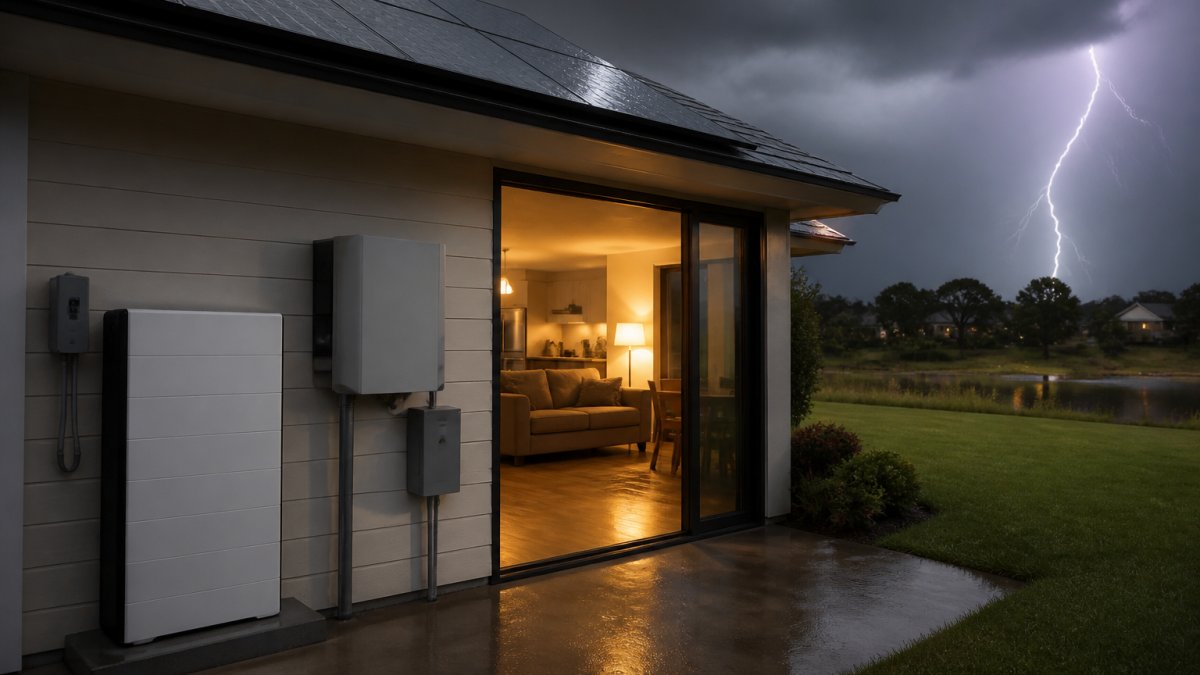
Solar energy battery backup for power outages automatically switches your home to battery-stored energy when the grid fails, keeping essential circuits like lights, refrigerators, and medical equipment running without manual intervention.
A properly sized battery system sustains your home for hours or days depending on consumption and capacity. Unlike generators requiring fuel and maintenance, solar batteries operate silently using energy stored from your panels, invaluable for Port St. Lucie homeowners facing hurricane season disruptions.
Battery backup eliminates worries about food spoilage, medication storage, and device charging by maintaining normal operations during outages. Florida Solar Pro helps homeowners across Port St. Lucie, Okeechobee, and Sebring optimize their systems for maximum resilience.
Types of Solar Battery Backup Systems
Solar battery systems fall into three main categories, each with distinct advantages and trade-offs for different needs and budgets.
Lithium-Ion Battery Systems
Lithium-ion batteries are the modern standard for residential solar backup, offering high energy density and thousands of charge cycles with minimal degradation.
Lithium systems charge and discharge quickly, maintain consistent output across discharge ranges, and tolerate Florida's heat well. The main trade-off is higher upfront cost, though this narrows over their longer lifespan compared to lead-acid alternatives.
Lead-Acid Battery Systems
Lead-acid batteries cost significantly less upfront and are familiar to installers, though flooded, AGM, and gel varieties have different maintenance requirements.
Lead-acid systems require regular maintenance, last 5-10 years versus 10-15+ for lithium, discharge more slowly, and lose performance in extreme temperatures. They remain a budget option for maintenance-committed homeowners.
Hybrid Systems
Hybrid systems pair a smaller lithium battery for instant response with a generator for extended outages, balancing cost and resilience without paying for days of full-home capacity.
Another hybrid approach uses lithium batteries for daily cycling and lead-acid for emergency backup, though this adds complexity. The real advantage of hybrid thinking is matching your solution to actual risk. Port St. Lucie experiences seasonal hurricane risk and occasional grid maintenance outages, not year-round unreliability. A hybrid approach acknowledges that reality and sizes accordingly.
How Long Do Solar Batteries Last During an Outage
How long your solar battery lasts during an outage depends entirely on three factors: battery capacity, your home's power consumption, and which loads you've prioritized. A typical residential battery system stores between 10 and 15 kilowatt-hours of usable energy, though larger systems exist.
The math is straightforward. If your home consumes an average of 2 kilowatts during an outage and your battery stores 12 kilowatt-hours, you have roughly six hours of runtime. But most homes don't run at average consumption during an outage, you reduce usage by eliminating discretionary loads. With intentional conservation, that same system extends to 10-12 hours of essential power. Overnight outages lasting 8-12 hours present no problem. Extended outages lasting 24+ hours require either a second day of solar recharge (if weather cooperates) or acceptance that some loads will pause.
The realistic approach is to size your battery for your actual critical loads, not your entire home. Refrigerator, medical equipment, communication devices, lighting, and water systems typically consume 1-1.5 kilowatts when actively running. This subset of your home can run 8-12 hours on a standard battery. Non-critical loads, air conditioning, electric heating, pool pumps, are the first to pause during battery operation.
FPL Power Outage Protection and Automatic Switching
FPL (Florida Power & Light) serves most of the East Coast of Florida, including Port St. Lucie. Understanding how your solar battery system integrates with FPL's grid is essential for safe, legal operation. When the grid fails, your battery system must automatically disconnect from FPL's lines to prevent back-feeding electricity into the grid, a serious safety hazard for utility workers.
Modern solar battery systems include automatic transfer switches that detect grid failure in milliseconds.
Residential Solar Battery Installation Cost and ROI
The cost of residential solar battery backup varies based on system size, battery chemistry, and installation complexity. A mid-sized lithium system for critical loads typically requires an investment that reflects both the battery hardware and professional installation labor. Pricing depends on quantity, system specifications, local installation conditions, and current market rates. For current pricing and a customized quote for your Port St.
Installation Considerations for Your Home
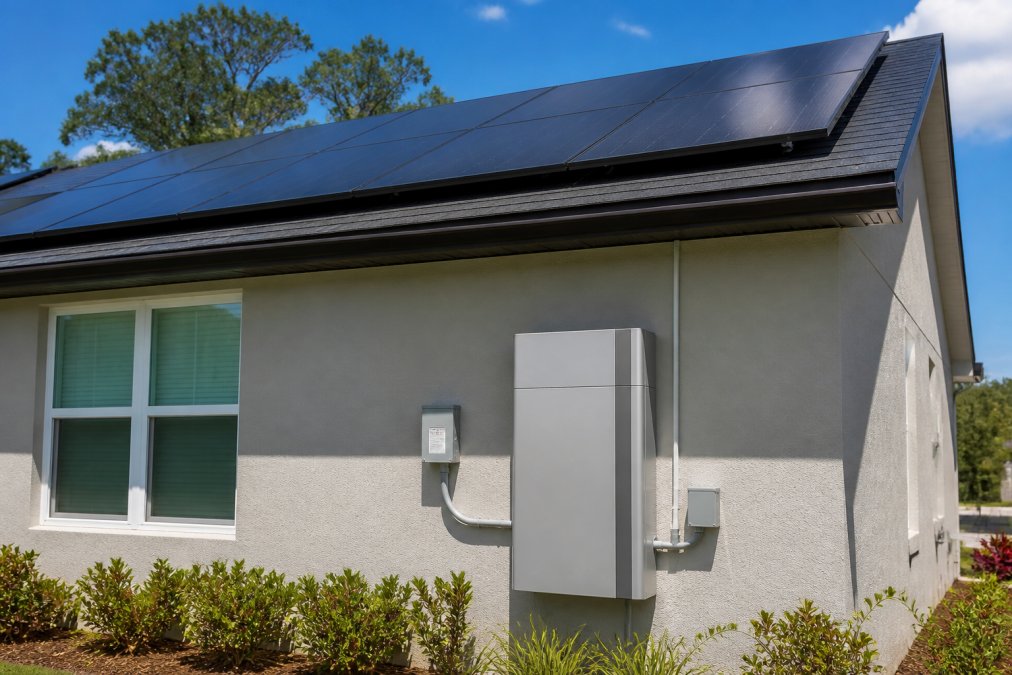
Installing solar battery backup requires careful assessment of your home's electrical panel, available roof or wall space, and local permitting requirements. The battery unit itself is typically wall-mounted near your electrical panel, requiring a dedicated space with adequate ventilation. Lithium systems generate minimal heat, but proper airflow extends lifespan and ensures safe operation. Selecting the right chemistry and capacity for your specific household needs remains a critical step in the home solar battery comparison process to ensure reliable performance during grid instability.
Maintenance and Long-Term Performance
Solar battery systems require minimal maintenance compared to backup generators, but some care extends lifespan and ensures reliable performance. Lithium batteries need no regular servicing, they operate safely without fluid checks, terminal cleaning, or seasonal preparation. The system's battery management electronics monitor cell health continuously and protect against overcharge, deep discharge, and temperature extremes.
Common Power Outage Scenarios and What Your System Can Handle
Understanding real outage scenarios helps you size your system appropriately. A typical summer afternoon thunderstorm knocks out power for 2-4 hours. Your battery system easily covers this duration, keeping critical loads running until FPL restores service. You'll likely end the outage with 50% battery remaining.
| Outage Duration | System Response | Battery Status | Action Needed |
|---|---|---|---|
| 2-4 hours | Handles all critical loads | 30-50% remaining | None |
| 8-12 hours | Critical loads only | 10-20% remaining | Reduce non-essential use |
| 12-24 hours | Depends on solar recharge | Low, needs daylight charging | Monitor weather, prepare for conservation |
| 24+ hours | Insufficient without generator | Depleted | Add backup generator or accept load reduction |
Frequently Asked Questions
How long does a solar battery backup last during a power outage?
Duration depends on battery capacity, system size, and household energy consumption. A typical residential solar battery backup can power essential appliances for 4-12 hours, though larger systems or those paired with active solar production may extend this. Factors include battery chemistry (lithium-ion lasts longer per cycle than lead-acid), depth of discharge settings, and which appliances run simultaneously. Your actual runtime should be calculated based on your home's specific loads and the battery system's kilowatt-hour rating.
How long do solar batteries last during an outage if I'm running multiple appliances?
Runtime decreases significantly when running multiple high-demand appliances. A refrigerator, water heater, and HVAC system together may drain a standard residential battery in 2-4 hours, while running only lights and essential devices could extend backup to 8-12 hours. Most systems prioritize critical loads automatically. Proper sizing during installation ensures your battery capacity matches your home's typical outage power needs. A professional assessment determines which appliances your system can realistically support simultaneously.
What is FPL power outage protection and how does solar battery backup help?
FPL (Florida Power & Light) power outages can last hours or days depending on weather events or grid failures. Solar battery backup provides immediate, automatic protection by switching your home to battery power the moment grid power drops. Unlike generator backup, solar systems operate silently and require no fuel, making them ideal for extended outages. Many systems detect outages in milliseconds, ensuring uninterrupted power to critical circuits. This protection is especially valuable in hurricane-prone regions where extended outages are common.
How much does residential solar battery installation cost?
Residential solar battery installation costs depend on system size, battery type, electrical upgrades required, and installation complexity. Pricing factors include the battery capacity (measured in kilowatt-hours), whether your existing solar system requires modifications, and local labor rates. Many homeowners also qualify for federal tax credits and state incentives that reduce net costs. Contact Florida Solar Pro for a custom quote based on your home's specific needs and energy requirements.
Can I add battery backup to my existing solar panels?
Yes, battery backup systems can typically be integrated with existing solar installations, though compatibility depends on your current inverter and electrical configuration. Some systems require inverter upgrades or additional wiring work. A professional inspection determines whether your existing solar setup can support battery storage or if modifications are needed. Retrofitting is often more affordable than installing battery backup with new solar panels.
What appliances can a solar battery backup power during an outage?
Most residential battery systems can power essential appliances including refrigerators, lights, water pumps, medical equipment, phone chargers, and internet routers. Larger systems may support HVAC units, electric water heaters, or multiple appliances simultaneously. High-demand devices like electric ranges or air conditioning units consume battery reserves quickly. Your system should be sized and configured to prioritize critical loads. A professional can help you identify which appliances are essential for your household and configure your system accordingly.
Do I need solar panels to install a home battery backup system?
No, you can install battery backup without solar panels; however, without solar, your battery charges only from the grid, limiting cost savings and outage protection benefits. Pairing battery storage with solar panels maximizes value by allowing daytime solar production to charge the battery, reducing grid dependence. For true energy independence during outages, solar plus battery is the most effective combination. A solar professional can evaluate whether solar, battery, or both make sense for your home.