 how-to
Emergency Solar Repair After Hurricane Damage | Florida
Table of Contents
- What to Do Immediately After Hurricane Damage to Your Solar System
- Visible Signs of Storm-Damaged Solar Panels and Mounting
- Solar Inverter Not Working After Storm
- Solar System Inspection After Hurricane
- Solar Panel Removal and Reinstallation for Roof Repair
- Solar Battery Flood Damage and Backup Power After Storms
- Repair vs. Replace After Hurricane Damage
- Getting Your Solar System Back Online Safely
- Frequently Asked Questions
Last Updated: October 12, 2026
What to Do Immediately After Hurricane Damage to Your Solar System
A hurricane can damage your solar system in seconds, and emergency solar repair may be needed to restore power safely. Broken panels, loose roof straps, water in your inverter, and downed wiring are common after high winds. Here's what to check, when to stay away, and how to get back online.
Safety first: when to stay away from your system
Do not touch your panels, wiring, or inverter if you see damage. Electricity still flows through broken equipment, even if the system looks offline.
Stay away if you see:
- Exposed wiring or burned connectors
- Water pooling around your inverter or battery
- Panels hanging from roof straps
- Scorched or melted plastic on any equipment
- Your inverter display is dark or flashing red
If your inverter has a manual disconnect switch, turn it off from a safe distance. Don't enter a flooded equipment room or basement.
The federal government's emergency preparedness guidance from FEMA covers what to do after storm damage to your home's electrical systems.
Documenting damage for insurance
Photograph your whole system from several angles before you touch anything. Get close-ups of cracked panels, bent straps, damaged wiring, and water damage.
Call your insurer within 24 hours. Many require prompt notice.
Keep all receipts and invoices from repair work. If your original installer is still in business, contact them about the claim.
Visible Signs of Storm-Damaged Solar Panels and Mounting
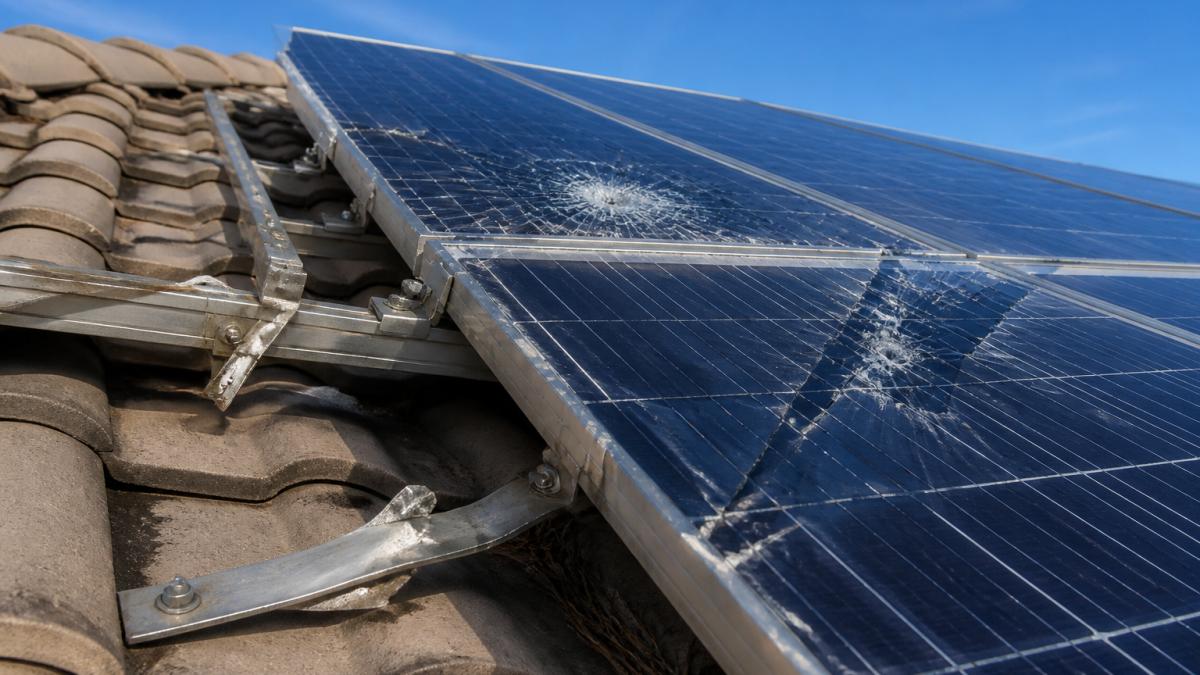
Storm-damaged solar panels show cracks, discoloration, or missing sections. Roof straps and racking may be bent, cracked, or pulled loose. After a hurricane, walk your home and look at the array from the ground.
What broken panels look like
A cracked panel has visible lines through the glass or dark spots where cells are damaged. Small cracks may not stop production. Larger breaks will.
Discoloration, dark streaks, or brown spots usually mean water got inside. That water corrodes cells and wiring.
A panel that's completely separated from its mounting frame is dangerous. It could fall on someone below. Do not try to reattach it yourself.
Roof straps and racking damage
Look at the aluminum rails and stainless steel straps holding your panels down. If they're bent, cracked, or pulled away, your panels can fall.
Roof penetrations, the bolts and flashing where racking attaches, are common leak points after a hurricane.
If your roof straps are visibly damaged, keep the system shut down until they're replaced. A licensed contractor removes the panels, repairs or replaces the racking, and reinstalls.
Solar Inverter Not Working After Storm
Your inverter converts DC power from the panels into AC power for your home. If it's down, the system won't produce usable electricity, even if the panels are fine.
How to check if your inverter is down
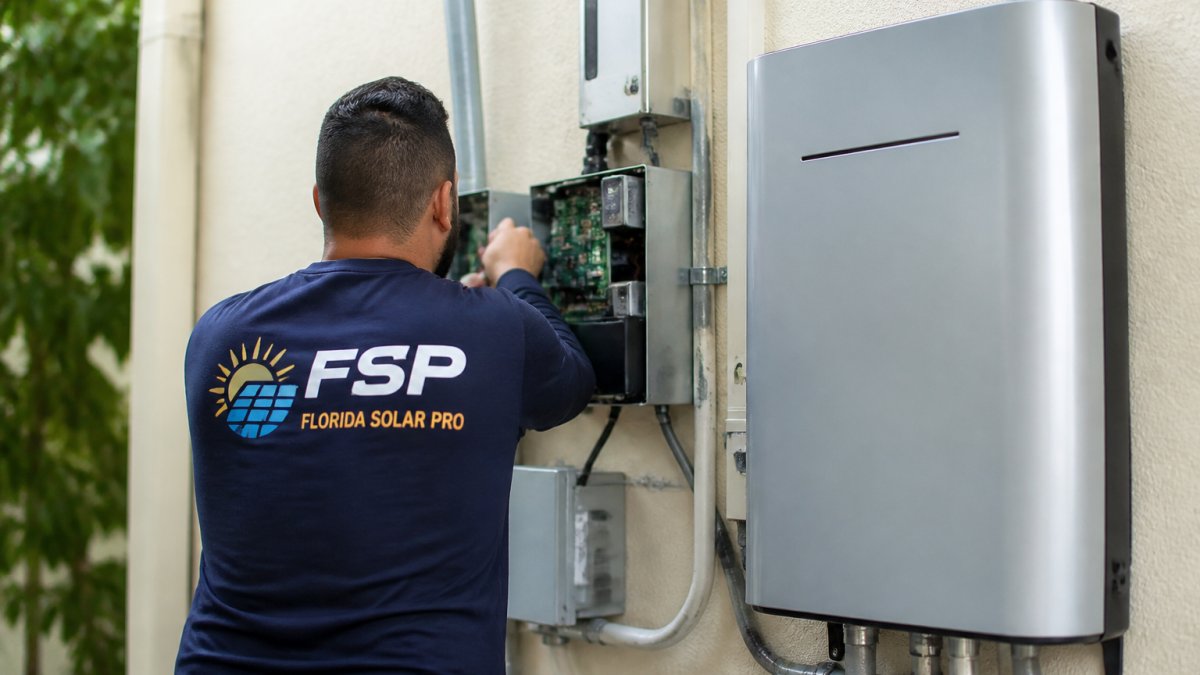
Look at your inverter's display. If it's dark, the inverter has lost power.
If the breaker is on and the display is still dark, your inverter has been damaged.
If the display shows a red light or error code, write down the exact code. Enphase, SolarEdge, and Fronius units each use different codes.
Many inverters have a monitoring app. Check whether it shows your system offline or at zero watts.
Water intrusion and electrical faults
Water inside an inverter is a serious problem.
Inverters usually mount on a wall or pole near your main panel. After a hurricane, check whether that spot flooded.
A wet inverter can be dried out by a professional, but it needs to be removed from service immediately.
Ground faults and arc faults show up as error codes.
Solar System Inspection After Hurricane
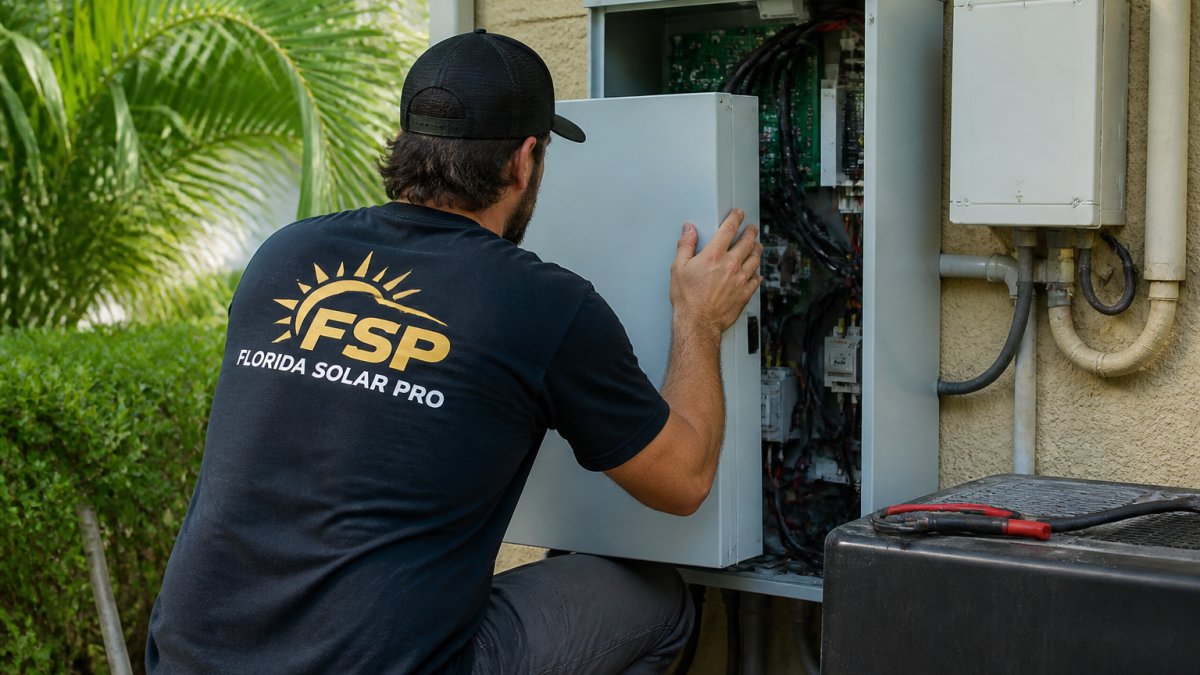
A professional inspection for emergency solar repair tells you what's damaged, what can be salvaged, and creates a record for your insurance claim.
What a professional diagnostic includes
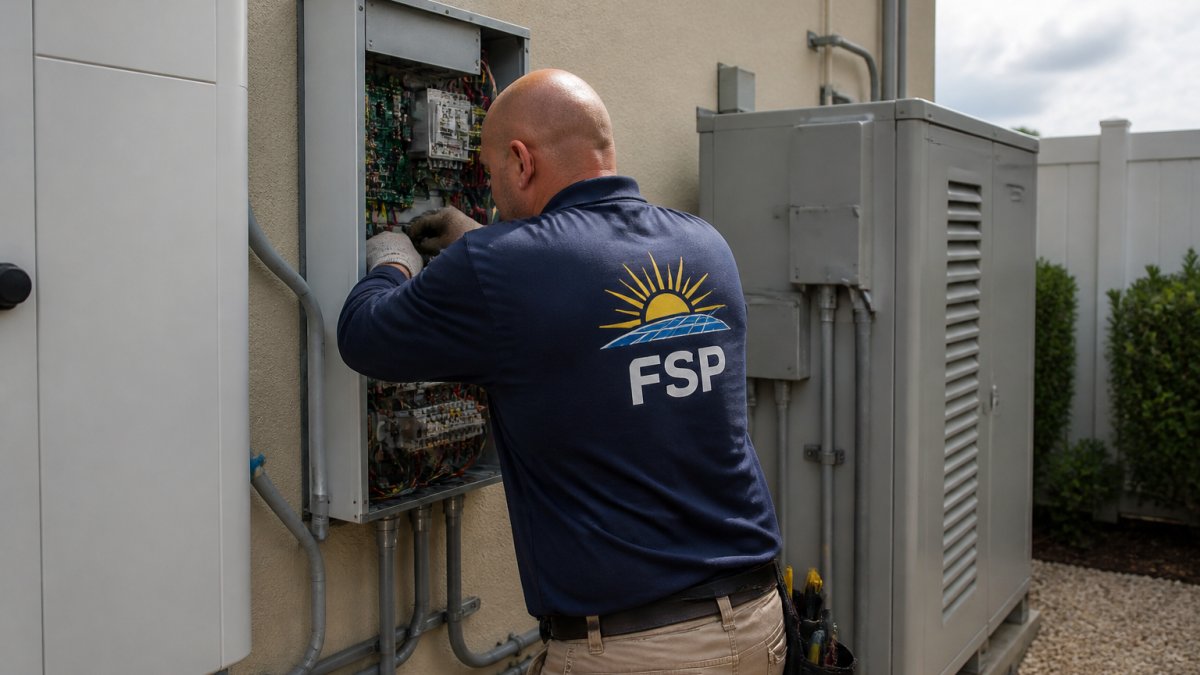
A licensed solar technician will:
- Visually inspect all panels for cracks, water damage, and loose connections
- Check all roof straps, rails, and bolts for damage
- Test the continuity of all wiring runs
- Measure voltage and current from the array
- Inspect your inverter, disconnects, and breakers
- Check your monitoring system and gateway
- Test any batteries for water intrusion or cell damage
- Document everything with photos and measurements
The inspection takes 1-2 hours. It costs money upfront, but it's often required for a claim and tells you whether the system can be repaired or replaced.
Florida Solar Pro offers a Solar Rescue Assessment. The assessment is capped at 2 hours of diagnostic work, and if you decide to move forward with repairs, the fee is credited toward your repair bill. Lucie, Stuart, West Palm Beach, or other areas we serve.
Rapid shutdown and ground fault detection
Your system has safety devices that shut it down if something goes wrong. A rapid shutdown device cuts power to your panels if the inverter loses power or detects a fault.
Ground fault detection watches for electricity leaking to ground. If it finds a fault, it trips a breaker and shuts the system down.
A technician can test these devices and confirm they're working. If they've failed, they need to be replaced.
Solar Panel Removal and Reinstallation for Roof Repair
If your roof was damaged by the hurricane and needs replacement, your solar panels have to come off first. This is called removal and reinstallation, or R&R.
Temporary removal during reroof work
Your roofer needs the panels off before starting. Don't let them pull the panels themselves. They aren't trained to disconnect solar equipment safely. A licensed solar contractor does that work.
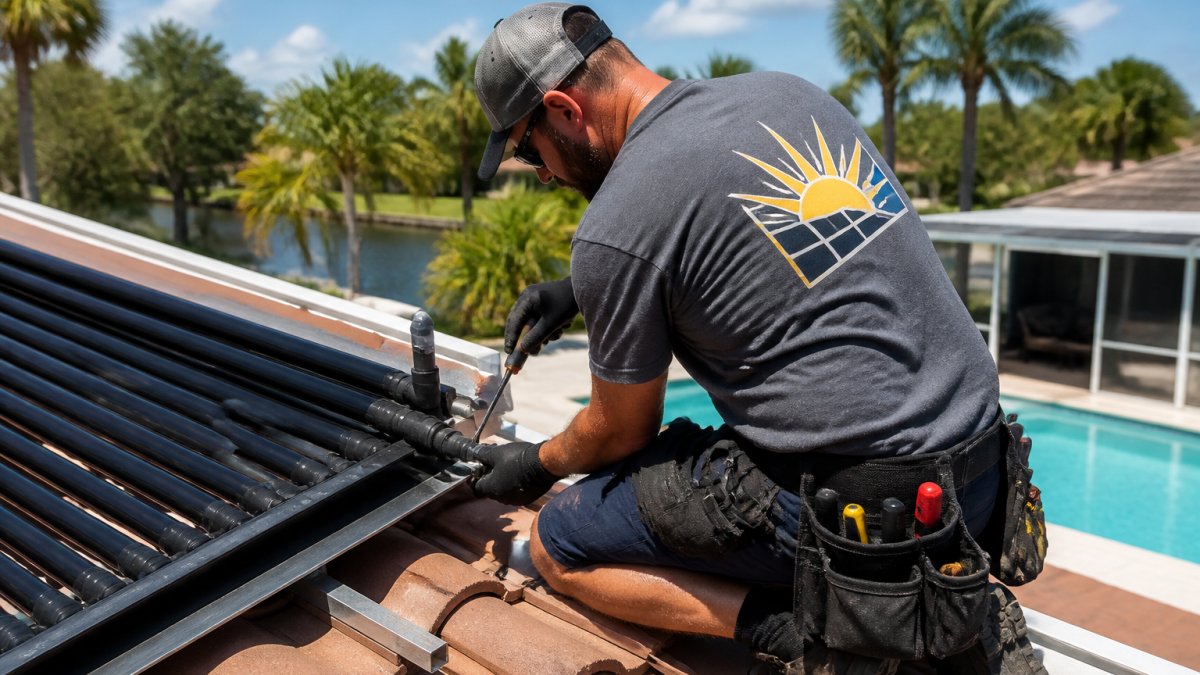
Removal takes a few hours. The technician will:
- Shut down your inverter and disconnect the system
- Unbolt the racking from the roof
- Carefully lower the panels and lay them aside
- Disconnect all wiring and label it
- Cap off all electrical connections to prevent water intrusion
Your system will be offline during the roof work. Once the roof is done, the solar contractor comes back to reinstall the panels, reconnect the wiring, and bring the system back online.
Protecting wiring and disconnects during removal
Exposed wiring is a hazard during roof work.
If roof work runs long, keep the capped connections dry. Water getting in causes corrosion and faults when the system is reconnected.
After the roof is done and the panels are reinstalled, the contractor will test all connections before turning the system back on. This is critical.
Solar Battery Flood Damage and Backup Power After Storms
Battery systems like Tesla Powerwall, Enphase IQ Battery, and Generac PWRcell are vulnerable to flooding. Saltwater is especially damaging in coastal areas like Port St. Lucie and Broward County.
When batteries are unsafe to operate
Do not use your battery if it got wet during the storm. Water inside a lithium battery can cause internal shorts, fires, or explosions.
Signs your battery was damaged:
- The unit got submerged or partially flooded
- Water is visible inside the case
- The display is dark or showing error codes
- The battery won't charge or discharge
- You smell burning plastic or chemicals near the unit
If any of these apply, turn off the battery's disconnect switch and call a licensed technician. Do not try to dry it out or restart it.
Saltwater and freshwater intrusion
Saltwater from storm surge is more corrosive than freshwater. It eats through metal connectors and circuit boards faster.
Freshwater flooding is still dangerous. Water conducts electricity and can short-circuit the battery. Even after it dries, mineral deposits and corrosion remain.
A flooded battery usually can't be repaired. It has to be replaced. Your homeowner's insurance may cover it if the hurricane damaged the battery.
Repair vs. Replace After Hurricane Damage
Deciding whether to fix or replace your solar equipment depends on the damage, the age of your system, and warranty coverage.
Age, warranty, and cost math
A solar panel lasts 25-30 years.
Check your warranty. Most panels carry a 10-25 year defect warranty.
An inverter lasts 10-15 years.
A damaged roof strap or connector can be replaced for less than the cost of a new panel.
Get a repair estimate from a licensed contractor. They'll tell you what can be fixed and what needs replacing.
When your original installer is out of business
If the company that installed your system has closed, you're not stuck. A licensed solar contractor like Florida Solar Pro can take over.
More than a dozen Florida solar installers have shut down over the past few years. They were investor-backed companies run from out of state.
If your original installer is gone, bring us your warranty documents and system details.
Getting Your Solar System Back Online Safely
Once repairs are done, your system needs to be reconnected and tested before it can produce power again.
Reconnection and monitoring checks
A technician reconnects all wiring, tests continuity, and verifies voltage and current are within spec.
Your monitoring should come back within a few minutes. You should see the panels producing power in the app or on your inverter display.
If monitoring won't connect, the gateway may need a factory reset or firmware update. Simple, but it has to be done right.
Utility notification and FPL requirements
If you're on FPL, you may need to notify them before your system goes back online.
Call FPL to report that your system was damaged and repaired. They'll send an inspector to verify the work.
If you had net metering before the hurricane, you'll still have it after repairs. Florida's net metering rules haven't changed.
If your solar system took damage during hurricane season, don't wait. Lucie, Stuart, West Palm Beach, and areas across Florida's east coast, Okeechobee, and Sebring.
Florida Solar Pro · Solar Energy Professionals · 1930 SW Biltmore St, Port St.
Frequently Asked Questions
What should I do if my solar panels are damaged after a hurricane?
First, stay safe. Don't touch exposed wiring, damaged panels, or electrical equipment. Turn off your system at the main disconnect if it's safe to do so. Document damage with photos for your insurance claim. Avoid going on your roof. Call a licensed solar contractor for a professional inspection. They'll assess whether panels, mounting hardware, wiring, or your inverter need repair or replacement. If your original installer is out of business, companies like Florida Solar Pro can take over your system and handle warranty claims.
Is it safe to turn on solar panels after a hurricane?
No. Don't restore power to your system until a licensed professional inspects it for water intrusion, electrical faults, and structural damage. Wet electrical equipment can cause fires or electrocution. Your inverter may have shut down automatically to protect your system, which is correct. A professional inspection will check for ground faults, arc faults, rapid shutdown function, and monitoring system status before reconnection. Only after those tests pass is it safe to bring your system back online.
Why is my solar inverter not working after a storm?
Your inverter likely shut down automatically to protect your system from water damage or electrical faults. Common causes after storms are water intrusion through ventilation holes, ground faults from wet wiring or connectors, or physical damage to internal components. Some inverters have a manual reset button you can try after the system has dried out, but if it won't restart, the inverter may need replacement. A professional diagnostics test will identify whether the inverter can be repaired or needs to be replaced. Enphase, SolarEdge, SMA, and Fronius inverters all have different diagnostic protocols.
Can a solar system be repaired if the roof is damaged after a hurricane?
Yes. If your roof is damaged, your solar panels will need to be temporarily removed so roofers can access and repair the roof. This is called removal and reinstallation (R&R). A licensed solar contractor will disconnect and safely remove your array, protecting wiring and disconnects. Roofers then repair the roof, fix any roof penetrations, and replace straps and flashing. Once the roof work is done and inspected, your solar system is reinstalled and reconnected. The entire process requires coordination between solar and roofing contractors to prevent water intrusion and electrical hazards.