 how-to
Solar System Not Producing Enough Power? Causes & Fixes
Last Updated: October 25, 2026
Quick Summary
A solar system underperforming usually traces to shade or debris on the panels, a failed inverter or microinverter, a monitoring or communications fault, or storm and heat damage. Start with your app's production history and any fault codes, since most underperformance traces to equipment rather than the panels themselves.
- Compare this month's production to the same month last year, not to last month, since Florida summers produce more than winters.
- An offline app is a communications fault, not a generation fault, so check your home internet and router first.
- One panel reading zero on a microinverter system points to that single unit, not the whole array.
- A standard diagnostic runs about two hours for most residential systems, with a written finding at the end.
- Never replace a whole system to fix one part; if the panels still make power, replace the inverter.
Table of Contents
- Why Is My Solar System Underperforming?
- Safe Homeowner Checks Before You Call Anyone
- Solar Monitoring Problems: What Your App Is Telling You
- Solar Inverter Troubleshooting: Faults, Microinverters, and Optimizers
- Solar Panel Performance Problems in Florida Heat and Storms
- When a Solar System Inspection Is the Only Way to Find the Cause
- Repair or Replace an Underperforming Solar System?
- When to Stop and Call a Licensed Solar Contractor
- Frequently Asked Questions
Why Is My Solar System Underperforming?
A solar system underperforming usually comes down to one of four things: shade or debris on the panels, a failed inverter or microinverter, a monitoring or communications fault, or storm and heat damage. For the broader causes-and-fixes overview, see why your solar system is not producing power. Most of it is findable without climbing on your roof.
At Florida Solar Pro, we've spent 30 years diagnosing underperforming residential solar systems across Port St. Lucie and the Treasure Coast. Here's the short version. Your panels probably aren't the problem. The equipment between them and your meter usually is.
Below, we'll walk through the safe checks you can do from the ground, what your app is actually telling you, and the point where DIY stops and a licensed contractor starts.
Safe Homeowner Checks Before You Call Anyone
You can confirm a real problem in about 15 minutes without touching a single wire. Stay on the ground. Don't open the inverter cover, don't get on the roof, and don't poke at anything with a meter unless you're trained.
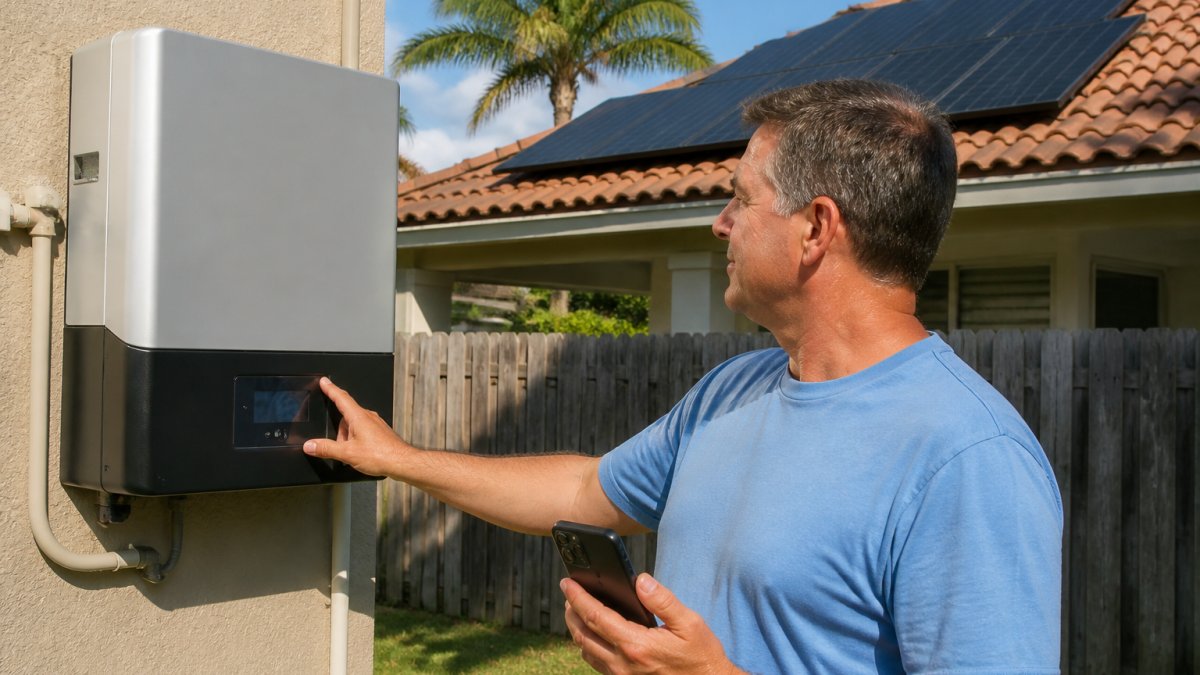
Step 1: Compare Production to Your Baseline
What to check: Pull last month's and last year's production numbers from your monitoring app.
What you'll see: A normal seasonal dip in winter, or a flat line that never recovers.
What it means: Compare the same month year over year, not month to month. Florida summers produce more than winters. A drop against the same month last year is a real signal. A drop against last month is usually just weather.
Step 2: Look for Shade, Debris, and Visible Damage
What to check: Walk your yard and look up. Check for new tree growth, storm debris, cracked glass, or panels sitting at odd angles.
What you'll see: A branch that grew over one array, or a panel with a visible crack.
What it means: Shade on one panel drags down the whole string on older systems. Visible glass damage means that panel is done. Don't get on the roof to check. Binoculars from the ground work fine.
Step 3: Read Your Monitoring and Inverter Display
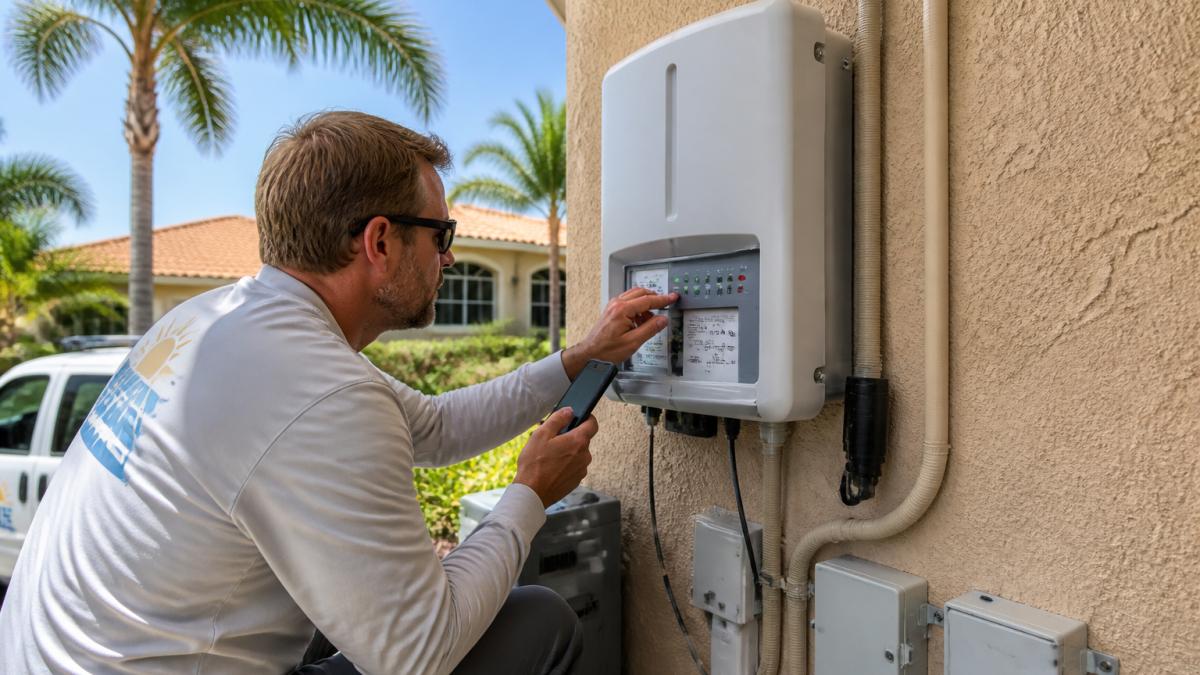
What to check: Look at the inverter's indicator lights and the app's error log.
What you'll see: A red or amber light, a fault code, or a gap in the production graph.
What it means: A solid red light or a fault code is your answer. Write the code down. That one detail saves time on the diagnostic call.
Solar Monitoring Problems: What Your App Is Telling You
Solar monitoring problems show up as an offline system, missing data, or a production graph with holes in it. Nine times out of ten, the panels are still making power. The system just stopped reporting it.
That distinction matters. An offline app is a communications fault, not a generation fault. The usual culprits are a failed gateway, a dropped Wi-Fi connection, or a router that got reset during a storm.
Here's what the common messages mean:
- "System offline" means the monitoring gateway lost its connection. Check your home internet first.
- Flat zero production during daylight means the inverter shut down. That's a real fault.
- Gaps in the graph point to intermittent communications, often a weak signal.
- One panel reading zero on a microinverter system points to that unit.
If your app has been dark for more than a few days, get the monitoring fault diagnosed and fixed rather than waiting it out. You can't spot a real production problem through a dead app.
Solar Inverter Troubleshooting: Faults, Microinverters, and Optimizers
Solar inverter troubleshooting starts with the fault code. Every major brand publishes its own code list, and the code tells you whether it's a grid issue, a heat issue, or a hardware failure.
Enphase's official support documentation walks through microinverter status and fault reporting unit by unit. SolarEdge's troubleshooting guides cover inverter fault codes and optimizer communication errors. Both are worth a look before you call, because the code on your screen maps to a specific cause.
Enphase Microinverter Repair and SolarEdge Inverter Faults
Enphase microinverter repair usually means replacing one unit, not the whole array. Each microinverter works under one panel, so a single failure shows up as one panel producing nothing while the rest run fine.
SolarEdge inverter faults are different. A SolarEdge system uses one central inverter with optimizers under each panel. When that inverter faults, the whole system goes down at once. A common one is a communication error between the inverter and its optimizers.
Symptom, cause, DIY or pro:
- One panel at zero, rest normal: failed microinverter. Pro repair.
- Whole system down, inverter red light: central inverter fault. Pro repair.
- Optimizer comms error: wiring or optimizer failure. Pro repair.
- Inverter hot and derating at midday: ventilation or heat issue. Check clearance around the unit first.
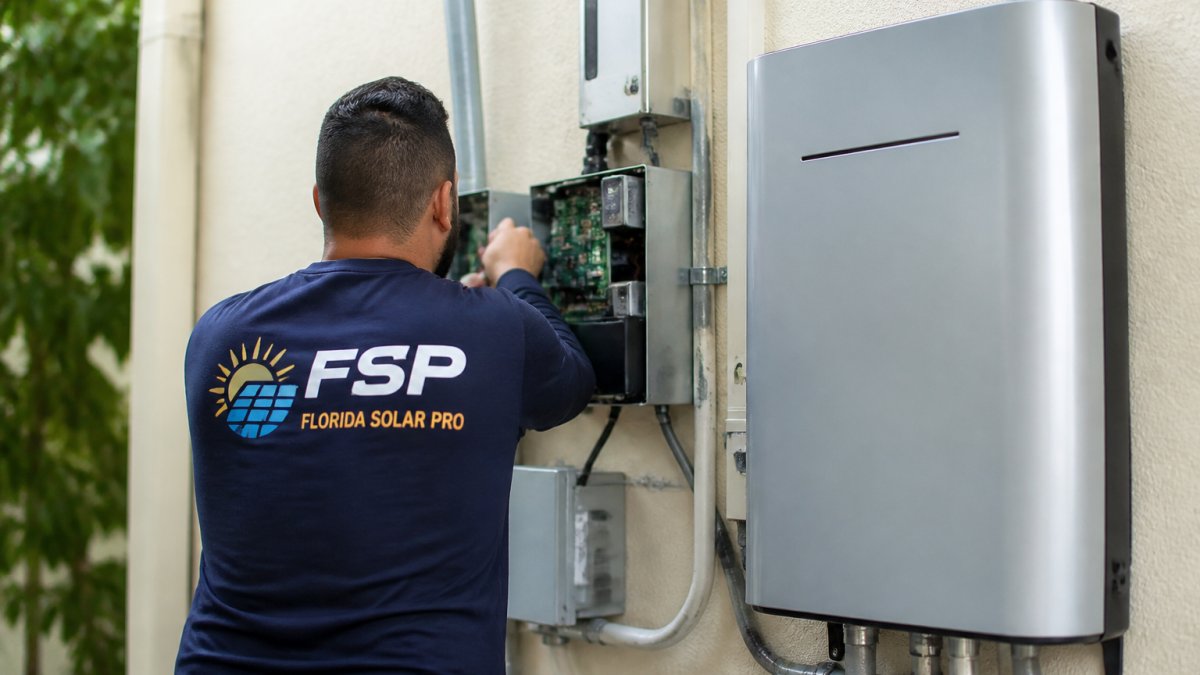
If you've traced it to the inverter, see how our inverter repair service works and get it on the schedule.
Solar Panel Performance Problems in Florida Heat and Storms
Solar panel performance problems in Florida come from heat, UV, and storms more than anything else. Panels lose efficiency as they heat up, so a July afternoon can produce less than a cool spring morning even with a higher sun.
Then there's hurricane season, June through November. After a storm, check for these:
- Lifted or shifted panels on the roof
- Debris lodged under the array
- Water staining around roof penetrations
- A production drop that started the day of the storm
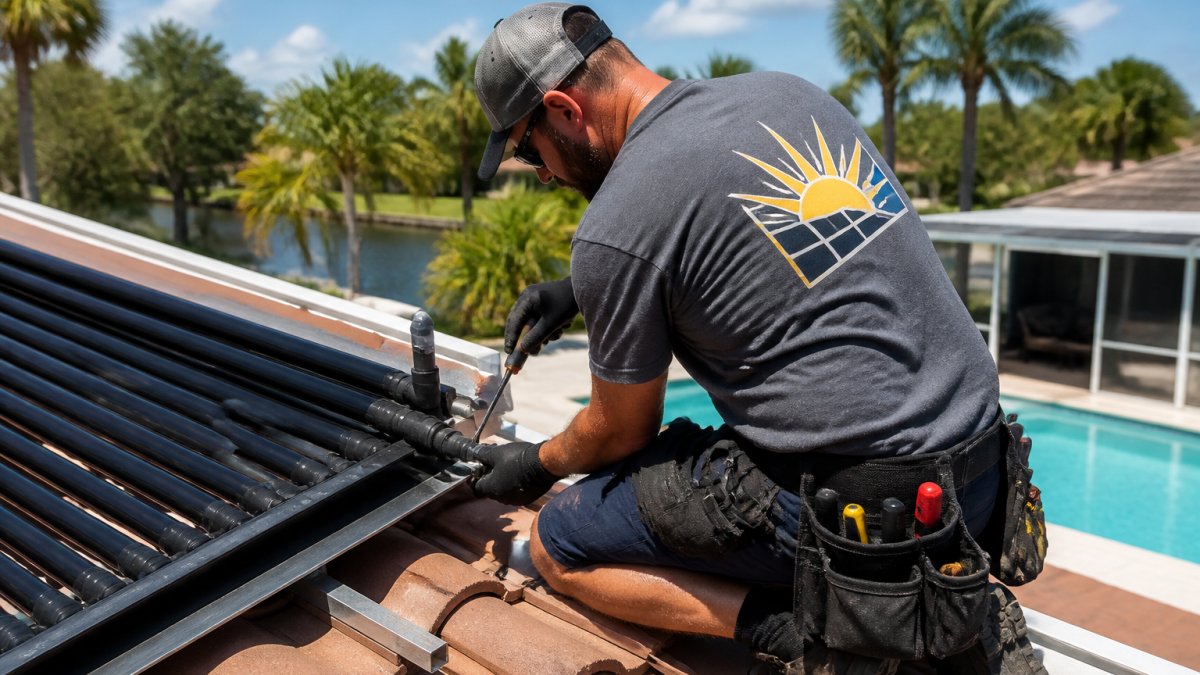
Roof penetrations are the quiet problem. A mounting foot that pulled loose lets water in slowly, and you won't see it until the ceiling stains. If your production dropped after a storm, read our guide on emergency solar repair after hurricane damage before you do anything else.
Inland freeze nights in Sebring and Okeechobee are a smaller factor for PV, but they matter for solar water heating and pool systems. Coastal salt air adds corrosion on top of everything else.
When a Solar System Inspection Is the Only Way to Find the Cause
A solar system inspection is the right move when your checks come up empty but the numbers still don't add up. That means a production drop with no visible cause, a fault code that keeps returning, or a system you inherited from an installer who's no longer around.
This is where most homeowners get stuck. The app says something's wrong. The panels look fine. The inverter shows no code. You've done everything you safely can.
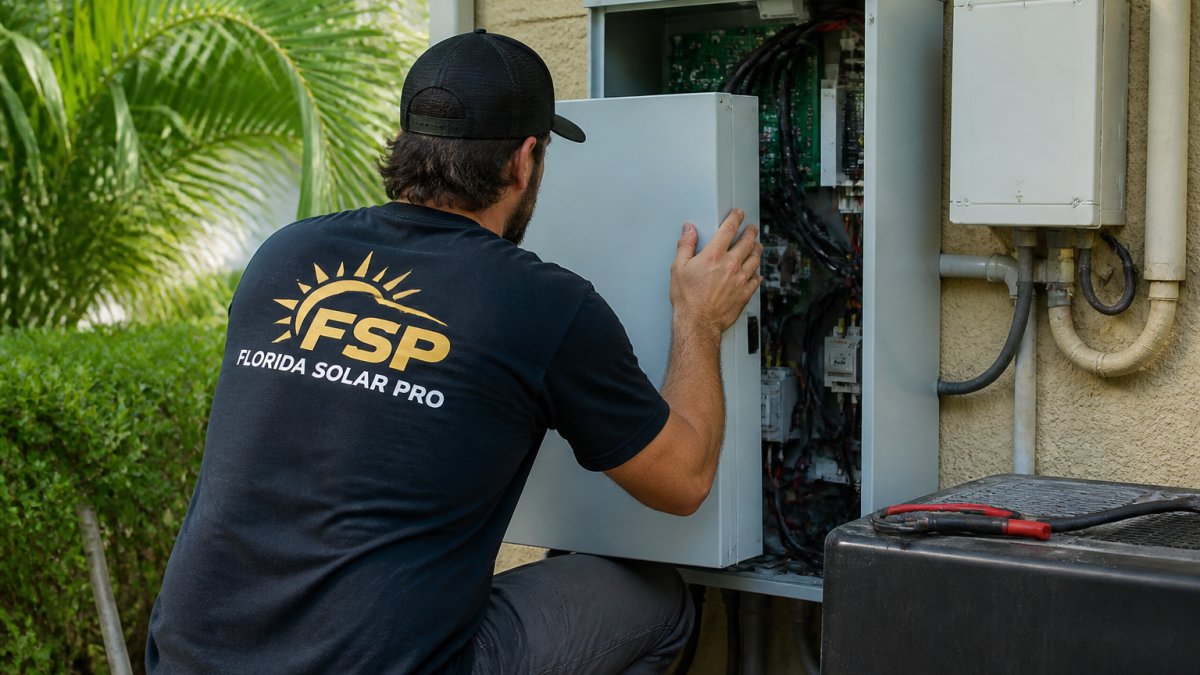
A proper inspection covers what you can't see from the ground: connections under the panels, ground faults, arc faults, torque on the mounting hardware, and the actual performance of each string. If your DIY checks have run out, schedule a professional system inspection and get a real answer instead of a guess.
Repair or Replace an Underperforming Solar System?
Repair wins when the system is under 10 years old and the problem is one component. Replace wins when the inverter is past its warranty and the panels are aging out with it.
Do the age and warranty math first:
| Situation | Age | Warranty Status | What We'd Do |
|---|---|---|---|
| One microinverter dead | Any age | Unit covered or not | Replace the unit |
| Central inverter failed | Under 10 years | Inverter warranty active | File claim, repair or replace |
| Central inverter failed | Over 12 years | Warranty expired | Price a replacement inverter against a new system |
| Storm damage, panels intact | Any age | Check homeowner policy | Repair mounts and penetrations |
| Storm damage, panels cracked | Any age | Check homeowner policy | Replace damaged panels |
| Orphaned system, unknown history | Any age | Unknown | Full inspection first, then decide |
One rule we follow: never replace a whole system to fix one part. If the panels are still making power and the inverter is the only failure, replace the inverter.
If the original installer is gone and you can't get warranty support, that changes the math. We take over orphaned systems and their warranties, which is often cheaper than starting over.
When to Stop and Call a Licensed Solar Contractor
Stop and call when you see any of these:
- A burning smell or scorch marks near the inverter
- A fault code that returns after a reset
- Buzzing or humming from the inverter that wasn't there before
- Water intrusion around roof mounts
- Production down sharply with no visible cause
- Any damage after a storm
Those first three are fire and shock risks. Shut the system down at the disconnect if you know where it is, and call.
We're a licensed multi-trade contractor: CVC56702 for solar, CPC1458189 for pool and spa, CAC1817178 for HVAC, and SCC131153056 for structural. That matters when a problem crosses trades, like a roof leak at a panel mount.
We're also a family company. The owner answers the phone, and the people who quote your job are the people who service it. Nobody in another state decides to close the local branch.
For homeowners in Port St. Lucie, Fort Pierce, and Stuart, we can usually get eyes on a system fast. Same for Vero Beach and Palm Bay up the coast, and Okeechobee and Sebring inland.
Frequently Asked Questions
How can I tell if my home solar system is underperforming?
Compare this month's production to the same month last year in your monitoring app, and check the daily totals against a clear sunny day from a few months back. A drop of more than 10 percent with no change in weather or shade is worth investigating. Also watch for one panel or one inverter producing far less than its neighbors. Your app usually flags that as a per-panel or per-string gap, which points to a hardware problem rather than clouds.
Why are my solar panels not producing enough power after a storm?
Florida storms cause three common problems: debris or shading on the array, water intrusion at roof penetrations, and tripped or damaged inverters. Start by checking your monitoring app for offline units or fault codes. If the whole system is down, look at the inverter display for a ground fault or arc fault code before resetting anything. If only part of the array is down, a damaged microinverter or a loose connection is likely. Do not climb on the roof to inspect panels yourself.
My solar monitoring app shows an alert. What should I do?
Write down the exact alert text and the date it started. Check whether the whole system is offline or just one panel or string. Confirm your internet router is working, since many monitoring problems are just a lost Wi-Fi connection. If the gateway is online and the alert persists for more than a day of clear sun, that is a hardware or wiring issue. Save the alert details for your contractor so the diagnostic visit starts with real information.
Should I repair or replace an underperforming solar system?
Age and warranty decide most of it. If the system is under 10 years old and the panels are fine, replacing a failed inverter or microinverter is almost always the right call. If the array is past 15 years and multiple components are failing, compare the repair total against a new system's production. Check whether the original installer's warranty still applies, since orphaned systems from closed companies often need a warranty takeover before any work starts.