 Comparison
Are There Better Alternatives to DIY Solar Panel Cleaning?
Last Updated: November 17, 2026
Quick Summary
Yes, there are better alternatives to DIY solar panel cleaning, including a one-time professional wash, an ongoing service plan, or a monitoring-based approach where you clean only when production data says it's worth it. Professional cleaning trades roof risk for a service fee and documented condition checks, and a diagnostic visit is the better spend when output drops for reasons cleaning won't fix.
- A professional solar panel cleaning service generally includes a site assessment, low-pressure rinse, soft-bristle wash, and visual inspection.
- You can clean panels without a ladder using a water-fed pole with a soft brush head from the ground.
- Skip pressure washers, abrasive pads, and concentrated chemicals, which can damage seals, cells, and coatings.
- Coastal Treasure Coast properties may need cleaning more often, and a final filtered rinse reduces hard-water spotting.
- A Solar Rescue Assessment is a flat $149 with a two-hour diagnostic cap, credited toward a plan within 30 days.
Table of Contents
- Why DIY Solar Panel Cleaning Isn't Your Only Option
- What a Professional Solar Panel Cleaning Service Actually Includes
- DIY vs Professional Cleaning: Safety, Warranty, and Cost Comparison
- How to Tell Whether Cleaning Was Worth It
- Choosing Your Cleaning Alternative in Port St. Lucie
- Frequently Asked Questions
Why DIY Solar Panel Cleaning Isn't Your Only Option
Yes, there are better alternatives to DIY solar panel cleaning, and for many Port St. Lucie homeowners they're worth considering.
Solar panel cleaning is one of the few maintenance tasks homeowners genuinely can do themselves. That doesn't mean they should.
Below, we'll compare DIY cleaning against professional service on safety, warranty, and cost, then give you a simple framework for deciding which fits your roof and your system.
What a Professional Solar Panel Cleaning Service Actually Includes
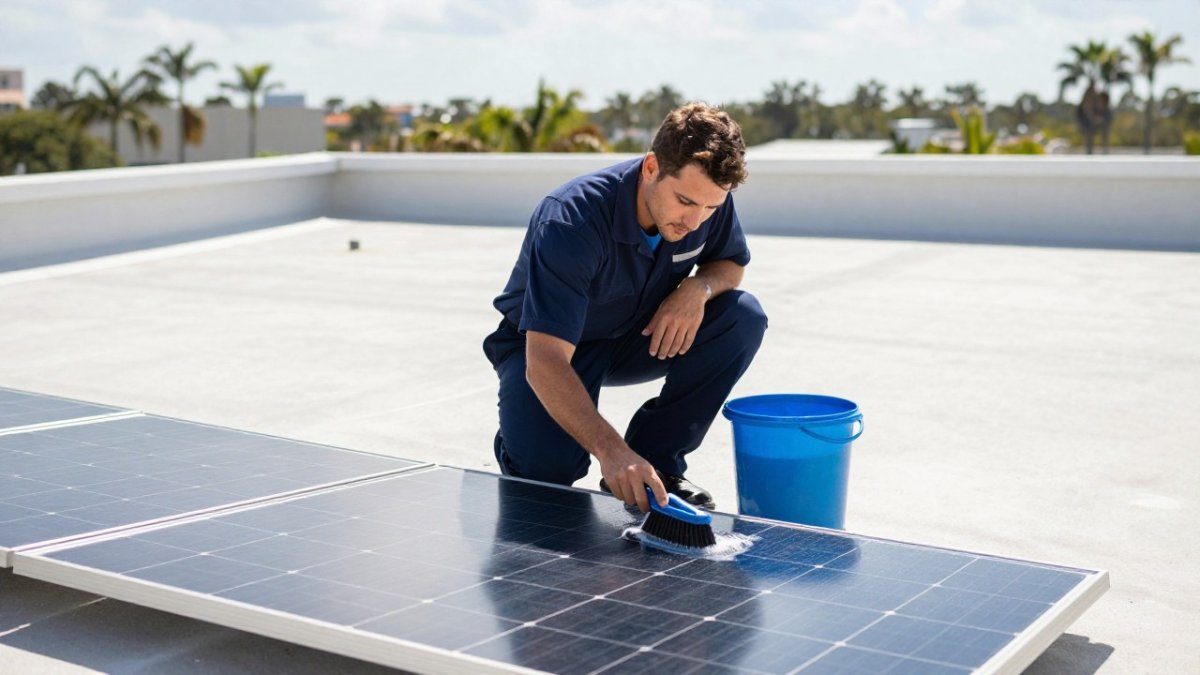
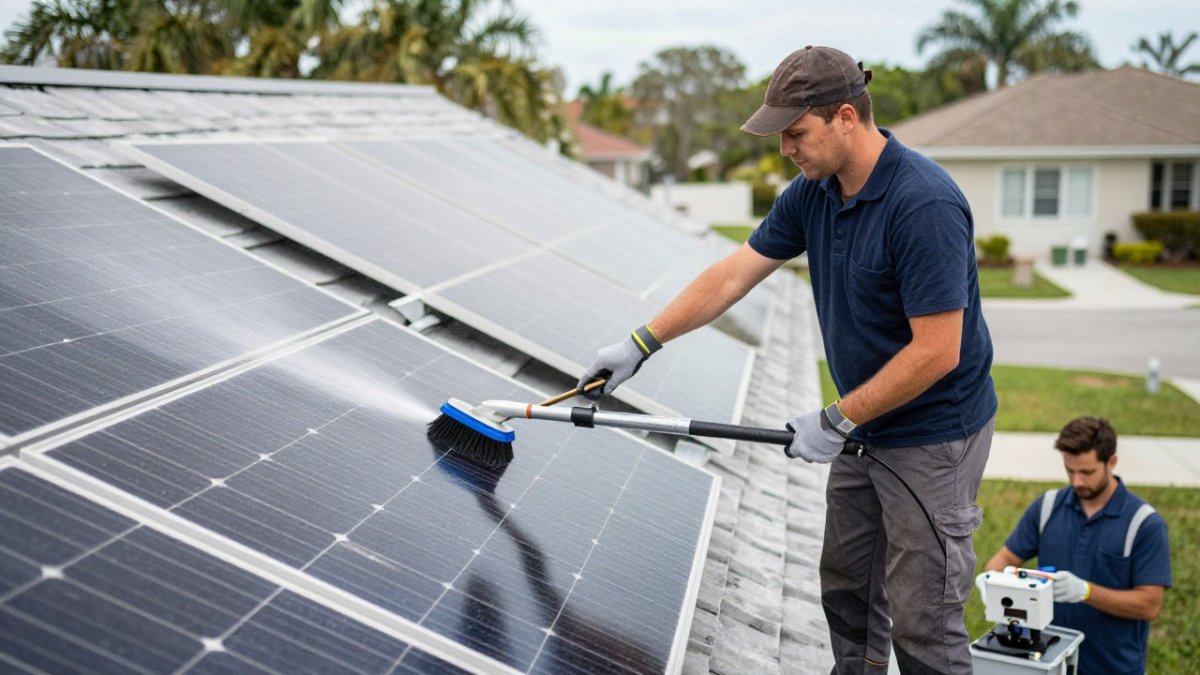
A professional solar panel cleaning service generally involves a site assessment, a low-pressure rinse, a soft-bristle or microfiber wash, and a visual inspection of the array and mounting hardware.
DIY vs Professional Cleaning: Safety, Warranty, and Cost Comparison
DIY cleaning costs less up front but carries real risk, while professional cleaning trades that risk for a service fee and documented condition checks.
Solar panel cleaning safety is the deciding factor for most homeowners.
Warranty is the second factor. Manufacturer instructions often specify approved cleaning methods, and using an abrasive, a pressure washer, or a harsh chemical can complicate a claim later.
What actually drives the price of a professional cleaning
Cleaning cost depends on the job. What drives it:
- System size. A 12-panel array and a 40-panel array are different days of work.
- Roof height and pitch. Single-story and walkable pitches cost less to service than two-story or steep roofs that need anchors and fall protection.
- Access. A clear driveway and room to stage a water-fed pole beat a tight lot with landscaping, pool cages, or a carport in the way.
- Water quality. Deionized or filtered water for the final rinse adds equipment and time but prevents the mineral spotting that hard Treasure Coast water leaves behind.
A quote should tell you which of these it covers. Ask whether any price includes filtered water, a condition check, and insurance.
What DIY really costs
DIY isn't free either. A telescoping water-fed pole with a soft brush head, a hose nozzle, a mild soap, and a squeegee add up, and you're supplying the labor and taking the roof risk yourself.
Cost comparison ultimately comes down to what you're buying. If you want ongoing coverage rather than a one-time wash, compare PV, pool solar, hot water and battery service plans in South Florida to see what each tier includes and how the service calls work. Our solar panel cleaning and maintenance service in Port St. Lucie can quote your specific roof once we see the array.
Watch out: a cleaning quote that doesn't ask about roof height, pitch, or access isn't really a quote, it's a guess that gets revised on the day of service.
How to Tell Whether Cleaning Was Worth It
Cleaning is worth it if your monitoring shows a measurable production increase in the days after, compared with similar weather days before.
Check your monitoring app before and after, and compare like days. A cloudy week after cleaning tells you nothing.
If production still looks low after a cleaning, the cause is likely something else: a failing inverter, a shaded string, or a connection issue. That's the point to bring in professional PV solar inspections and diagnostics rather than cleaning again.
Our guide to the reasons your Florida system's production dropped walks through the common faults in order, starting with your monitoring history.
Choosing Your Cleaning Alternative in Port St. Lucie
For Port St. Lucie homeowners, the realistic alternatives to DIY cleaning are a one-time professional wash, an ongoing service plan, a monitoring-based approach where you clean only when production data says it's worth it, or a diagnostic visit when output drops for reasons cleaning won't fix. Each fits a different situation, and the local conditions here should shape which one you pick.
Start with your monitoring data, not the calendar
Before you book anything, look at your monitoring app. Compare clear-sky days from the last few weeks against clear-sky days from a few months ago, ideally at the same time of morning.
A common pattern we see: a homeowner rinses the array, output barely moves, and the real fault turns out to be electrical. Cleaning is cheap to try, but it isn't a substitute for diagnosis.
How Port St. Lucie conditions shift the choice
- Coastal salt and dust. Properties closer to the ocean on the Treasure Coast collect salt residue and fine coastal dust faster than inland homes. If you're within a few miles of the water, the shorter end of the six-to-twelve-month range is more realistic.
- Spring pollen. A fine yellow film coats panels each spring. A rinse after pollen season often does more for production than a mid-summer wash.
- Storm season. June through November brings leaves, sand, and grit. A post-storm check is worth doing, but if you see cracked glass, lifted mounts, or hanging conduit, stop and call, that's a repair, not a cleaning.
- Hard water. Much of the local water supply leaves mineral spots when it dries on glass. A final filtered rinse matters here more than in softer-water regions.
The decision framework
- Single-story, easy access, light dust, and monitoring shows a slow decline: DIY with a soft brush and hose is reasonable, or a one-time professional wash if you'd rather not be on the roof at all.
- Two-story, steep roof, or panels near the ridge: hire a crew. The fall risk isn't worth the savings.
- Output dropped and cleaning didn't help: book diagnostics, not another wash. Our professional PV solar inspections and diagnostics start with your monitoring history.
- You want the system watched year-round: a service plan makes more sense than repeat one-off visits, because it bundles priority response, warranty management, and repair discounts by tier.
Measuring whether cleaning was worth it
After a cleaning, give it a few clear-sky days and compare daily kilowatt-hour totals against similar weather days before the wash. A cloudy week after cleaning tells you nothing. If the numbers moved, the soiling was real.
Florida Solar Pro is based at 1930 SW Biltmore St in Port St. Lucie and serves homeowners from south of Daytona to Miami, west to Okeechobee and Sebring.
Frequently Asked Questions
How much does professional solar panel cleaning cost?
Pricing depends on roof height, system size, accessibility, and how much mineral or bird-dropping buildup is present. These same factors generally drive service estimates, and no single national figure fits every home. Ask for a quote that lists what is included, such as a low-pressure rinse, soft-brush wash, and a visual inspection of the panel surface and mounting. If your system also needs diagnostics, Florida Solar Pro offers a $149 Solar Rescue Assessment with a two-hour diagnostic cap, credited toward a Service Protection Plan when you enroll within 30 days.
How often should solar panels be cleaned in Florida?
Solar panel cleaning frequency in Florida depends on your surroundings. Coastal homes deal with salt film and wind-blown sand, inland homes get heavy spring pollen and summer dust, and storm season can leave debris on the array. Many homeowners check panels two to four times a year and clean when they see visible buildup, streaks, or bird droppings. Watch your monitoring data too: a slow drop in energy production that is not explained by weather often points to soiling. Manufacturer instructions should guide any cleaning method you use.
Can I clean solar panels on my roof without a ladder?
Yes, in some cases. Ground-mounted arrays and low, easily reached roofs can be cleaned with a water-fed pole and soft brush from the ground, which keeps you off the roof entirely. For steep or two-story roofs, the safest alternative is a professional solar panel cleaning service. Do not lean a ladder against a gutter or climb onto a wet roof to reach panels. If you cannot reach the panel surface safely from the ground, stop and call a professional rather than risk a fall.
Is Dawn dish soap safe for cleaning solar panels?
Manufacturer instructions vary, so check yours before using any soap. Many guides suggest a mild soap solution, but harsh detergents and abrasive cleaners can leave residue or damage coatings. Vinegar is sometimes mentioned for mineral spots, though it should be used carefully and rinsed well. Tap water can leave water spots and mineral deposits as it dries, so a final rinse with clean water helps. Avoid chemicals that are not approved for your panel surface, and never use a pressure washer on the panels or electrical components.
When should I stop trying to clean solar panels myself?
Stop if reaching the panels requires climbing a ladder onto a steep roof, walking on a wet or fragile surface, or working near electrical components you do not understand. Also stop if you see cracked glass, damaged mounting, scorched wiring, or a rapid shutdown issue. Those are signs of a system problem, not a cleaning problem. At that point, a professional inspection is the safer and more useful next step than scrubbing harder. Call Florida Solar Pro at 772-464-2663 to discuss your system.