 comparison
Is Solar Battery Storage Worth It in Florida 2026
Table of Contents
- What Solar Battery Storage Actually Does
- Solar Battery Backup for Power Outages
- How Long Does a Solar Battery Last During an Outage
- FPL Net Metering and Solar Batteries
- Adding Battery Storage to an Existing Solar System
- The Math: Does Battery Storage Pay for Itself
- Why Call Florida Solar Pro for Battery Installation and Service
- Frequently Asked Questions
Last Updated: October 5, 2026
What Solar Battery Storage Actually Does
Solar battery storage captures excess energy your panels generate during the day and holds it for use at night or during cloudy weather. Without a battery, that extra power flows back to the grid. With one, it stays in your home. A solar battery storage system gives you two things: energy independence and backup power when the grid goes down. Integrating this storage capacity into a broader smart home energy strategy further optimizes your consumption patterns, helping you manage climate control efficiency alongside your stored power.
Here's the practical difference. During hurricane season, when FPL lines fail, a home with battery backup keeps running. Lights stay on. Refrigerators keep food cold. Air conditioning runs. Without batteries, you're in the dark until utility crews restore service, which can take days or weeks. That's worth thinking about in Florida.
At Florida Solar Pro, we install and service Tesla Powerwall, Enphase IQ Battery, and Generac PWRcell systems across Port St. Lucie, Stuart, and the surrounding areas. We've seen firsthand how batteries change what homeowners can actually do when storms hit. The math on whether they pay for themselves depends on your power costs, how often you lose grid power, and whether you want backup security beyond financial return.
Solar Battery Backup for Power Outages
When the grid fails, a battery system with proper sizing keeps your critical circuits running. This isn't about powering your entire house indefinitely. It's about keeping the essentials alive: refrigerator, well pump if you have one, medical equipment, phone chargers, some lights.
The system works like this. Your battery charges during the day from your solar panels. When the sun sets or the grid fails, an inverter converts stored DC power to AC power your home uses. A critical load panel routes power to the circuits that matter most. Everything else stays off until either the grid comes back or your battery depletes.
FPL outages in Port St. Lucie used to last hours during afternoon thunderstorms. After hurricanes, weeks weren't uncommon. A battery system doesn't replace a generator, but it starts instantly with no fuel, no noise, and no maintenance. That matters when you're sitting in the dark at 2 a.m. and the air conditioning is already off.
Most homeowners size a battery to cover 4-6 hours of essential loads. That gets you through a typical FPL outage and into the next morning when your panels start recharging. Bigger systems cost more but buy you more security. Smaller ones are cheaper but run out faster.
How Long Does a Solar Battery Last During an Outage
Runtime depends on three things: battery capacity, how much power you're drawing, and how much charge was stored when the outage started.
A Tesla Powerwall holds about 13.5 kWh of usable energy. If you're running 3 kW of loads (air conditioning, refrigerator, lights, well pump), that battery lasts roughly 4-5 hours. If you're running 1.5 kW (just essential circuits), you get 8-9 hours. The math is simple: capacity divided by load equals hours.
Here's what most people miss. That 13.5 kWh is usable capacity. The battery doesn't drain completely before it stops. It reserves power to protect itself. So you get slightly less than the full number suggests.
In Port St. Lucie, a typical outage lasts 4-8 hours. One battery covers that. In Sebring and Okeechobee, where inland freezes can knock out power overnight in winter, you might want two units. In Stuart or West Palm Beach, where coastal storms sometimes last longer, bigger systems make sense.
The real question isn't how long a battery lasts. It's whether it lasts long enough until your panels recharge it or the grid comes back. Most residential setups are sized to do both.
FPL Net Metering and Solar Batteries
This is where the financial picture gets complicated. FPL's net metering rules changed, and they affect whether a battery makes financial sense.
Net metering credits the excess power your panels send to the grid at your full retail rate. If you generate 10 kWh on a sunny day and use 6 kWh, FPL credits you for 4 kWh at your normal rate. That's the deal that made solar attractive in Florida.
A battery changes this equation. Instead of sending that extra 4 kWh to the grid for a full credit, you store it in your battery. You use it at night. That's great for backup power. It's not great for the financial payback if FPL's retail rate is high and their off-peak rate is low.
FPL doesn't yet offer time-of-use rates for residential customers in most of our service area, but that's likely coming. When it does, batteries become more valuable financially. You'll charge your battery during cheap off-peak hours and use stored power during expensive peak hours. Right now, that advantage doesn't exist for most homes in Port St. Lucie or Stuart.
This is the honest part: if you're buying a battery purely for financial return, run the numbers first. If you're buying it for backup power during hurricane season, the financial case is secondary. You're paying for security, not payback.
Adding Battery Storage to an Existing Solar System
Most homes already have solar panels without batteries. Adding a battery afterward is possible but has limits.
Your existing inverter matters most. If you have a string inverter from SMA, Fronius, or SolarEdge, you can add a battery by installing a separate hybrid inverter or a battery-specific inverter that works alongside your current system. This adds cost but keeps your existing panels working.
If you have microinverters from Enphase or APsystems, adding a battery is cleaner. Enphase systems work directly with Enphase IQ batteries. APsystems works with compatible storage. The integration is simpler, and you don't need a second inverter.
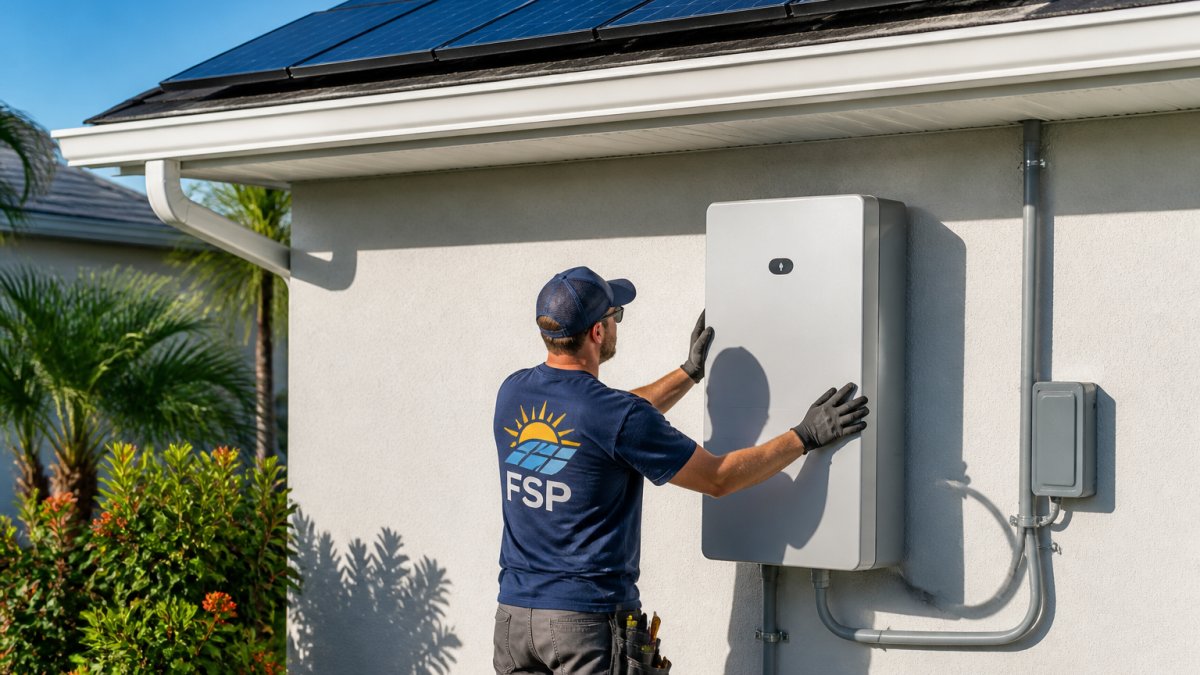
The installation involves running new wiring from your panels or inverter to the battery, installing a disconnect switch for safety, and programming the system to charge and discharge on your schedule. Larger systems in Stuart or Okeechobee might take longer depending on roof access and wiring runs.
One common mistake: assuming your existing breaker panel has room for new circuits. Older homes sometimes don't. We've seen jobs delayed weeks because the homeowner's panel was full. Check this before you commit to a battery purchase.
The cost of retrofitting a battery into an existing system is higher than installing both together from the start. You're paying for extra labor, possibly new wiring, and sometimes a second inverter. If you're planning to add storage eventually, do it during the initial solar install.
The Math: Does Battery Storage Pay for Itself
Battery storage doesn't pay for itself the way solar panels do. Solar panels generate electricity you'd otherwise buy from FPL. Batteries store electricity you already generated. The financial case is weaker.
Here's the honest math. A residential battery system costs money upfront. You use that stored power at night instead of buying it from FPL at retail rates. The difference between what you save and what the battery cost is your payback period.
That doesn't mean batteries are a bad deal. It means they're not a financial investment like solar is. They're a backup power system that happens to save you money on electricity over time.
The value changes if you lose power frequently. In Port St. Lucie, FPL outages average 3-5 hours per year. In Sebring and Okeechobee, inland weather patterns mean more frequent outages, especially in winter.
A few things improve the math. If FPL introduces time-of-use rates, you can charge your battery during cheap hours and use it during expensive hours. If you pair your battery with new solar panels you're installing anyway, the combined cost per kWh is lower than retrofitting.
But if you're purely asking whether batteries pay for themselves in 2026, the answer is usually no. They will, eventually, but not in the typical 7-10 year payback window.
| Factor | Impact on Payback |
|---|---|
| FPL outage frequency | Higher frequency = shorter payback |
| Battery size | Larger capacity = longer payback (higher upfront cost) |
| Time-of-use rates | If available, reduces payback by 2-3 years |
| Paired with new solar | Better economics than retrofit |
| Backup power priority | If critical, payback is secondary |
Why Call Florida Solar Pro for Battery Installation and Service
We've installed and serviced batteries across Port St. Lucie, Stuart, West Palm Beach, and down to Miami for three decades. We're certified on Tesla Powerwall, Enphase IQ Battery, and Generac PWRcell systems.
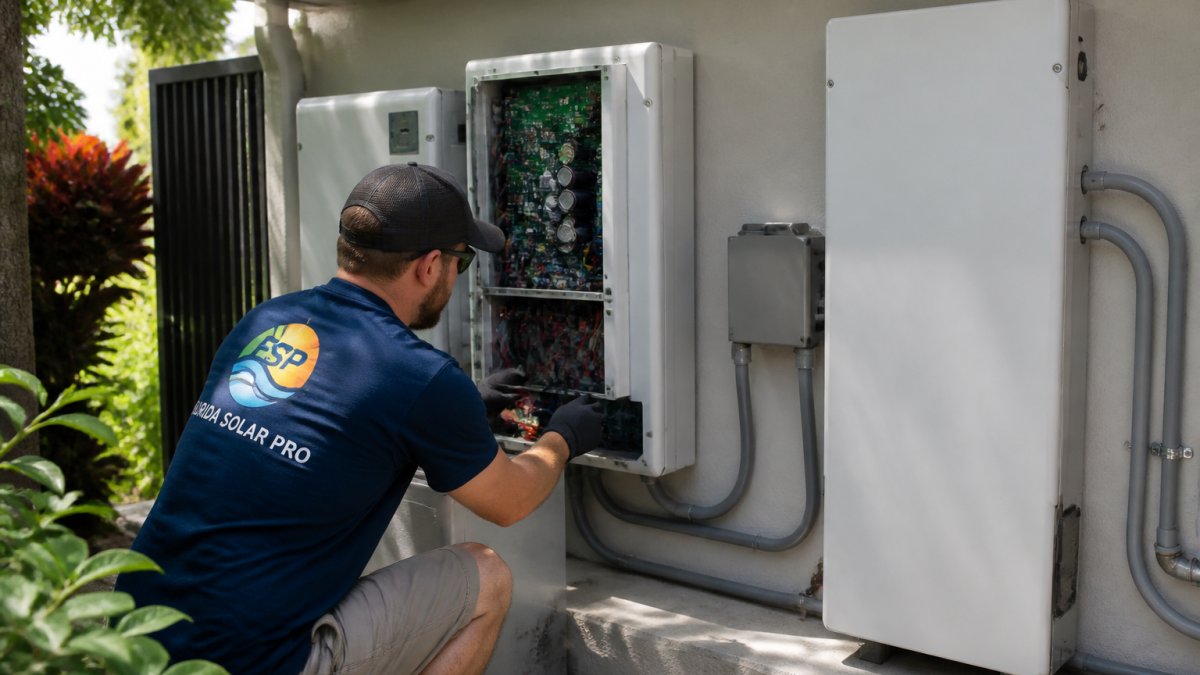
More important: we're here if something breaks. A dozen solar installers have closed in Florida over the past five years. Their customers were left with systems nobody would service. We take over those orphaned systems and their warranties. We don't shut down and leave you stranded.
We offer a Solar Rescue Assessment for a flat fee. We diagnose your existing system, tell you whether a battery makes sense, and show you the real numbers. If you decide to move forward, that fee credits toward a Service Protection Plan.
Call us at 772-464-2663 or visit flasolarpro.com. We serve Brevard County through Miami-Dade. We show up on time. We explain what's broken and what it costs to fix before we touch anything.
Battery storage in Florida is worth it if you want backup power during hurricane season and you're not expecting a quick financial payback. The technology is reliable. The systems work. The honest part is that the financial math is slow. You're buying security and independence, not a high-return investment.
Florida Solar Pro · *, Solar Energy Professionals, * · 1930 SW Biltmore St, Port St. Lucie, FL 34984 · 772-464-2663 · Licenses CVC56702 · CPC1458189 · CAC1817178 · SCC131153056
Frequently Asked Questions
Is a solar battery worth it in Florida in 2026?
Solar battery storage makes sense if you want backup power during outages, especially during hurricane season (June through November). The value depends on outage frequency in your area, your current electricity usage, and how many days of backup you need. In Florida, where afternoon thunderstorms and hurricane-related outages are common, a battery paired with solar panels gives you peace of mind and some energy independence. Battery costs have dropped, but they're still a significant investment. We recommend a Solar Rescue Assessment to evaluate your specific situation and whether a battery aligns with your goals.
How long can a solar battery power a house during an outage?
Runtime depends on battery size and your home's power draw. A typical residential battery system (5-13 kWh capacity) runs essential appliances like refrigerators, lights, well pumps, and medical equipment for 4 to 12 hours on a full charge. If your battery is also being charged by solar panels during the day, you can extend that runtime. In Florida, afternoon sun helps recharge during outages, but cloudy days or nighttime reduce available power. Most homeowners size batteries to cover overnight and early morning hours, then rely on solar recharge during daylight.
Can I add a battery to an existing solar system in Port St. Lucie or Sebring?
Yes. Most existing solar systems can be retrofitted with battery storage, but the process depends on your inverter type and system design. If you have a traditional string inverter, you may need to replace it with a hybrid or battery-ready inverter. Microinverter systems (like Enphase) are easier to upgrade because batteries can integrate directly. We handle retrofits across Port St. Lucie, Stuart, Okeechobee, and surrounding areas. A professional inspection tells you exactly what upgrades are needed and what your options are.
Does FPL net metering work with solar batteries?
FPL net metering credits you for excess solar power your panels send to the grid. A battery doesn't prevent net metering; it just stores energy locally instead of sending it out. If you have a battery, you can store excess power during the day and use it at night instead of drawing from the grid or exporting it. This changes your financial calculation because you're using more of your own solar power rather than relying on grid credits. Talk to FPL about your specific rate plan before adding storage, and have us review your system design to optimize both battery and net metering benefits.