 Listicle
10 Solar Panel Maintenance Tips for 2026
Last Updated: November 20, 2026
Quick Summary
Effective solar panel maintenance means monthly monitoring app checks and ground-level visual inspections, rinsing panels with a garden hose two to three times a year, and booking a professional inspection annually and after any major storm. Before hurricane season, have a pro confirm mounting hardware and wiring are secure.
- Compare monthly production to the same month last year to spot unexplained declines.
- Rinse panels with plain water two to three times a year; skip pressure washers and abrasive pads.
- Have a professional check mounting hardware and wiring before June 1.
- Book a professional inspection annually and after any named storm.
- Stop and call a pro for fault codes, scorched wiring, or water inside the inverter.
Table of Contents
- Why Solar Panel Maintenance Matters in Port St. Lucie
- Your Solar Panel Maintenance Checklist for 2026
- How to Clean Solar Panels on Roof Without Ladder
- When Rain Is Not Enough: Cleaning Frequency and Debris
- Solar Panel Monitoring Troubleshooting: Reading the Warning Signs
- Visual Inspection: What to Look For on Panels and Inverters
- When to Book a Solar Panel Cleaning Service or Pro Inspection
- Schedule Your Port St. Lucie Solar Checkup
- Frequently Asked Questions
Why Solar Panel Maintenance Matters in Port St. Lucie
Solar panel maintenance is the routine work of keeping a photovoltaic system clean, visible, and performing: checking for debris, watching production, and catching small faults before they become expensive ones.
This guide covers practical solar panel maintenance tips for 2026. Owner Robert Fulks brings more than 30 years of solar experience, and our own crew handles our solar service work.
Below, we'll show what you can safely do from the ground, what to leave to a professional, and how to build a schedule that fits Florida weather.
Your Solar Panel Maintenance Checklist for 2026
A workable solar panel maintenance checklist splits into two rhythms: quick monthly checks from the ground, and seasonal tasks tied to Florida's storm calendar.
| Task | How Often | Who Does It |
|---|---|---|
| Read production on your monitoring app | Monthly | Homeowner |
| Visual check for debris and damage from the ground | Monthly | Homeowner |
| Rinse panels with a garden hose | 2-3 times a year | Homeowner |
| Check inverter status light and display | Monthly | Homeowner |
| Look for new tree shading | Twice a year | Homeowner |
| Pre-hurricane roof and mounting check | Before June | Professional |
| Post-storm inspection and production review | After any major storm | Professional |
| Full system diagnostics | Annually | Professional |
Monthly checks you can do from the ground
Start with your monitoring app. Compare this month's production to the same month last year and to the month before.
Then walk the perimeter of your home and look up. Check for bird droppings, palm fronds, leaf litter, and anything loose or discolored.
Finally, glance at your inverter. Most units show a green light for normal operation and a different color or code when something needs attention.
Seasonal tasks before and after hurricane season
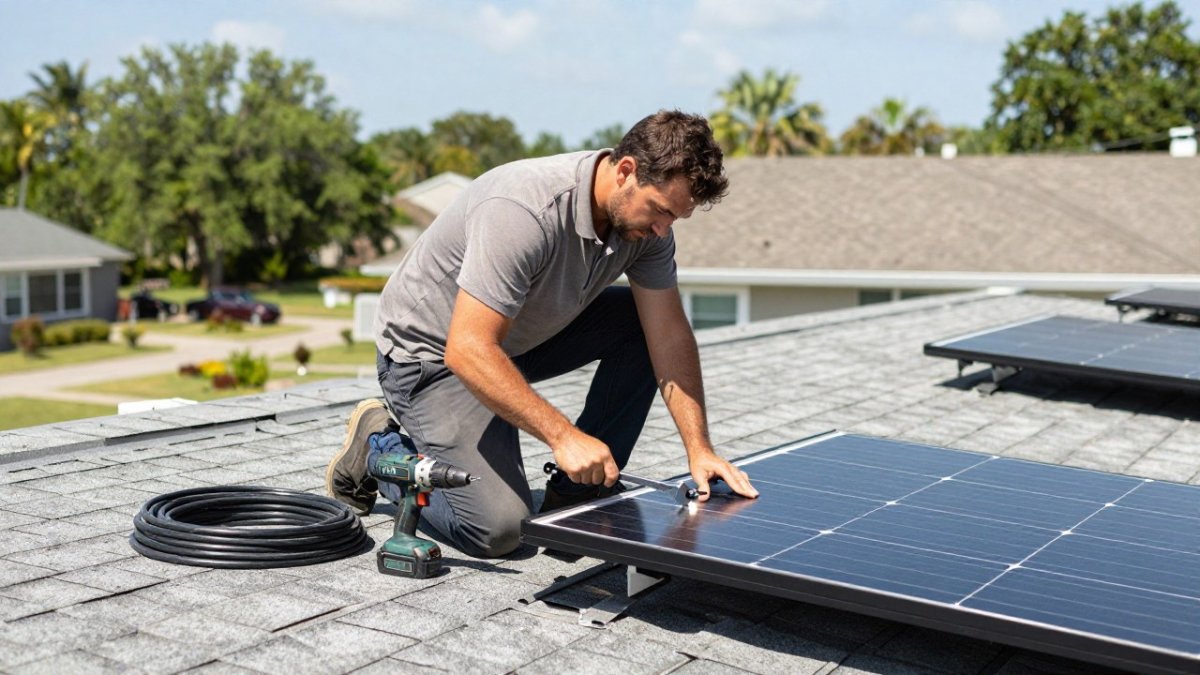
Atlantic hurricane season runs June 1 through November 30, and Port St. Lucie sits in the path of plenty of storms. Before the season, have a professional confirm that mounting hardware, rail connections, and wiring are secure.
After any named storm or significant wind event, don't climb up. Look from the ground, note any visible shift or damage, and schedule a storm damage inspection and repair if anything looks off or production has dropped.
How to Clean Solar Panels on Roof Without Ladder
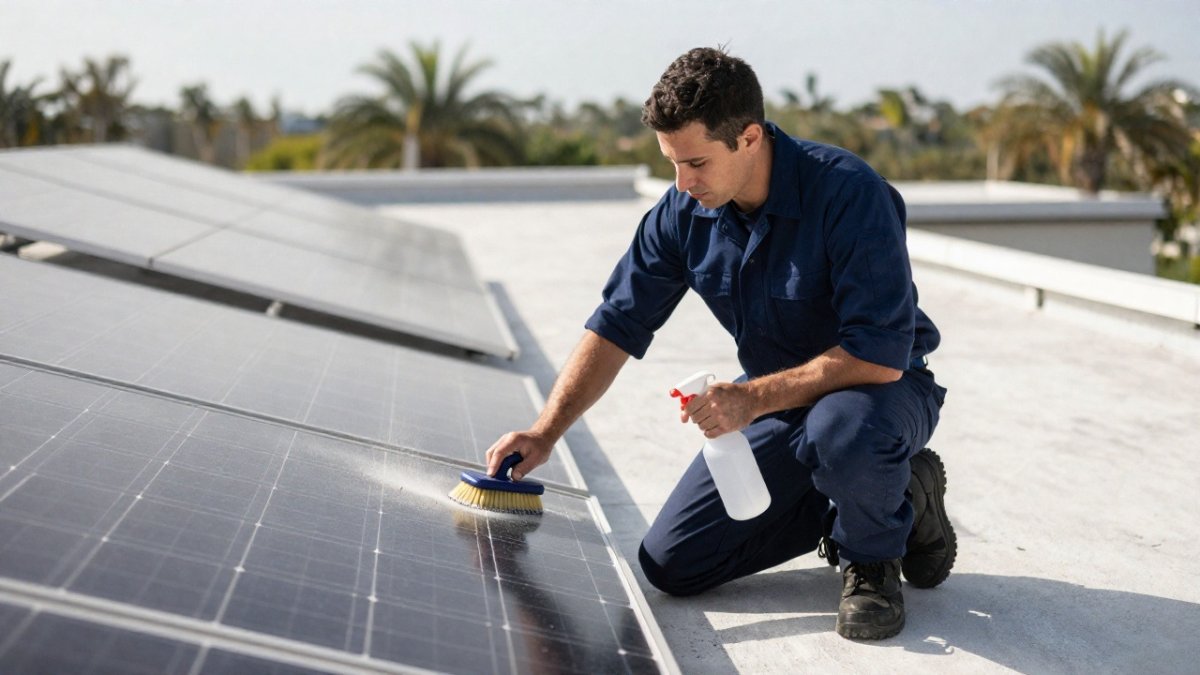
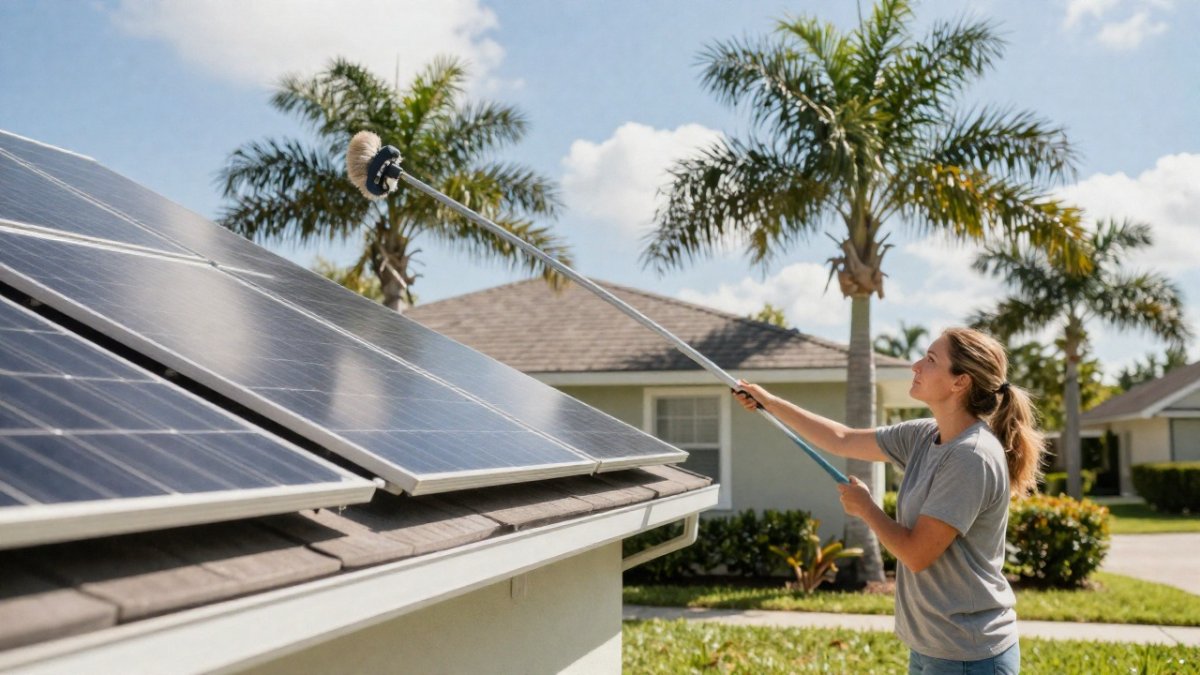
You can clean most rooftop solar panels safely from the ground using an extension pole with a soft brush, a garden hose, and plain water. No ladder, no roof access, no risk.
When Rain Is Not Enough: Cleaning Frequency and Debris
Florida rain helps, but it doesn't replace cleaning. Heavy rain washes off loose dust, yet leaves behind pollen streaks, bird droppings, and the film that builds up along panel frames.
For most Port St. Lucie homes, a light rinse two to three times a year is typically enough. Bump that up near construction, under oak or palm canopy, or close to the coast where salt film accumulates faster.
Watch for these debris sources:
- Pollen: heaviest in spring, leaves a yellow film
- Bird droppings: stubborn, and they block light in one spot
- Palm fronds and leaf litter: collect along the bottom edge of the array
Solar Panel Monitoring Troubleshooting: Reading the Warning Signs
Solar panel monitoring troubleshooting starts with one question: is the whole system down, or just part of it? A full outage usually points to the inverter, a main breaker, or a grid issue. A partial drop often means one string, one microinverter, or one shaded section. Separating normal weather-driven variation from a real fault takes a baseline.
Build a baseline before you troubleshoot
You can't spot an abnormal drop without knowing what normal looks like. Most monitoring portals show daily, weekly, and monthly production, and many offer a per-panel or per-string view.
Then account for the variables that move production legitimately:
- Season: a South Florida array produces more in spring's clear, cool skies than in the hazy, storm-heavy weeks of late summer.
- Weather: a week of afternoon storms and cloud cover will pull numbers down across the whole array, not one panel.
- System size and age: compare your system to its own history, not to a neighbor's roof.
A common pattern is a homeowner alarmed by a single low day after a storm. One cloudy day is weather. A consistent gap over two or three weeks that weather doesn't explain is worth a closer look.
Match the symptom to the likely cause
Once you have a baseline, the symptom usually narrows the cause:
- Whole system at zero, inverter dark: check whether the main solar breaker tripped and whether the utility had an outage. If the breaker resets and production returns, note the date. If it trips again, stop and call a professional.
- Whole system low but producing: often weather, soiling, or a grid-voltage issue the inverter is managing. Check the inverter display for a warning code.
- One string or one panel low: a shaded section, a failed microinverter or optimizer, or a connection issue. Note which panel numbers the app flags.
What you can safely check, and when to stop
From the ground and at the breaker panel, you can safely:
- Open your monitoring app and note which panels or strings are underproducing.
- Read the inverter display for a fault code or warning indicator and write it down.
- Confirm the system breaker hasn't tripped, and reset it once if it has.
- Note whether the drop happened after a storm, a power outage, or nothing obvious.
Watch out: if you see a fault code you can't clear, scorched wiring, a burning smell, water inside the inverter enclosure, or a breaker that trips again after one reset, stop there and call a professional.
If production is low but nothing looks broken, our guide to why a solar system isn't producing enough power covers the safe checks in more depth. Our solar system inspections and diagnostics cover string-level and panel-level testing.
Visual Inspection: What to Look For on Panels and Inverters
A visual inspection is a ground-level scan for what goes wrong quietly: cracked glass, discolored cells, loose wiring, corrosion at connections, and debris piled against the array. In Port St. Lucie, the scan should also account for what salt air, summer storms, and wildlife do to a roof over time.
On the panels
Walk the perimeter of the house and look up, using binoculars on a two-story roof. Look for:
- Cracks or chips in the glass: often from hail, flying debris, or a dropped tool during a prior service.
- Brown or discolored cells: a hot spot or a failing cell, which can drag down a whole string.
- Panels sitting at a different angle than their neighbors: a sign of a slipped mount or a loose clamp after wind.
At the inverter and conduit
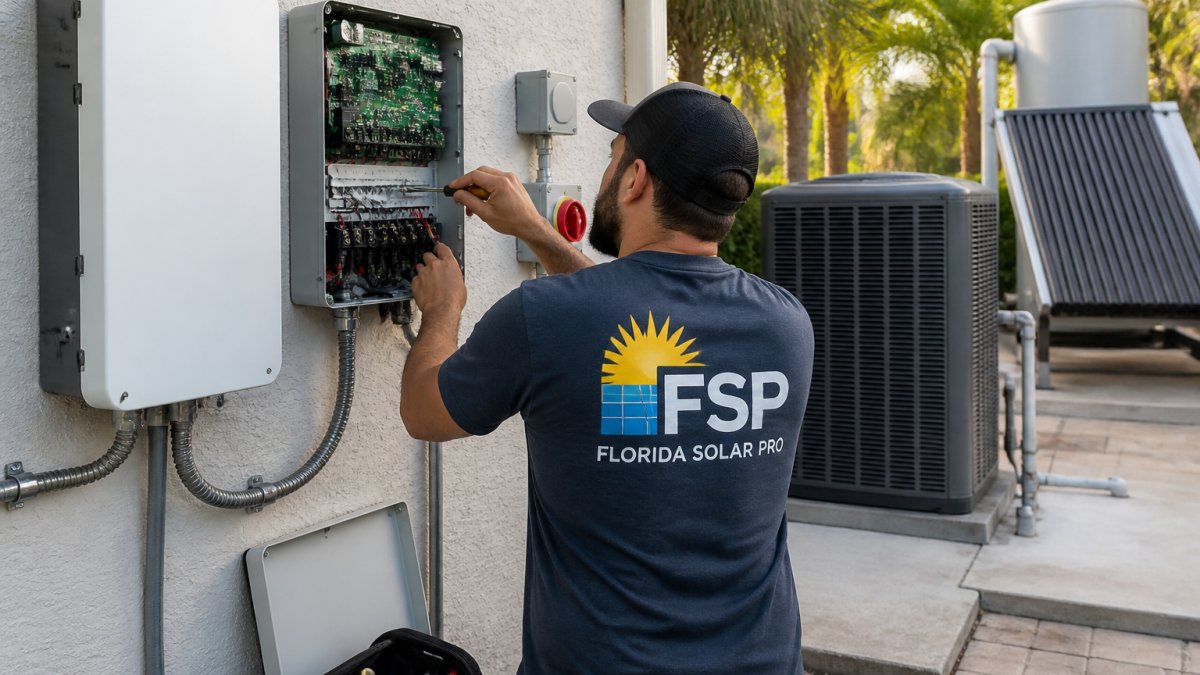
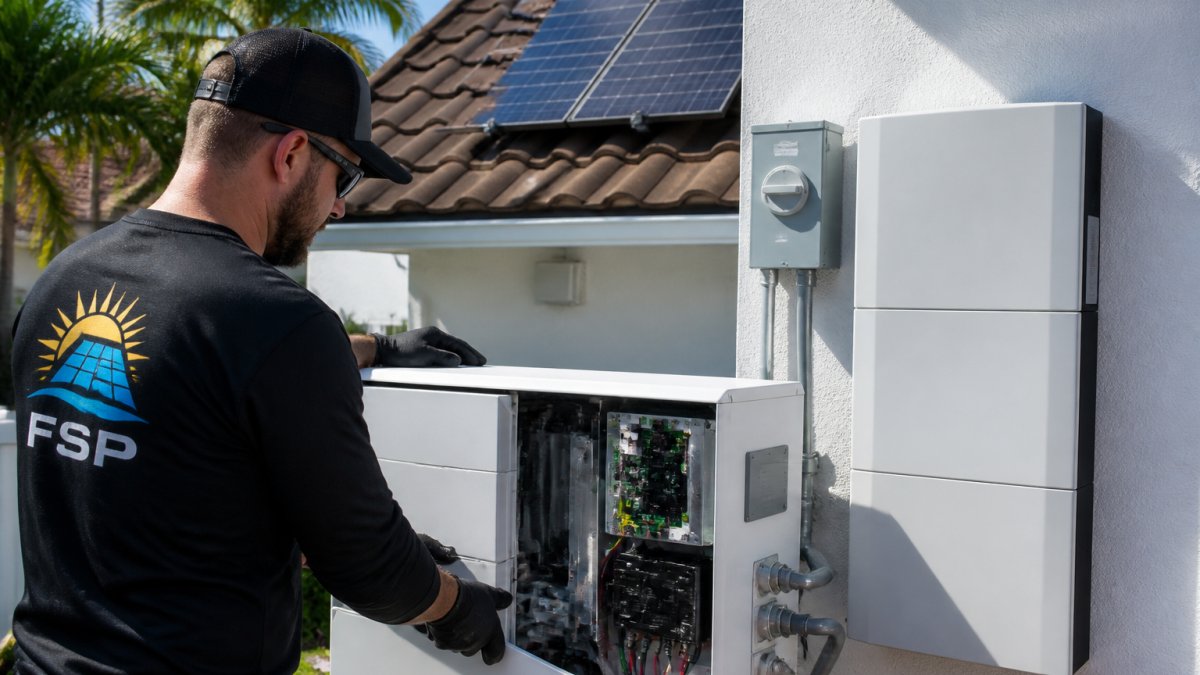
At the inverter, check for a red or amber status light, a display code, dust buildup around vents, and any sign of moisture inside the enclosure. Corrosion on conduit or connections is a job for a licensed tech, not a DIY fix. Look at the conduit runs and the rapid shutdown equipment for:
- Rust or green corrosion at fittings and connectors.
- Loose conduit or a pulled fitting after wind.
- Rodent damage: chewed insulation or droppings near the equipment, which is a common Florida issue.
Wildlife, vegetation, and roof concerns
Wildlife and vegetation cause more quiet damage than most homeowners expect. Birds nest under arrays, and their droppings block light and can etch the glass. Squirrels and rats chew wiring insulation.
Watch out: if you see a cracked panel, a loose mount, chewed wiring, water inside the inverter, or a roof leak near the array, don't try to fix it from a ladder.
When to book a solar panel cleaning service or pro inspection
Book a professional inspection when you see a fault code, a production drop you can't explain, physical damage, or new shading that wasn't there before. Also book one annually, and after any major storm.
| What You Can Check | What a Pro Diagnoses |
|---|---|
| Visible dirt and debris | String-level and panel-level output |
| Inverter status light | Fault codes and inverter health |
| Monitoring app trends | Wiring, connections, and grounding |
| Obvious physical damage | Mounting integrity and roof condition |
| New tree shading | Shading impact and optimizer performance |
Our solar system inspections and diagnostics cover system faults, storm concerns, reroof planning, and documentation for home sales. If you're not sure whether you need a cleaning or a diagnosis, call us at 772-464-2663 and we'll point you the right way.
When to Book a Solar Panel Cleaning Service or Pro Inspection
Book a professional inspection when you see a fault code, a production drop you can't explain, physical damage, or new shading that wasn't there before. Also book one annually, and after any major storm.
| What You Can Check | What a Pro Diagnoses |
|---|---|
| Visible dirt and debris | String-level and panel-level output |
| Inverter status light | Fault codes and inverter health |
| Monitoring app trends | Wiring, connections, and grounding |
| Obvious physical damage | Mounting integrity and roof condition |
| New tree shading | Shading impact and optimiser performance |
Our solar system inspections and diagnostics cover system faults, storm concerns, reroof planning, and documentation for home sales. If you're not sure whether you need a cleaning or a diagnosis, call us at 772-464-2663 and we'll point you the right way.
Schedule Your Port St. Lucie Solar Checkup
The best maintenance schedule is the one you keep. Monthly app checks and ground-level looks take minutes; the annual professional visit catches what you can't see from the yard.
If your system is due for a checkup, or you've noticed a production dip you can't explain, our team can help. Compare ongoing solar service plans for South Florida that include scheduled checkups and priority service, or call us at 772-464-2663 to book a visit.
Port St. Lucie homeowners get the most from their arrays when maintenance is steady rather than reactive.
Florida Solar Pro · Solar Energy Professionals · 1930 SW Biltmore St, Port St. Lucie, FL 34984 · 772-464-2663 · Licenses CVC56702 · CPC1458189 · CAC1817178 · SCC131153056
Frequently Asked Questions
How often should solar panels be inspected in Port St. Lucie?
We recommend a visual check from the ground monthly and a professional inspection once a year. Port St. Lucie's pollen season, summer storms, and coastal salt air can leave debris and micro-scratches that are hard to see from below. After any named storm or hail event, book an inspection before you rely on the system for backup power. A professional inspection can include inverter diagnostics and a review of monitoring data.
Do solar panels need to be cleaned in Florida?
Yes, but less often than many homeowners think. Regular rainfall rinses away light dust, yet pollen, bird droppings, and construction dust can stick to the glass. In our climate, most systems need a cleaning every 12 to 24 months, or sooner if you live near a construction site, farm field, or heavy tree canopy. Watch your monitoring app: a sudden drop in production without a weather explanation is a good reason to schedule a cleaning service.
Can a solar panel maintenance company inspect my inverter and monitoring system?
Yes. A qualified solar maintenance company can read inverter error codes, check communication links, and compare your system's output against expected performance. We look at the inverter display, warning indicators, and monitoring app history to spot ground faults, arc faults, or failed optimizers. If your inverter is under manufacturer warranty, we help with eligible warranty procedures, but we do not automatically take over the original installer's workmanship obligations.
What should I check if my solar panels are producing less electricity?
Start with your monitoring app: look for a sudden drop, a single underperforming panel, or a string that went offline. Check the inverter display for warning lights or error codes. Then do a ground-level visual inspection for new shade from tree growth, bird nests, or storm debris. If production stays low for more than a few sunny days, stop and call a professional. Do not open the inverter or climb on the roof to troubleshoot electrical components yourself.