 Listicle
5 Best Solar Inverter Brands for Residential Systems
Table of Contents
- Quick Comparison: 5 Best Solar Inverter Brands for Homes
- 1. Enphase: Best for Shade and Panel-Level Monitoring
- 2. SolarEdge: Best for Whole-Home Backup and One Inverter
- 3. SMA: The Proven String Inverter for Straightforward Roofs
- 4. Fronius: Best for Homeowners Who Want Open Monitoring
- 5. EcoFlow: The Hybrid Inverter Pick for Battery-Ready Homes
- Microinverter vs String Inverter: Which Fits Your Roof?
- Solar Inverter Lifespan and Warranty: What to Expect
- When to Stop and Call
- Frequently Asked Questions
Last Updated: October 18, 2026
Quick Comparison: 5 Best Solar Inverter Brands for Homes
The best solar inverter brands for residential systems are Enphase, SolarEdge, SMA, Fronius, and EcoFlow. Each one fits a different roof and a different budget. At Florida Solar Pro, we service all five across Port St. Lucie and the Treasure Coast, and we see which ones hold up after ten Florida summers. Here's how they compare before you sign a proposal.
| Brand | Type | Best For | Monitoring | Battery-Ready |
|---|---|---|---|---|
| Enphase | Microinverter | Shade, panel-level data | Panel by panel | Yes, AC-coupled |
| SolarEdge | String + optimizers | Whole-home backup | Panel by panel | Yes, DC-coupled |
| SMA | String | Simple, unshaded roofs | String level | Limited |
| Fronius | String | Open data access | String level, open API | Limited |
| EcoFlow | Hybrid | Battery-first planning | System level | Yes, built in |
1. Enphase: Best for Shade and Panel-Level Monitoring
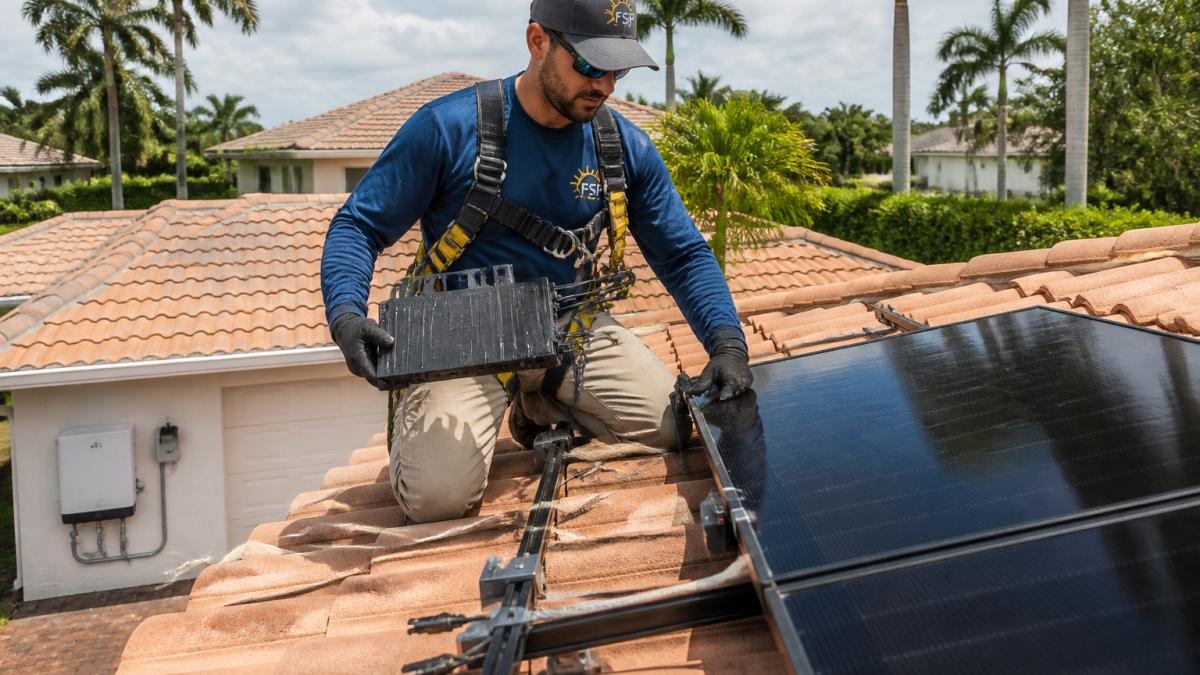
Enphase is the pick when trees, chimneys, or a messy roof layout shade part of your array. Each IQ8-series microinverter sits under one panel, so a shaded panel doesn't drag the rest down. You also get per-panel production data, which makes a dead panel obvious fast.
Enphase Pros and Cons
Pros: Panel-level monitoring, shade tolerance, easy panel swaps, strong service network. We're certified on Enphase, so troubleshooting is straightforward.
Cons: Higher upfront cost than a single string inverter, and more components on the roof to fail over time. Microinverters sit in Florida heat and UV, so heat-related failures do happen.
2. SolarEdge: Best for Whole-Home Backup and One Inverter
SolarEdge pairs one central inverter with optimizers under each panel. You get panel-level monitoring without a microinverter under every module. The HD-Wave line is the common residential choice, and it's a solid fit if you plan to add battery backup later.
SolarEdge Pros and Cons
Pros: One inverter to service, panel-level data, good battery pairing. Cons: If the central inverter fails, the whole system goes down until it's replaced. We see this often on older units, and it's the number-one SolarEdge repair call we get.
3. SMA: The Proven String Inverter for Straightforward Roofs
SMA's Sunny Boy line is the old reliable of string inverters. On a simple, unshaded roof, a string inverter is the lowest-cost, fewest-parts option, and SMA has been building them for decades. Fewer components on the roof means fewer heat-related failures.
The tradeoff is monitoring. You see string-level data, not panel-level, so finding one weak panel takes more work. For a clean south-facing roof in Port St. Lucie with no shade, SMA is a sensible, proven pick.
4. Fronius: Best for Homeowners Who Want Open Monitoring
Fronius is for the homeowner who wants to see and own their data. Its monitoring platform is open, so you're not locked into one app or one installer to read your system. Build quality is solid and the string inverters are common on residential roofs.
Where it falls short: the service network in Florida is thinner than Enphase or SolarEdge. When a Fronius unit needs repair, parts and qualified techs can take longer to line up. We're certified on Fronius, which helps, but it's worth knowing before you buy.
5. EcoFlow: The Hybrid Inverter Pick for Battery-Ready Homes
EcoFlow's hybrid inverter handles solar and battery in one box. If you're planning backup power for hurricane season, a hybrid inverter can simplify the wiring and cut a separate component.
The catch is track record. Hybrid inverters are newer to the residential market, and long-term service history in Florida is thinner than the established string brands.
Microinverter vs String Inverter: Which Fits Your Roof?
A microinverter converts power at each panel; a string inverter converts power for the whole array in one box. Microinverters win on shade and panel-level monitoring. String inverters win on cost and fewer roof components. Hybrid inverters add battery management to the string design.
For most Port St. Lucie roofs, the deciding factor is shade. A shaded roof favors microinverters. A clean, open roof favors a string inverter. If you're adding batteries for hurricane outages, a hybrid or a battery-ready string inverter makes the wiring simpler.
Solar Inverter Lifespan and Warranty: What to Expect
Most residential inverters are built to last roughly 10 to 15 years, and microinverters often carry longer warranties than central string units. Exact terms vary by brand and model, so read the warranty document, not the sales sheet.
If your inverter is past its warranty and failing, do the age-and-warranty math before you repair. A unit near the end of its covered life is usually a replace, not a fix.
When to Stop and Call
If your monitoring is offline, production dropped to zero, or you see a ground fault or arc fault warning, stop and call. Those aren't DIY fixes. We run a Solar Rescue Assessment for a flat $149, capped at two hours of diagnosis, and it's credited toward a Service Protection Plan if you enroll within 30 days.
Florida Solar Pro is a family company. The owner answers the phone, and the people who quote your job are the people who service it. We're licensed (CVC56702, CPC1458189, CAC1817178, SCC131153056) and certified on Enphase, SolarEdge, SMA, and Fronius. Call 772-464-2663 and we'll tell you straight whether your inverter needs a repair or a replacement.
Frequently Asked Questions
What are the best solar inverter brands for residential systems?
The shortlist most installers quote includes Enphase, SolarEdge, SMA, and Fronius. Enphase leads on microinverters for shaded or complex roofs, SolarEdge fits homes that want one central inverter with panel-level monitoring, and SMA and Fronius are proven string inverter lines. The right choice depends on your roof layout, shade, and whether you want backup power.
Are microinverters or string inverters better for a Florida home?
It depends on the roof. Microinverters like Enphase handle shade, salt air, and panel-level monitoring well, which suits many Florida roofs with trees or multiple orientations. A string inverter like SolarEdge or SMA costs less upfront and works fine on a clean, unshaded south-facing roof. In hurricane country, microinverters also keep the rest of the array producing if one unit fails, while a single string inverter failure can take the whole system offline.
How long do residential solar inverters last, and what warranty should I expect?
Most residential inverters are built to last roughly 10 to 15 years, though microinverters often carry longer warranties than central string units. Ask your installer for the exact warranty terms in writing, and check whether labor is covered. A failed inverter at year 12 can be a real cost if only the parts are covered.
Can I replace a solar inverter without replacing my panels?
Yes. Panels usually outlast inverters, so a solar inverter replacement is common after 10 to 15 years. A licensed contractor can swap a failed string inverter for a new unit, or replace microinverters one at a time under the panels. The panels, racking, and wiring often stay in place. If your original installer is gone, an authorized service center can take over the warranty and handle the swap. Get a diagnostic first to confirm the inverter is the failed part.
What should I do if my Enphase inverter or system stops reporting?
Start with Enphase inverter troubleshooting basics: check the breaker, confirm the gateway is powered and connected to Wi-Fi, and look for a red or flashing status light. If the app shows a microinverter offline, note which panel number it is. A single offline unit may be a failed microinverter, while a whole-system outage usually points to the gateway or breaker. If the reset does not fix it, call a certified technician before climbing on the roof.
Florida Solar Pro · Solar Energy Professionals · 1930 SW Biltmore St, Port St. Lucie, FL 34984 · 772-464-2663 · Licenses CVC56702 · CPC1458189 · CAC1817178 · SCC131153056