 how-to
5 Signs Your Solar Pool Heating Sensor Needs Repair
Last Updated: October 28, 2026
Quick Summary
A failing solar pool heating sensor usually shows up as a controller reading that doesn't match reality, such as a roof or pool temperature that looks wrong on the display. Check the display, the sensor lead from the ground, and compare readings to your own pool thermometer, then have the system checked by a professional.
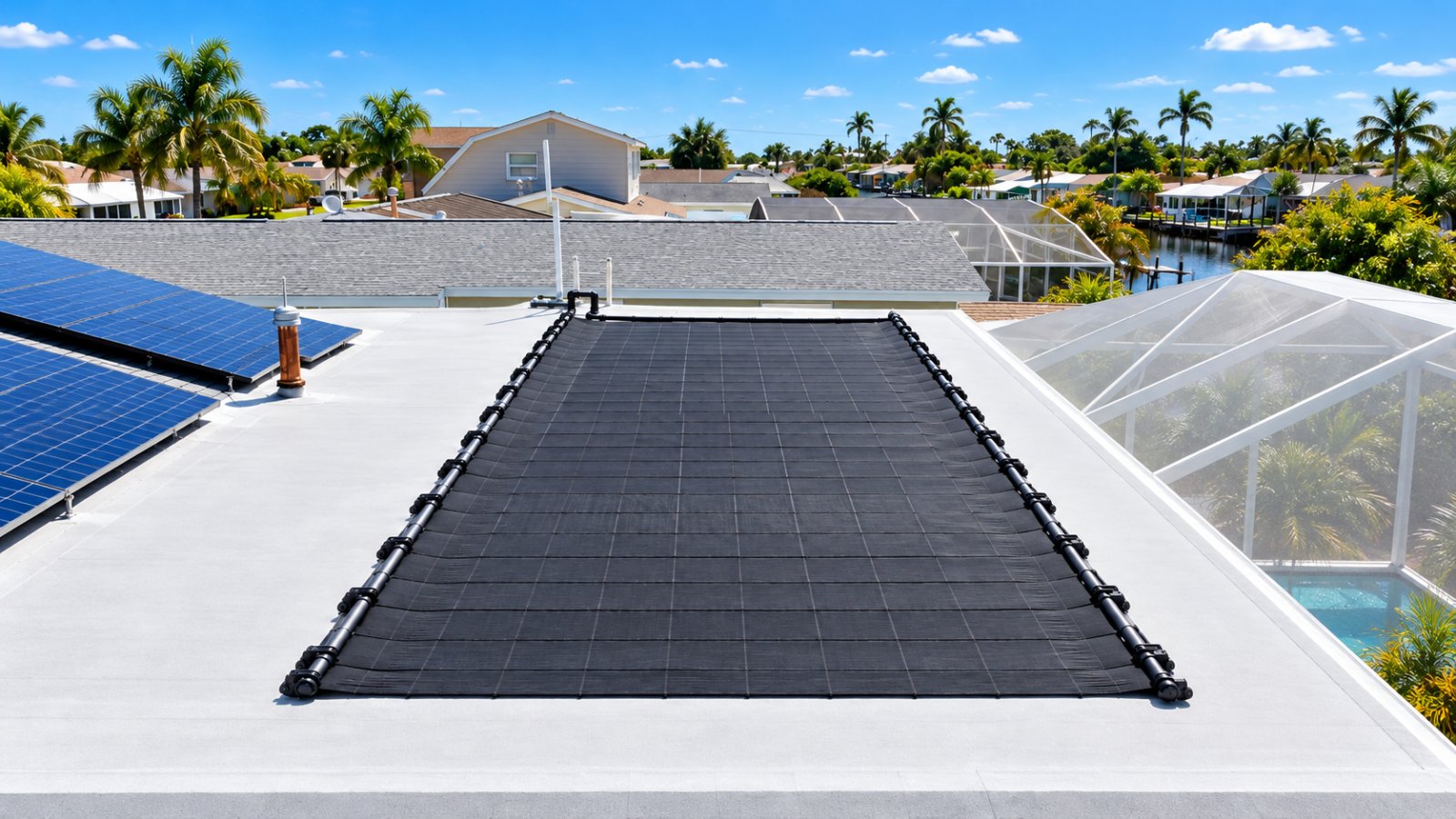
- Walk the yard and look up for gaps between panels and the roof, sagging pipes, drips, and debris against the lower header.
- If you see a leak, a loose panel, or a controller fault you can't clear, shut off the solar heating function per the manufacturer's instructions.
- Don't climb onto the roof after a storm; leave roof and system inspection to a professional.
- Note the date and what you saw, since you'll want it for an insurance claim.
- Heliocol's warranty is 12 years when installed by an authorized dealer and 8 years when it isn't.
Table of Contents
- How to Spot Storm Damage on Your Solar Pool Heater From the Ground
- Solar Pool Heating Sensor Troubleshooting: What You Can Check Yourself
- When to Shut Off the System: A Step-by-Step Guide
- Solar Pool Heater Controller Repair: Why the Panel Says Nothing
- Solar Pool Collector Leak Repair: Headers, Panels, and Plumbing
- Solar Pool Heating Diverter Valve Problems and What They Look Like
- Repair or Replace? The Age and Warranty Math for Heliocol and SunStar
- Book Your Solar Pool Heating Inspection with Florida Solar Pro
- Frequently Asked Questions
How to Spot Storm Damage on Your Solar Pool Heater From the Ground
A failed solar pool heating sensor can show up as a panel that reads a temperature that doesn't match reality, or a controller that stops calling for heat. This guide covers what you can check yourself and when to call.
You don't need a ladder. Walk the yard and look up.
What to check:
- Straps and mounts. Look for gaps between the panel and the roof.
- Plumbing runs. Sagging pipes or drips on the soffit mean trouble.
- Debris. Palm fronds and shingle grit collect against the lower header.
- Panel color. A dull or chalky surface points to UV wear.
What you'll see: a loose strap or a leak may be visible from the ground.
What it means: have the system looked at before you run it again. You can see how storm damage restoration works.
Solar Pool Heating Sensor Troubleshooting: What You Can Check Yourself
Solar pool heating sensor troubleshooting can start at the controller. The sensor provides temperature readings to the system.
Here's what we'd check first:
- Read the display. What to check: the pool and roof temps side by side. What you'll see: the readings shown on the controller. What it means: an unexpected reading is a reason to have the system checked.
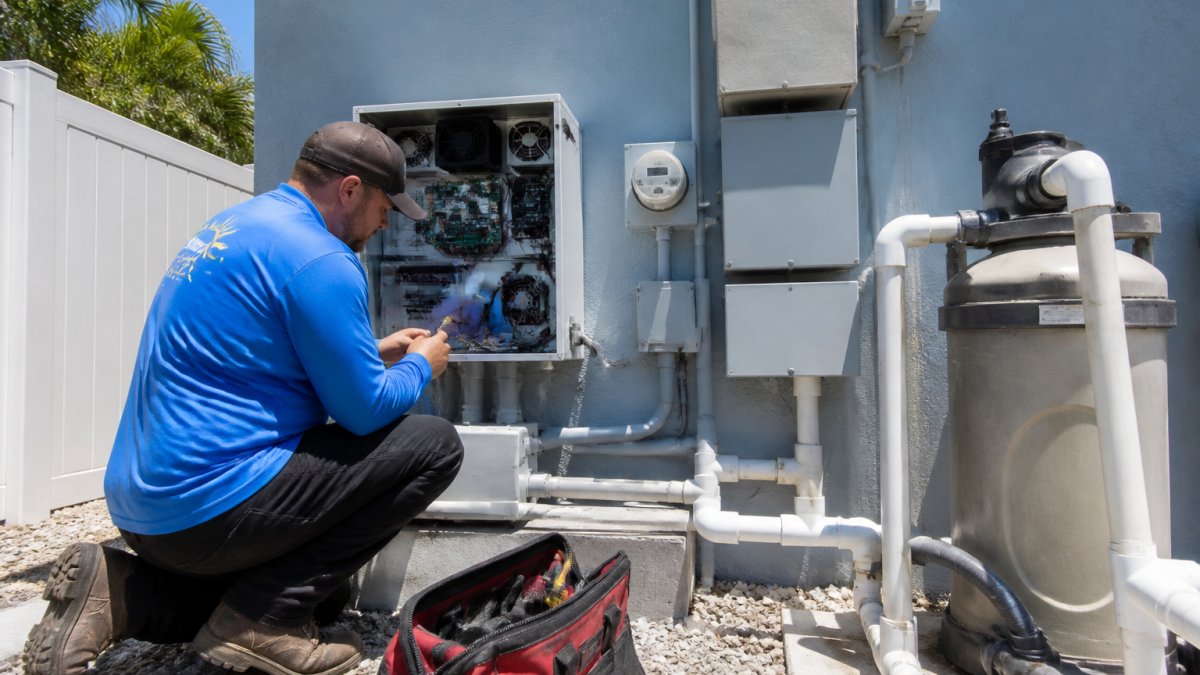
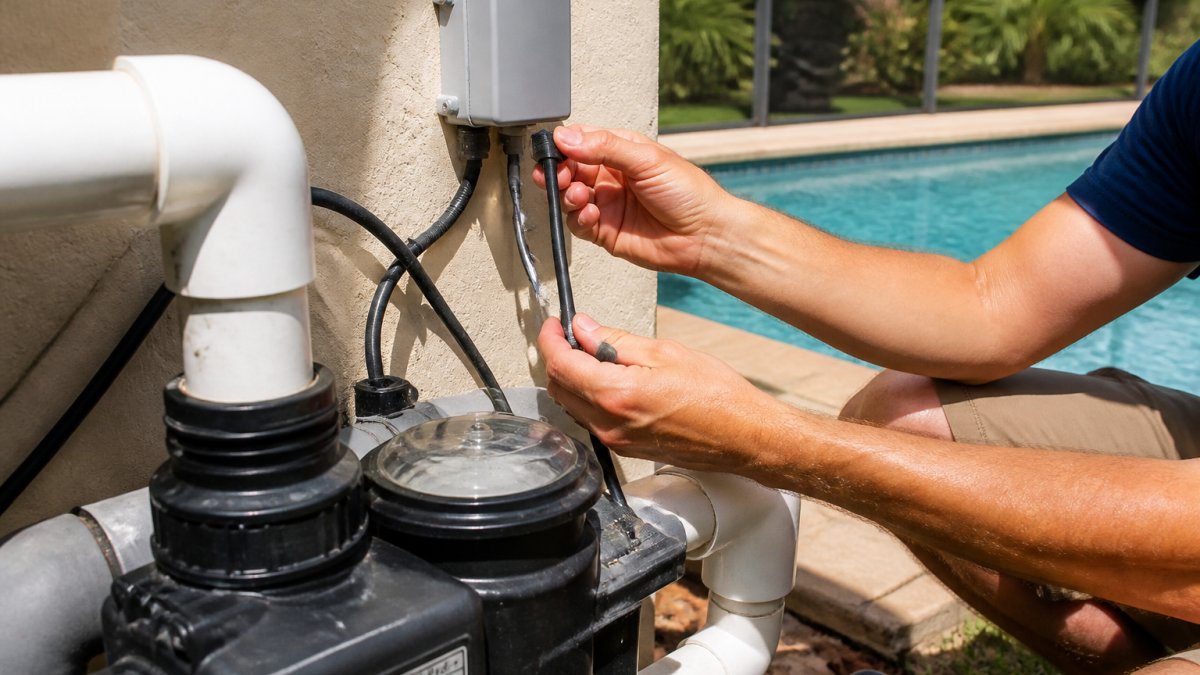
- Look at the wire. What to check: the sensor lead from the ground. What you'll see: visible damage, if any. What it means: have the system checked by a professional.
- Compare to a pool thermometer. What to check: your own thermometer against the controller. What you'll see: whether the readings differ. What it means: have an unexpected difference checked.
If the readings look wrong, have the system checked. For a deeper walkthrough of weak output, see our guide on how to diagnose underperforming solar pool panels.
Here's what we'd check first, in order, before calling anyone.
| Step | What to check | What you'll see | What it means |
|---|---|---|---|
| 1 | Pool and roof temps side by side on the display | The readings shown on the controller | An unexpected reading is a reason to have the system checked |
| 2 | The sensor lead from the ground | Visible damage, if any | Have the system checked by a professional |
| 3 | Your own thermometer against the controller | Whether the readings differ | Have an unexpected difference checked |
When to Shut Off the System: A Step-by-Step Guide
If you see a leak, a loose panel, or a controller fault you can't clear, follow the manufacturer's instructions for shutting off the solar heating function. Don't climb onto the roof after a storm.
Do this:
- Turn off the controller. Use the switch or breaker at the unit, per the manufacturer's instructions.
- Follow the manufacturer's instructions for shutting off the solar heating function.
- Leave the roof alone. Don't climb up to "take a quick look" after a storm.
- Note the date and what you saw. You'll want it for an insurance claim.
What you'll see: follow the manufacturer's instructions to confirm the solar heating function is off. What it means: leave inspection of the roof and system to a professional.
Solar Pool Heater Controller Repair: Why the Panel Says Nothing
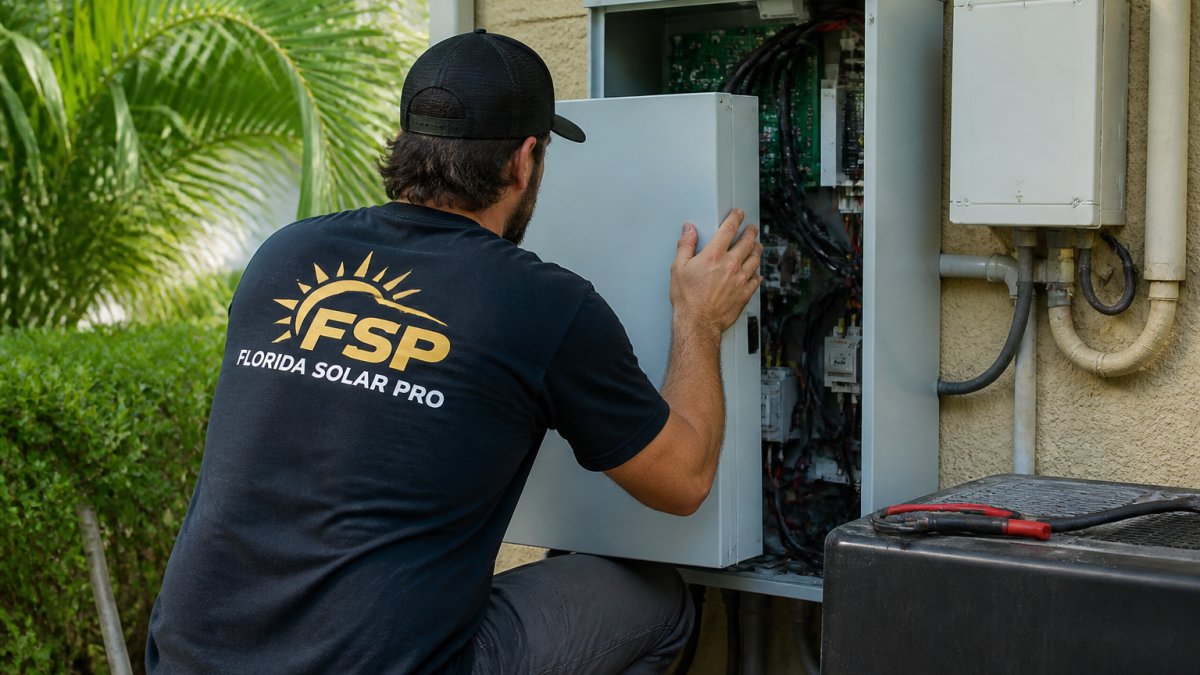
A dead display on a solar pool heater controller can have more than one cause. Have the system checked before deciding whether the controller needs repair or replacement.
Check these in order:
- Power at the breaker. If it trips, stop and call a professional.
- The fuse on the board. Leave inspection to a professional.
- The sensor leads. Leave inspection to a professional.
What you'll see: a blank screen. What it means: have the controller checked before deciding whether it needs repair or replacement.
If the panel is blank, see our guide to the heater not heating symptom.
Solar Pool Collector Leak Repair: Headers, Panels, and Plumbing
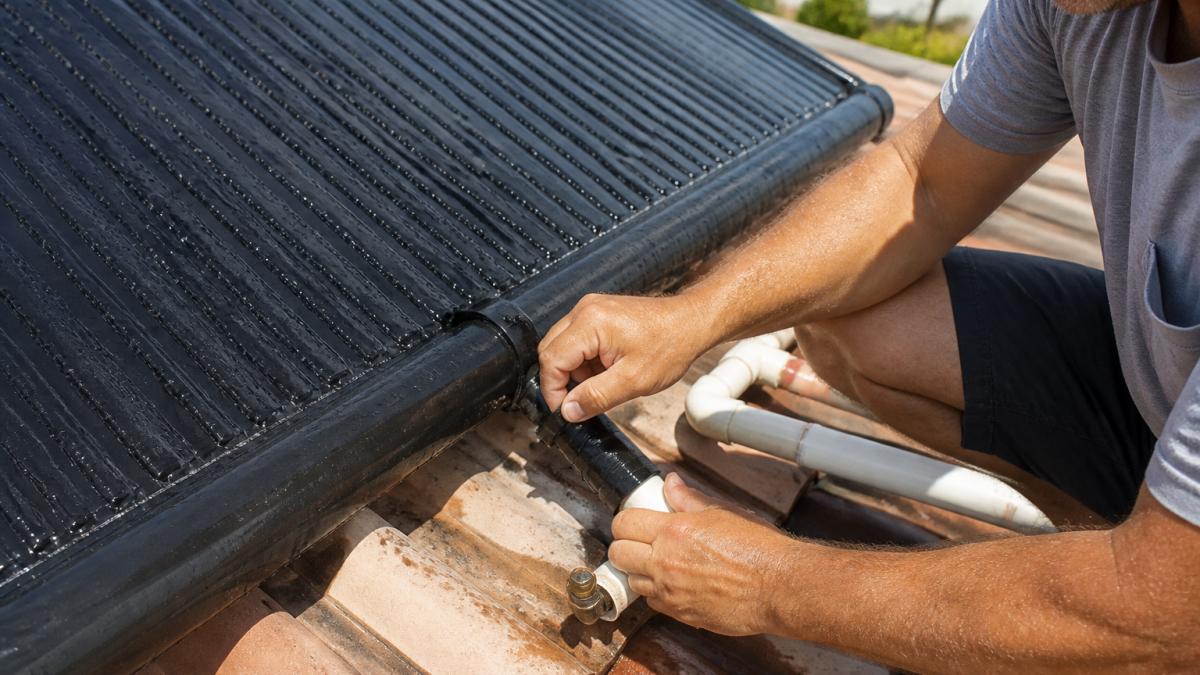
Solar pool collector leaks can involve the header, the panel body, or the plumbing connections.
- Header leaks may be visible at the top or bottom rail.
- Panel leaks may be visible on the panel.
- Plumbing leaks may be visible at connections.
What it means: have a professional inspect the system and determine the repair needed.
Solar Pool Heating Diverter Valve Problems and What They Look Like
A malfunctioning diverter valve can affect solar pool heating. The valve directs water to the roof or back to the pool. If you suspect a valve problem, have a professional inspect it and determine whether repair or replacement is needed.
Repair or Replace? The Age and Warranty Math for Heliocol and SunStar
Repair or replacement depends on the system's condition and warranty. Heliocol's warranty is 12 years when installed by an authorized dealer and 8 years when it isn't. Check the warranty terms for your system before deciding. For Heliocol and SunStar owners, finding authorized Heliocol solar technicians matters.
Book Your Solar Pool Heating Inspection with Florida Solar Pro
We're a family company. The owner answers the phone, and the people who quote your job are the people who service it.
We're an authorized Heliocol and SunStar dealer and factory-authorized warranty service center from Brevard County through Miami-Dade. We provide solar pool heating repair and maintenance.
Call 772-464-2663 to book a solar pool heating inspection, or reach our Broward line at 954-372-3358.
Frequently Asked Questions
How can I tell if my solar pool heating sensor is damaged?
Look at the controller display from the ground. If the reading looks wrong or shows a sensor fault code, have the system checked. Don't climb onto the roof.
Can a damaged solar pool heating sensor cause a leak?
A sensor problem and a water leak are different issues. If you notice a leak or other damage after a storm, have the system inspected.
Why is my solar pool heater not turning on after a thunderstorm?
A system that won't turn on after a thunderstorm needs inspection. Follow the manufacturer's instructions and don't open electrical equipment. Call us at 772-464-2663 to ask about solar pool heating repair.
Should I repair or replace storm-damaged solar pool collectors?
Check the warranty terms first. Heliocol's warranty is 12 years when installed by an authorized dealer and 8 years when it isn't. Have a professional inspect the damage and discuss repair or replacement.
Your pool should be warm, not a puzzle. If the controller is reading wrong or a panel is dripping, get it looked at before the next storm. Get started with Florida Solar Pro and get your system back to doing its job.
Florida Solar Pro ·, Solar Energy Professionals, · 1930 SW Biltmore St, Port St. Lucie, FL 34984 · 772-464-2663 · Licenses CVC56702 · CPC1458189 · CAC1817178 · SCC131153056