 how-to
Do Solar Pool Heaters Need Annual Maintenance
Last Updated: October 23, 2026
Quick Summary
Yes, do solar pool heaters need annual maintenance to keep them running efficiently. We recommend a full inspection and cleaning before hurricane season each year. Most problems come from skipped maintenance: blocked panels, stuck diverter valves, and pump failures that could've been caught early.
- Clean panels twice yearly, especially before hurricane season in June
- Check the diverter valve handle for smooth movement and listen for leaks
- Inspect hoses for cracks from UV exposure and tighten loose clamps
- A well-maintained diverter valve lasts 10 to 15 years; neglected ones fail in 5 to 8 years
- Most heating problems stem from dirty panels or a stuck diverter valve
Table of Contents
- What Solar Pool Heater Maintenance Includes
- Why Your Solar Pool Heater Is Not Heating
- Solar Pool Heater Leak Repair and When to Call
- Solar Pool Heater Diverter Valve Problems
- Seasonal Prep: Before and After Hurricane Season
- Repair or Replace: Age and Warranty Math
- Why Call Florida Solar Pro for Your Pool Heater
- Frequently Asked Questions
Do Solar Pool Heaters Need Annual Maintenance
Yes, do solar pool heaters need annual maintenance? The answer is yes, they do solar pool heaters need annual maintenance to keep them running efficiently. We recommend a full inspection and cleaning before hurricane season each year. Most problems we see come from skipped maintenance: blocked panels, stuck diverter valves, and pump failures that could've been caught early.
What Solar Pool Heater Maintenance Includes
Annual maintenance keeps your system heating and prevents costly repairs down the line. Here's what needs to happen every year.
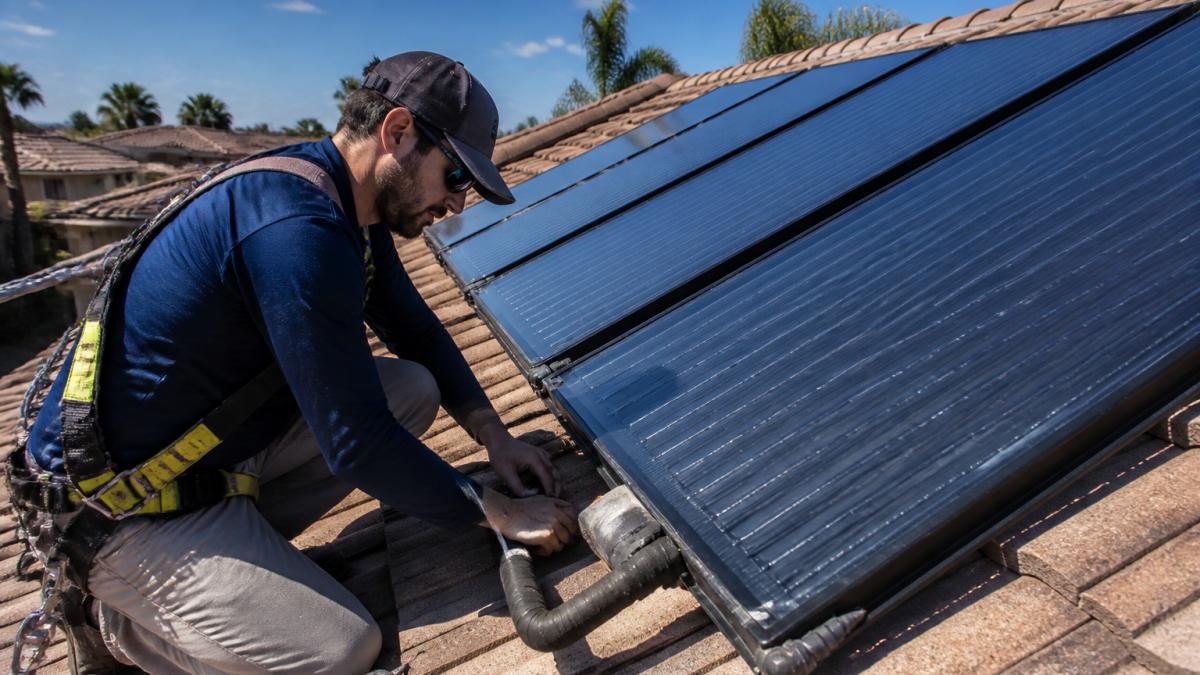
Cleaning the collector panels
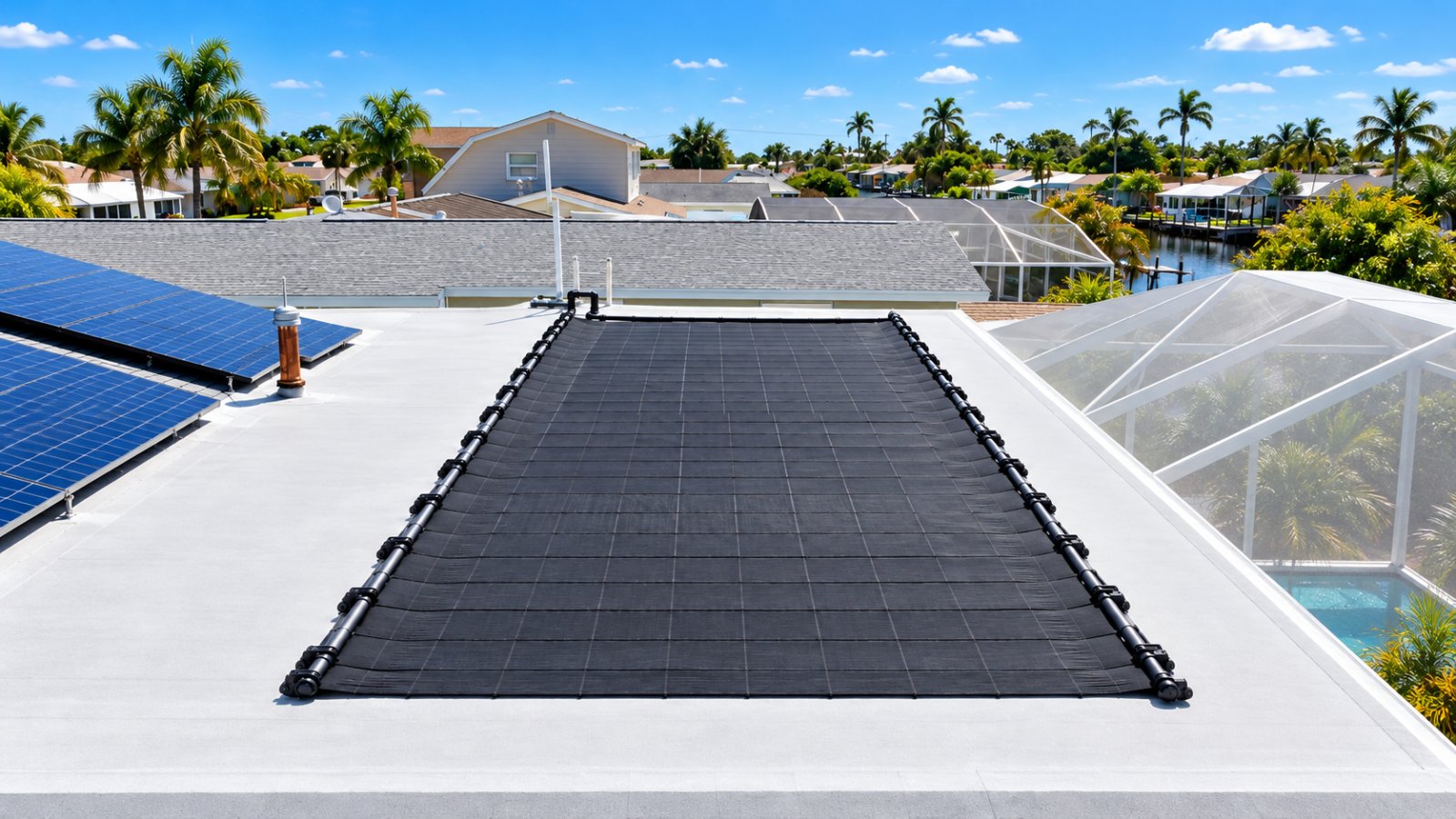
Dirty panels lose efficiency fast. Dust, pollen, bird droppings, and salt spray coat the surface and block sunlight. We clean panels in Port St. Lucie and the surrounding area, especially before hurricane season.
What to check:
- Look at the panels from the ground. Are they visibly dirty or discolored?
- Check for debris: leaves, branches, or sand buildup.
- Look for salt residue if you're near the coast (Fort Lauderdale, Hollywood, Miami).
What you'll see:
- Clean panels are clear or slightly hazy. Dirty panels look dull or have white streaks.
- After cleaning, water flow improves and pool temperature rises within days.
DIY or pro: You can rinse panels with a hose from the ground. Use soft water if possible. Don't pressure wash or use harsh chemicals. For a thorough cleaning with inspection of seals and connections, call us. We use the right tools and know what to look for.
Checking the diverter valve
The diverter valve directs water through the solar panels or bypasses them. If it sticks or leaks, your pool won't heat or will lose pressure.
What to check:
- Feel the valve handle. Does it move smoothly or is it stiff?
- Look for water dripping from the valve body or around the handle.
- Listen for hissing sounds, which mean internal leakage.
What you'll see:
- A working valve moves with light pressure and stops at both positions.
- A stuck valve won't budge or moves partway and stops.
- Leaking valves drip water even when the pump is off.
DIY or pro: Don't force a stuck valve. You'll break it. A pro can free it up or replace it. Leaking valves need replacement. This is not a DIY fix.
Inspecting connections and hoses
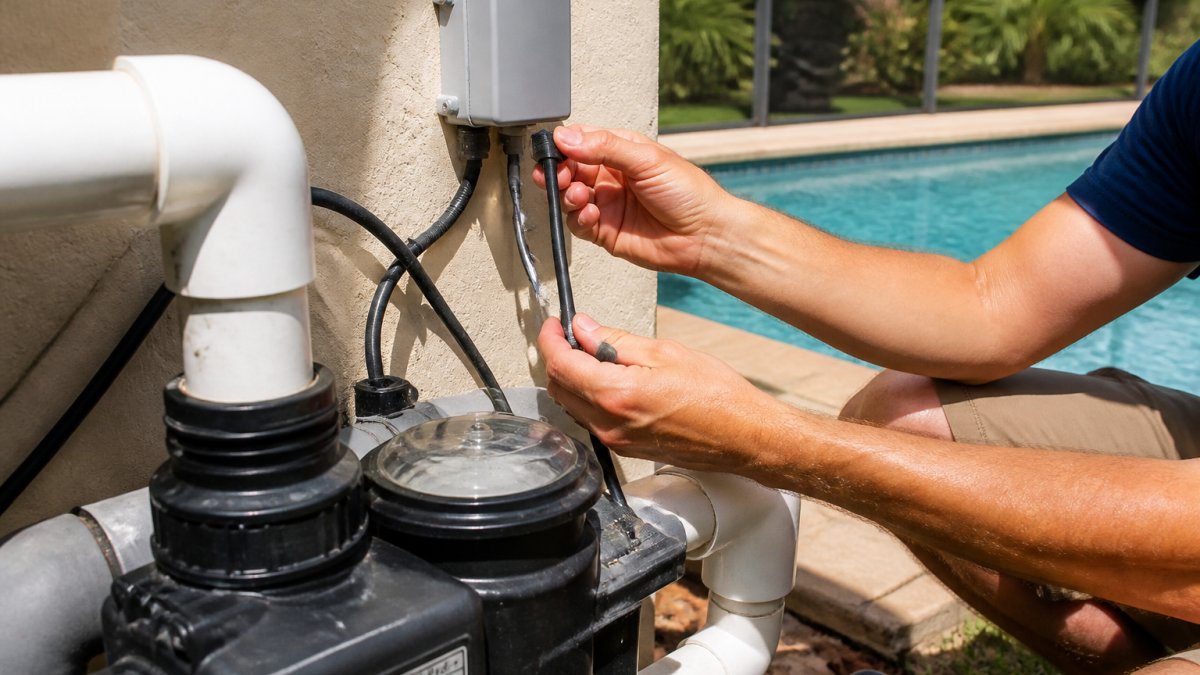
Hoses crack from UV exposure. Connections loosen from vibration and freeze-thaw cycles. Leaks waste water and reduce heating.
What to check:
- Walk the hose runs from the panels to the pool. Look for cracks, splits, or bulges.
- Check hose clamps. Are they tight or loose?
- Feel connections at the valve, pump, and controller. Any water seeping out?
- After freeze nights in Sebring or Okeechobee, check for new cracks.
What you'll see:
- Healthy hoses are flexible and have no visible damage.
- Cracked hoses leak water or spray when the pump runs.
- Loose clamps let hoses slip and cause leaks.
DIY or pro: Tighten loose clamps yourself. Replace cracked hoses. If you're comfortable with basic plumbing, you can swap a hose. If not, we handle it. Connections at the valve and pump need a pro to avoid leaks.
Why Your Solar Pool Heater Is Not Heating
Your pool stays cold when the system isn't moving water through the panels or the panels aren't getting enough sun. We troubleshoot this often in Port St. Lucie and nearby areas.
Blocked or dirty panels
Dirty panels don't absorb sunlight. Your pool temperature won't rise no matter how long the pump runs.
Symptom: Pool stays cold. Panels look dull or have visible debris.
Cause: Dust, salt spray, bird droppings, or pollen blocks sunlight.
Fix: Clean the panels. See the cleaning section above for details.
Diverter valve stuck or leaking
A stuck valve blocks water from reaching the panels. A leaking valve lets water bypass the panels even when the valve is set to heat mode.
Symptom: Pool temperature doesn't rise. You hear water flowing but the panels don't get warm.
Cause: Valve is stuck in bypass position or leaking internally.
Fix: If stuck, don't force it. Call us. If leaking, the valve needs replacement.
Pump not running or check valve failure
No pump means no water flow. A failed check valve lets water drain from the panels at night, wasting energy.
Symptom: No water flowing to the panels. Gauge on the pump shows zero pressure.
Cause: Pump is off or broken. Check valve is stuck open.
Fix: Check that the pump is on and the circuit breaker hasn't tripped. If the pump runs but no water flows, the check valve may be stuck. Call us.
Solar Pool Heater Leak Repair and When to Call
Small leaks get worse fast. Water loss means lower pressure and reduced heating.
Dripping from hose clamps: Tighten the clamp with an adjustable wrench. Turn clockwise until snug.
Crack in a hose: Replace the hose. Turn off the pump.
Leaking from the diverter valve: Stop here and call us. The valve seal is failing.
Leaking from the pump: Call us. Pump seals need a pro to replace without damaging the pump.
Leaking from panel connections: Call us.
When to stop and call:
- Water sprays from connections under pressure.
- The leak is at the pump, valve, or panel connections.
- You've tightened clamps and the leak continues.
- You see water pooling under the equipment.
We service Port St. Lucie, Stuart, Jupiter, West Palm Beach, Boca Raton, Fort Lauderdale, and surrounding areas.
Solar Pool Heater Diverter Valve Problems
The diverter valve is the most common failure point we see.
Valve won't move: Mineral buildup or corrosion freezes the handle. In Port St.
Valve leaks from the handle: The shaft seal is worn. Water drips when the pump is running. The valve needs replacement.
Valve leaks from the body: Internal seals are failing. Water bypasses the valve setting. The valve needs replacement.
Valve is noisy: Air in the line or a partially stuck valve causes noise.
How long do diverter valves last: A well-maintained valve lasts 10 to 15 years.
Seasonal Prep: Before and After Hurricane Season
Hurricane season runs June through November (noaa.gov). Before it starts, prep your system. After it ends, inspect for damage.
Before hurricane season (May):
- Clean panels and inspect for loose roof straps.
- Check all hose connections and tighten clamps.
- Test the diverter valve and pump.
- Make sure the check valve isn't stuck.
- Inspect the controller for water damage.
After hurricane season (December):
- Inspect panels for cracks or impact damage.
- Check roof penetrations where pipes enter the roof. Look for leaks into the attic.
- Walk the hose runs for new cracks or abrasion.
- Test the system end to end: pump, valve, panels, return.
- Look for debris wrapped around hose connections.
Storms in Sebring and Okeechobee inland areas bring high winds. Coastal areas near Miami and Fort Lauderdale get salt spray and wind damage. We've seen roof straps fail, panels crack, and hoses torn off after storms. Call us for a post-storm inspection. We'll find damage you might miss.
Repair or Replace: Age and Warranty Math
When a part fails, you need to know whether to fix it or replace the whole system. Age and warranty matter.
Diverter valve:
- Age under 8 years: repair or replace the valve.
- Age over 10 years: if the valve fails, consider replacing the whole system. You're approaching end of life anyway.
- Warranty: most valves carry 1 to 3 years. If it fails in warranty, replacement is free.
Pump:
- Age under 7 years: repair or replace the pump.
- Age over 10 years: if the pump fails, replacing the system makes sense. You're near the end of the system's useful life.
- Warranty: most pumps carry 2 to 5 years depending on brand.
Hoses and clamps:
- Always replace. Hoses are cheap. Leaks from old hoses cause bigger problems.
Panels:
- Age under 10 years: repair or replace individual panels if cracked.
- Age over 15 years: if multiple panels are failing, replace the whole system. Panels degrade over time and won't heat as well.
- Warranty: Heliocol panels carry 12 years when installed by an authorized dealer like us, 8 years when installed by others. SunStar panels carry similar terms.
When to replace the whole system:
- More than 2 parts have failed in the last 3 years.
- The system is over 15 years old and major components are failing.
- Repair costs exceed 50% of replacement cost.
- The system is from a closed installer and parts are no longer available.
We're an authorized Heliocol and SunStar dealer. If your system is orphaned from a closed installer, we can take over the warranty and service it. Call us for a free estimate on replacement.
Why Call Florida Solar Pro for Your Pool Heater
We've been servicing solar pool heating systems in Port St. Lucie and across Florida for over 30 years.
More than a dozen Florida solar installers have closed over the years. Their customers were left with no one to call. We take over those systems and their warranties.
We're licensed for solar work (CVC56702), pool and spa (CPC1458189), HVAC (CAC1817178), and structural work (SCC131153056).
What we do:
- Diagnose and repair Heliocol and SunStar systems.
- Replace failed pumps, valves, hoses, and controllers.
- Install new solar pool heating systems.
- Take over warranty service for orphaned systems.
- Pair solar pool heating with pool heat pumps for year-round swimming.
Call 772-464-2663 for Palm Beach County or 954-372-3358 for Broward. We'll schedule a free estimate or Solar Rescue Assessment.
Frequently Asked Questions
Do solar pool heaters need annual maintenance?
Yes. Annual maintenance keeps your system heating efficiently and prevents costly repairs. You should have the panels cleaned, diverter valve checked, and all connections inspected at least once a year. In Florida, salt spray, hard water scaling, and UV exposure make regular service essential. A Service Protection Plan like Pool Solar Guard covers annual maintenance and repair discounts.
Why is my solar pool heater not heating the pool?
Common causes include dirty panels blocking sunlight, a stuck or leaking diverter valve, a failed check valve, or the pump not running. Start by checking if water flows through the panels when the pump runs. If panels are visibly dirty, clean them. If the pump runs but no heat builds, the diverter valve likely needs service. Call us if you can't identify the issue in 15 minutes.
How do I know if my solar pool heater diverter valve needs repair?
A faulty diverter valve won't direct water through the solar panels or gets stuck in one position. You'll notice the pool temperature stays flat even on sunny days, or water leaks from the valve body. Some valves stick from mineral buildup or debris. Don't force a stuck valve. We can clean it or replace it depending on the damage and age.
Can I clean solar pool heating panels myself?
You can rinse panels with a soft brush and plain water to remove loose debris and salt spray. Avoid high-pressure washers, which can damage seals. For stubborn scaling or algae, call a professional. We have the right tools and know how to clean without breaking connections or voiding warranties. Improper cleaning can cause leaks.
Florida Solar Pro · *, Solar Energy Professionals, * · 1930 SW Biltmore St, Port St. Lucie, FL 34984 · 772-464-2663 · Licenses CVC56702 · CPC1458189 · CAC1817178 · SCC131153056