 how-to
Licensed Solar Contractors for Roof Repairs
Table of Contents
- Why You Need a Licensed Solar Contractor for Roof Work
- Solar Panel Removal and Reinstallation for Roof Repair
- How to Verify a Florida Solar Contractor License Lookup
- Solar Panel Warranty After Roof Repair
- Solar Panel System Inspection After Reinstallation
- Why Choose a Family-Owned Licensed Contractor
- Conclusion
- Frequently Asked Questions
Last Updated: October 21, 2026
Why You Need a Licensed Solar Contractor for Roof Work
When your roof needs repair or replacement, your solar panels have to come down first. This is where hiring licensed solar contractors for roof repairs becomes critical. A licensed contractor knows how to disconnect your system safely, remove panels without damage, and reinstall them correctly after the roof work is done. We've seen too many homeowners hire a roofer who then damages panels or leaves the system non-functional because they don't understand solar wiring and electrical codes. Your panels are a significant investment. The people who remove and reinstall them need to be trained, licensed, and accountable.
At Florida Solar Pro in Port St. Lucie, we handle solar removal and reinstallation for re-roofs as part of our service offering. We're licensed under CVC56702 for solar work, which means we know the Florida electrical code, FPL interconnection requirements, and how to protect your warranty during the process. When you hire a licensed contractor, you're not just getting someone who can do the work. You're getting someone who carries insurance, follows code, and won't void your warranty or create electrical hazards.
Solar Panel Removal and Reinstallation for Roof Repair
What Happens During Removal
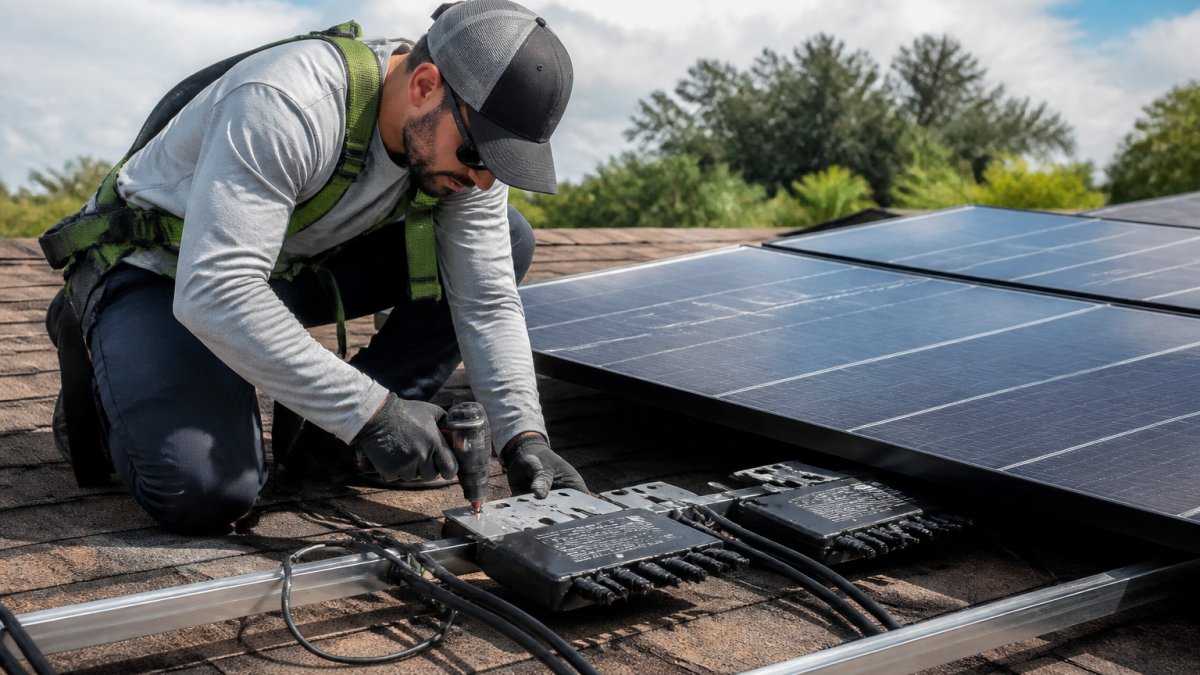
Removing solar panels safely is a multi-step process. First, we shut down your system at the inverter and disconnect the DC wiring from the combiner box. We photograph the roof layout and document how each panel connects. Then we remove the roof straps and bolts that hold the rails to your roof. In Port St. Lucie and nearby Stuart, the afternoon thunderstorms and salt air mean corrosion is common, so bolts can seize. We use the right tools to avoid stripping threads or cracking the roof penetrations.
Each panel gets labeled and stored in a safe location. Panels are fragile. A drop or impact can crack the glass or damage the cells inside. We wrap them, stack them carefully, and keep them out of direct sun while the roof work happens. If your roof has multiple rows of panels, we remove them systematically so we can reinstall them in the same configuration.
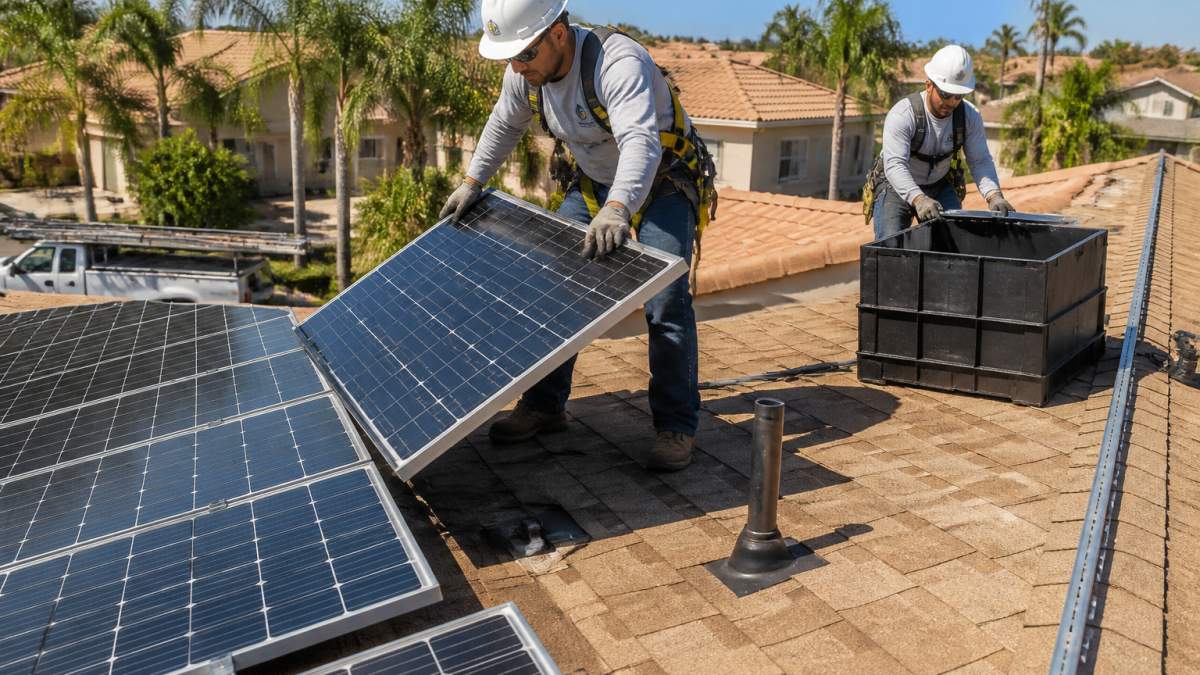
The electrical disconnect is the critical step. If you have microinverters like Enphase or SolarEdge optimizers, each panel has its own electronics. We disconnect the AC or DC wiring carefully, label every connection, and store the documentation. If something goes wrong during removal, a licensed contractor knows how to troubleshoot and fix it. An unlicensed roofer doesn't.
What Happens During Reinstallation
Once the roofer finishes and your roof is watertight, we reinstall the panels in their original positions. We start by checking the roof for damage. New penetrations, cracks, or soft spots can cause leaks later if we don't catch them. We use new flashing and sealant at every penetration point. In Port St. Lucie, hurricane season runs June through November, so roof integrity is not optional.
We reinstall the mounting rails, then secure each panel in its original spot. We reconnect all DC wiring, check for continuity, and verify the system grounds properly. Then we connect the AC side and power up the inverter. We run a full system check. Monitoring should come online. All circuits should show voltage and current. The inverter display should show no errors.
We also check the inverter's firmware to make sure it matches what was installed before. If your system lost power during roof work, some inverters need a manual reset or reauthorization with the monitoring app. We handle that. When we're done, your system should produce power exactly as it did before the roof work started.
How to Verify a Florida Solar Contractor License Lookup
Before you hire anyone to remove and reinstall your panels, verify their license. Florida requires solar contractors to be licensed under the Construction Contractors Licensing Board (CCLB). You can check a contractor's license online at Florida CCLB License Verification.
Search by the contractor's name or license number. A valid license will show:
- License number and type (CVC for solar)
- Contractor name and business address
- License status (Active)
- Expiration date
- Any disciplinary history
If a contractor won't give you a license number, that's a red flag. If the license is expired or shows disciplinary action, move on. We hold license CVC56702 for solar work in Port St. Lucie and throughout our service territory from Brevard County through Miami-Dade.
Check whether the contractor is bonded and insured. A licensed contractor carries general liability insurance and a performance bond. If something goes wrong, you have recourse. An unlicensed contractor leaves you with no protection.
Solar Panel Warranty After Roof Repair
Your panel warranty is tied to the installation and how the system is maintained. Most panel warranties are 10 to 25 years, depending on the manufacturer. But the warranty only covers defects in the panel itself, not damage from improper removal or reinstallation.
If an unlicensed contractor removes your panels and cracks one, the manufacturer won't cover it. The damage was caused by improper handling, not a manufacturing defect. You'll have to pay for a replacement out of pocket. If the contractor damages the roof penetrations and water leaks into your attic, your roof warranty is affected too.
A licensed contractor documents the removal and reinstallation. We photograph the system before and after. We keep records of what was disconnected and how it was reconnected. If a problem shows up later, documentation protects you and the warranty claim. Manufacturers want to see proof that the work was done correctly.
In Port St. Lucie, we recommend enrolling in a Service Protection Plan before roof work happens. Our PV Guard plan covers repair discounts, priority response, and one complimentary service call per year. If something goes wrong after reinstallation, you have support. Plans start at $339 per year and include warranty management.
Solar Panel System Inspection After Reinstallation
What to Check
After your panels are reinstalled, your system needs a full inspection. We check:
- Voltage and current on each string. If one panel is producing less than the others, it may have been damaged or improperly connected.
- Inverter display and error codes. The inverter should show normal operation with no faults.
- Monitoring app. Your system should report production in real time. If monitoring is offline, the inverter can't communicate with the network.
- Ground resistance. We use a meter to verify the system grounds properly. Poor grounding creates shock hazards.
- AC and DC disconnects. Both switches should be accessible and labeled.
- Roof penetrations. We inspect new flashing and sealant for gaps or cracks.
- Roof straps and bolts. All fasteners should be tight and corrosion-free.
We also compare production to weather. On a clear day in Port St. Lucie, a typical 5 kW system should produce 3 to 4 kW in the afternoon. If production is significantly lower, something's wrong. We'll run diagnostics to find it.
When to Stop and Call a Professional
If you see any of these after reinstallation, stop and call us right away:
- Inverter shows error codes or fault lights. This means something is disconnected or miswired.
- Monitoring app shows offline or zero production. The system isn't communicating or isn't producing power.
- You smell burning or see scorch marks on wiring. This is an electrical hazard.
- Water is leaking around the roof penetrations. The flashing failed or wasn't sealed properly.
- One or more panels produce significantly less power than the others. A panel may be damaged or disconnected.
- You see sparks, arcing, or melting near the combiner box or inverter. This is dangerous. Turn off the system and call us immediately.
A licensed contractor has the tools and training to diagnose electrical problems safely. Homeowners should not work inside the combiner box or disconnect switches. If something isn't working, let a professional fix it.
Why Choose a Family-Owned Licensed Contractor
When you hire a licensed contractor, you're making a choice about who's accountable when things go wrong. We're a family-owned business. The owner answers the phone. The people who quote your job are the people who service it. Nobody in another state decides to close the local branch or abandon your warranty.
Over the past 30 years, we've watched solar installers in Florida close their doors. When they shut down, their customers had no one to call. Their warranties were orphaned. Their systems stopped working. We take over those systems. We honor the original warranties. We become the local contractor you can count on.
We're licensed under CVC56702 for solar, CPC1458189 for pool and spa, CAC1817178 for HVAC, and SCC131153056 for structural work. We carry insurance. We follow Florida electrical code. We document everything. When we remove and reinstall your panels, your system should produce power as it did before.
Conclusion
Hiring licensed solar contractors for roof repairs protects your system and your investment. The removal and reinstallation process requires technical knowledge, proper tools, and accountability. Your panels are expensive. Your roof is expensive. Both deserve professional care. Ensuring the long-term integrity of your home requires hiring the right contractor to manage the complexities of solar-integrated roofing.
We're here in Port St. Lucie and serve Brevard County through Miami-Dade. We've been doing this for 30 years. We're licensed, insured, and accountable. If you need solar removal and reinstallation for a roof repair, call us at 772-464-2663. We'll give you a free estimate and walk you through the process.
When your roof needs work, your solar system needs a licensed contractor. We handle removal, reinstallation, and the full inspection afterward. Call Florida Solar Pro at 772-464-2663 for a free estimate. We serve Port St. Lucie, Stuart, Okeechobee, Sebring, and all of our territory from Brevard County through Miami-Dade. We're licensed, we're local, and we stand behind our work.
Frequently Asked Questions
Do solar panels need to be removed to repair a roof?
Yes. A roof repair under solar panels requires removal to access the roof surface and prevent water damage to electrical components. The licensed solar contractor disconnects the system safely, removes mounting hardware, and lifts panels off. After roof work is complete, they reinstall and reconnect everything. Skipping this step risks electrocution, fire, and voiding warranties.
How do I verify a Florida solar contractor's license before hiring them?
Check the Florida Department of Business and Professional Regulation (DBPR) website for active licenses. Ask for the contractor's license number and verify it matches their business name. Florida Solar Pro holds CVC56702 for solar work, CPC1458189 for pool systems, and CAC1817178 for HVAC. Licensed contractors carry liability insurance and follow code requirements.
Can roof repairs affect my solar panel warranty?
Only if improper removal or reinstallation damages components. A licensed solar contractor protects your warranty by following manufacturer specifications during removal and reinstallation. Document the work in writing. If the original installer is gone, we take over warranty coverage and service. Roof repairs themselves don't void panel warranties when done correctly.
What should I check after solar panels are reinstalled?
Verify the system produces power by checking your monitoring app or inverter display. Look for loose wires, cracks in panels, or water pooling around roof penetrations. Confirm all roof fasteners are tight and roof flashing is sealed. Listen for unusual sounds from the inverter. If production drops, monitoring goes offline, or you see water stains, call immediately.
Florida Solar Pro · Solar Energy Professionals · 1930 SW Biltmore St, Port St. Lucie, FL 34984 · 772-464-2663 · Licenses CVC56702 · CPC1458189 · CAC1817178 · SCC131153056