 how-to
How Do You Get Air Out of Solar Pool Heating Lines?
Last Updated: November 2, 2026
Quick Summary
Fixing air in solar pool heating lines starts by timing the bubbles: if they clear within three to five minutes, that is normal startup. If they persist, check the water level, pump basket, and lid O-ring, then bypass the solar loop to see whether air enters on the roof side or at the equipment pad.
- Bubbles that clear in three to five minutes and stay clear are normal startup behavior.
- A low water level or clogged pump basket is the most common cause of a pump losing prime.
- Bypassing the solar loop shows whether air enters on the roof side or at the pad.
- A stuck-open vacuum relief valve causes bubbles only when the solar loop is active.
- Do not climb on the roof; replacing a vacuum relief valve is a technician's job.
Table of Contents
- Why Air Gets Into Solar Pool Heating Lines
- Startup Bubbles Versus Persistent Air
- What Air Bubbles From Pool Returns Are Telling You
- Is Your Pool Pump Losing Prime? How to Tell
- A Safe Step-by-Step Troubleshooting Checklist
- How a Solar Pool Vacuum Relief Valve Works and Why It Fails
- What a Solar Pool Heater Air Lock Looks Like and How to Clear It
- When to Stop and Call for Professional Solar Pool Heating Repairs
- Schedule Solar Pool Heating Repair in Port St. Lucie
- Frequently Asked Questions
Why Air Gets Into Solar Pool Heating Lines
Air in a solar pool heating system is normal at startup and a warning sign when it never stops.
Air gets in through the suction side of the pump, a low water level, or a valve that lets air in on purpose. It can also enter when a rooftop collector or its plumbing develops a small leak.
Most air complaints trace back to a handful of causes. Here's what you can safely check yourself.
Startup Bubbles Versus Persistent Air
Startup bubbles are expected. Persistent bubbles mean something is wrong.
When the solar valve opens and water floods the rooftop collectors, trapped air pushes out through the pool returns. You'll hear a rush, see bubbles, then the flow settles. That's normal.
A fault looks different:
- Bubbles continue for more than a few minutes
- The pump struggles to stay primed
- Flow at the returns stays weak
If the bubbles never stop, treat it as air entering the system, not as a startup event.
What Air Bubbles From Pool Returns Are Telling You
Air bubbles from pool returns show where air is getting in. Location and timing narrow down the cause fast.
Bubbles only when the solar valve first opens point to collectors draining and refilling.
Watch for these clues:
- Bubbles at one return only: often a fitting or union near that line
- Bubbles with a whistling sound: air being pulled into the suction side
- Bubbles plus weak heating: reduced panel flow
If you suspect a collector leak or failing panel, our guide on solar pool heating system leaks and poor heating walks through the checks in more detail.
Is Your Pool Pump Losing Prime? How to Tell
A pool pump losing prime is the most common reason air keeps showing up in solar pool lines. Prime means the pump housing is full of water; when it isn't, the pump pulls air instead.
Signs of a prime problem:
- The pump basket looks half empty or has a whirlpool
- You hear gurgling at the pump
- The pump runs hot or noisy
A Safe Step-by-Step Troubleshooting Checklist
Work through these checks in order, and stop at anything you cannot reach safely. Never climb on the roof or open the pump while it is running.
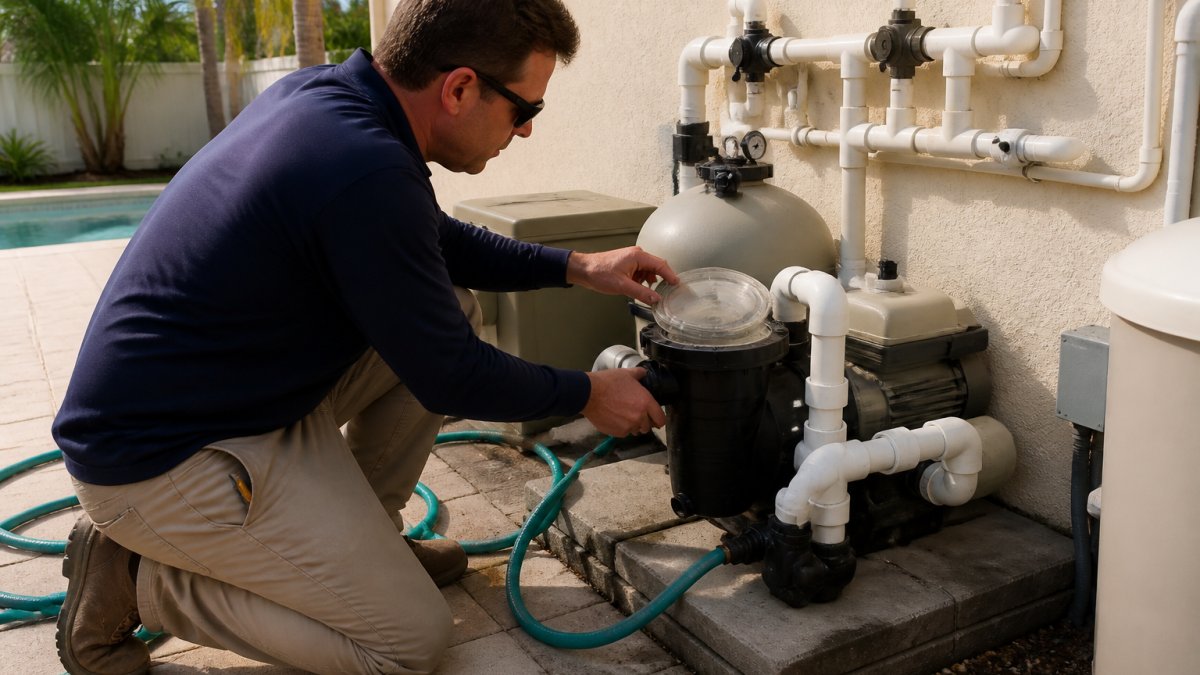
The Diagnostic Decision Tree
Use this sequence to separate a normal startup event from a fault.
- Time the bubbles. Run the system with the solar valve open. If bubbles clear within three to five minutes and stay clear, that is normal startup behavior. If they continue past five minutes or return every time the valve opens, move to step 2.
- Check the water level and pump basket. A low water level or a clogged basket is the most common cause of a pump losing prime. Refill to the skimmer midpoint, clean the basket, and recheck. If bubbles persist, move to step 3.
- Inspect the pump lid and O-ring. A dry, cracked, or grit-covered O-ring lets air in. Clean and lubricate it, reseat the lid by hand, and recheck. If bubbles persist, move to step 4.
- Bypass the solar loop. With the pump off, set the diverter valve to send water past the collectors. Restart and watch the returns. If bubbles stop, the air is entering on the roof side. If bubbles continue, the air is entering at the equipment pad or suction line.
- Isolate the suction side. With the pump running, look and listen along the suction plumbing for drips, whistles, or moisture at unions and valves. A small suction-side leak often shows as a drip or a whistle. If you find nothing, move to step 6.
- Check the vacuum relief valve. If the air is on the roof side, the vacuum relief valve is a leading suspect. Look for a valve that is wet, cracked, or visibly stuck. Replacing it is a job for a technician since it sits on the roof plumbing.
Check the Water Level, Pump Basket, and Lid Seal
A low water level lets the skimmer pull air. Refill to the midpoint of the skimmer opening and recheck.
Next, shut off the pump and clear the pump basket. A clogged basket restricts flow and makes prime harder to hold.
Inspect the pump lid and its O-ring. A dry, cracked, or grit-covered O-ring lets air in. Wipe it clean, apply pool lubricant, and reseat the lid firmly by hand.
Inspect Unions, Valves, and the Filter Pressure Gauge
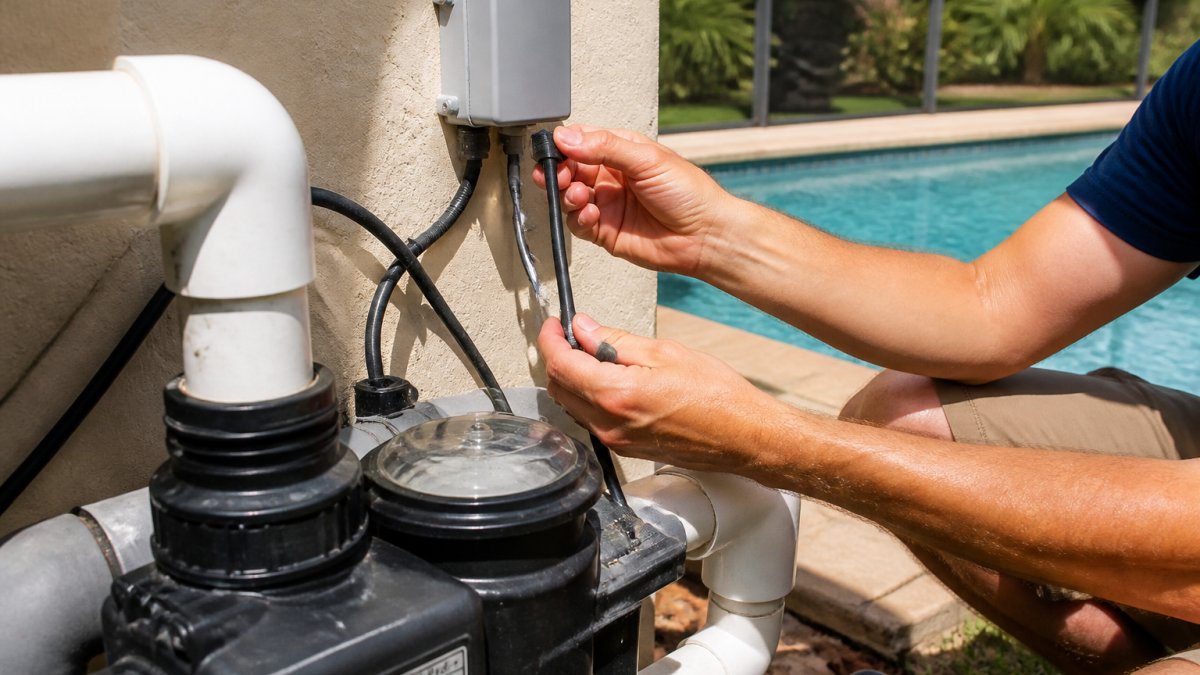
With the pump running, look and listen along the suction plumbing. A small suction-side leak often shows as a drip, a whistle, or moisture at a union.
Then read the filter pressure gauge. Low pressure with bubbles points to air on the suction side. A gauge that won't settle suggests a flow problem; if it looks stuck or fogged, it may need replacing.
Bypass the Solar Loop to Isolate the Fault
Bypassing the solar loop tells you whether the air is coming from the pool equipment or the roof. It's the check most homeowners skip, and it saves the most time.
With the pump off, set the diverter valve to send water past the collectors. Restart the pump and watch the returns.
- Bubbles stop: the air is entering on the roof side, at the collectors, vacuum relief valve, or roof plumbing
- Bubbles continue: the air is entering at the equipment pad or the suction line
For a closer look at flow, valve, and sensor checks, see our guide on diagnosing underperforming solar pool panels.
Solar-Specific Air Entry Versus Ordinary Pool-Pump Suction Leaks
Air can enter a solar pool heating system in two places, and the symptoms differ. A suction-side leak at the equipment pad pulls air into the pump before the water reaches the filter: bubbles at the returns, a half-empty pump basket, and low filter pressure. Because the pump must move water through the filter and roof loop without drawing in air, its suitability for the system is another factor to weigh alongside leak location, as discussed in a solar pool pump guide.
The fix differs too. A suction leak is often a lid O-ring, a union, or a valve at the pad. A solar-side air entry is often a vacuum relief valve, a collector fitting, or a roof plumbing connection. If you're not sure which side the air is on, the bypass test above is the fastest way to find out.
Here is the order we work through, and what each check tells you.
Step | What to do | What it tells you |
|---|---|---|
1 | Time the bubbles with the solar valve open | Clear in three to five minutes is normal startup |
2 | Check water level and pump basket | Low water or clogged basket is the most common prime cause |
3 | Inspect the pump lid and O-ring | A dry, cracked, or gritty O-ring lets air in |
4 | Bypass the solar loop | Bubbles stop means air enters on the roof side |
5 | Isolate the suction side | Drips, whistles, or moisture point to a suction leak |
6 | Check the vacuum relief valve | A wet, cracked, or stuck valve is a leading suspect |
How a Solar Pool Vacuum Relief Valve Works and Why It Fails
A solar pool vacuum relief valve is a small one-way valve that lets air into the collectors when the pump shuts off. It protects the panels from vacuum damage as water drains back; without it, the draining water could collapse the collectors or pull fittings loose.
When the pump runs, the valve stays closed so water flows through the panels under pressure. When the pump stops, it opens and lets air in, allowing water to drain back to the pool.
Why Vacuum Relief Valves Fail
A vacuum relief valve can fail in several ways, and each one produces a different symptom.
- Stuck open: The valve lets air in during normal operation, so bubbles appear only when the solar loop is active. This is a leading cause of persistent bubbles that stop when you bypass the solar loop.
- Stuck closed: The valve does not let air in when the pump stops, so water stays in the collectors and the roof plumbing. That can trap a solar pool heater air lock and put stress on the panels.
- Clogged with debris: Florida pollen, oak catkins, and roof grit can block the valve seat. A clogged valve may stick open or closed depending on where the debris settles.
Look for a valve that is wet, cracked, or visibly stuck. Replacing a failed vacuum relief valve is a job for a technician, since it sits on the roof plumbing.
How Solar Valves and Check Valves Affect Air and Draining
The vacuum relief valve is not the only valve that affects air in the system. The solar diverter valve and any check valves also play a role.
The solar diverter valve controls whether water flows to the collectors or bypasses them.
A system that starts fine in the morning but develops bubbles after the first shutdown of the day points to a check valve or vacuum relief valve that isn't holding.
System-Specific Checks for Heliocol and SunStar Systems
Solar pool systems vary by model, and brand compatibility depends on the model and system.
If your system was installed by another company or you're not sure of the brand, contact us and our team can review the system. We are an authorized Heliocol and SunStar dealer and manufacturer warranty service provider, and we service existing systems and help with eligible manufacturer warranty procedures.
When to Stop and Call
Stop and call a professional if the vacuum relief valve is cracked, if you see water draining back to the pool for longer than usual after shutdown, or if bubbles return every time the solar loop runs. Rooftop collectors, roof plumbing, and pressurized lines need trained hands. Our licensed team handles solar pool heating repairs and diagnostics for Heliocol and SunStar systems, including systems we did not install.
What a Solar Pool Heater Air Lock Looks Like and How to Clear It
A solar pool heater air lock is a pocket of trapped air that stops water from flowing through the collectors. The pump runs, but the panels stay cool and the returns stay weak.
Signs of an air lock:
- The pump runs but heating does not improve
- Flow at the returns is low
- The collectors stay cool in full sun
To clear it, run the pump at full speed with the solar valve open and give the system time to push the air out. Our team can trace why your pool heater is not heating the pool and clear the lock safely.
When to Stop and Call for Professional Solar Pool Heating Repairs
Stop and call a professional when the checks above don't solve the problem, or when the fault is on the roof. Rooftop collectors, roof plumbing, and pressurized lines need trained hands.
Call us if you see:
- Bubbles that continue after the solar loop is bypassed and the pad is checked
- A collector or roof line that is leaking
- A vacuum relief valve that keeps failing
Our licensed team handles solar pool heating repairs and diagnostics for Heliocol and SunStar systems, including systems we did not install. We service existing systems and help with eligible manufacturer warranty procedures.
Schedule Solar Pool Heating Repair in Port St. Lucie
If air keeps returning to your solar pool lines, the cause is still there.
We are a family-owned, woman-owned company, and we are an authorized Heliocol and SunStar dealer and manufacturer warranty service provider. Our own crew handles our solar work, and we are fully insured.
Call 772-464-2663 to schedule service, or 954-372-3358 from South Florida, and we will help find the air source and work toward restoring full flow.
Frequently Asked Questions
Why does my solar pool heater release air when it starts up?
When the solar valve opens, the collectors and roof plumbing are usually full of air that entered while the system was off. The pump pushes water up, and that air has to escape somewhere, so you see a burst of bubbles at the returns for a short time. If the bubbles stop and heating resumes, nothing is wrong. If they continue for the whole cycle, air is being drawn in somewhere in the loop and needs diagnosis.
Can a faulty solar pool vacuum relief valve cause air in the lines?
Yes. The vacuum relief valve sits at the high point of the collector array and opens to let air in when the pump stops, which protects the panels from collapsing. A worn seal or stuck valve can stay open while the pump runs, pulling air into the solar loop. Look for water weeping or a whistling sound near the valve on the roof. Replacing it is a professional job because it means working at height on the collector array.
How do I know if my pool pump is losing prime?
Signs include a pump basket that stays partly empty, a pump that sounds like it is moving gravel, weak flow at the returns, and bubbles that never clear. A pump losing prime is pulling air on the suction side, often through a dry lid O-ring, a loose union, or a water level that has dropped below the skimmer. Tighten the lid, lubricate the O-ring, raise the water level, and check again before assuming the pump itself has failed.
What should I check before calling for solar pool heating repairs?
Confirm the water level is at least halfway up the skimmer, empty and reseat the pump basket, lubricate the lid O-ring, and note the filter pressure gauge reading. Then check whether bubbles appear only when the solar valve is open. If they do, the fault is likely in the roof loop or its valves. If they appear with solar bypassed, the problem is on the pool pad. That distinction saves diagnostic time when you call 772-464-2663.
Air in solar pool lines rarely fixes itself, and a small leak left alone can turn into a bigger repair. Florida Solar Pro brings licensed diagnostics, Heliocol and SunStar parts knowledge, and leak detection to every call. Get started with Florida Solar Pro and restore steady flow and heat to your pool.
Florida Solar Pro · Solar Energy Professionals · 1930 SW Biltmore St, Port St. Lucie, FL 34984 · 772-464-2663 · Licenses CVC56702 · CPC1458189 · CAC1817178 · SCC131153056